322-Foot Rocket Built for NASA’s Lunar Flyby Mission
NASA’s Artemis 2 mission plans to send four astronauts to the moon, orbit it, and safely return them to Earth. This is a major test for NASA and its numerous contractors, including Boeing, responsible for developing the core stage of the Artemis Space Launch System (SLS), and Lockheed Martin, developing the Orion crew capsule.
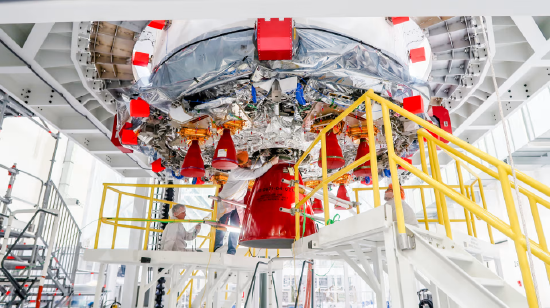
Technicians are installing orbit maneuvering system engine nozzles and heat shields to the Artemis 2 European Service Module. Technicians preparing for a launch mission to send astronauts to deep space. The Artemis 2 flight will mark the first time the SLS rocket and Orion spacecraft will fly with a crew.
This mission will be the first crewed flight of the Artemis series of vehicles and will be the farthest human spaceflight since the last mission of the Apollo lunar program in 1972. Here are the key components of the vehicle supporting this flight.
Orion Spacecraft
Developed by Lockheed Martin, the capsule houses the living and working areas for the astronauts. The European Service Module, providing propulsion and power to the spacecraft, was developed by the European Space Agency, with Airbus as the prime contractor.
Solid Rocket Boosters
Manufactured by Northrop Grumman, the SLS solid rocket boosters are as tall as 17 stories and burn more than 11,000 pounds of propellant per second during liftoff. The boosters separate from the core stage shortly after takeoff.
Engines
Four engines are mounted at the base of the rocket, working with the boosters to lift the SLS rocket off the ground. These engines, manufactured by L3Harris, are 14 feet tall and produce approximately 500,000 pounds of thrust each.
Manufacturing the hardware for the Artemis program has been challenging. NASA’s Inspector General has repeatedly criticized problems with supplier performance and official oversight, and the project’s numerous scheduled launches have been delayed.
NASA has invested heavily in the Artemis program. In 2021, the Inspector General estimated that NASA’s investment in the program over the years will reach $93 billion, and that early Artemis missions will cost around $4 billion per flight.