New Self-Healing Composite Material Can Self-Repair Over 1,000 Times, Potentially Eliminating the Need to Scrap Cars and Aircraft
An engineering team from North Carolina State University and the University of Houston has announced the development of a new fiber-reinforced composite material capable of repeatedly self-repairing structural damage over 1,000 times. It also exhibits significantly higher initial strength than traditional composites used in critical components like aircraft wings and wind turbine blades, and researchers describe it as a "game changer" for various key application areas. The team believes this material could significantly extend the lifespan of critical equipment such as cars, aircraft, spacecraft, and wind turbines.
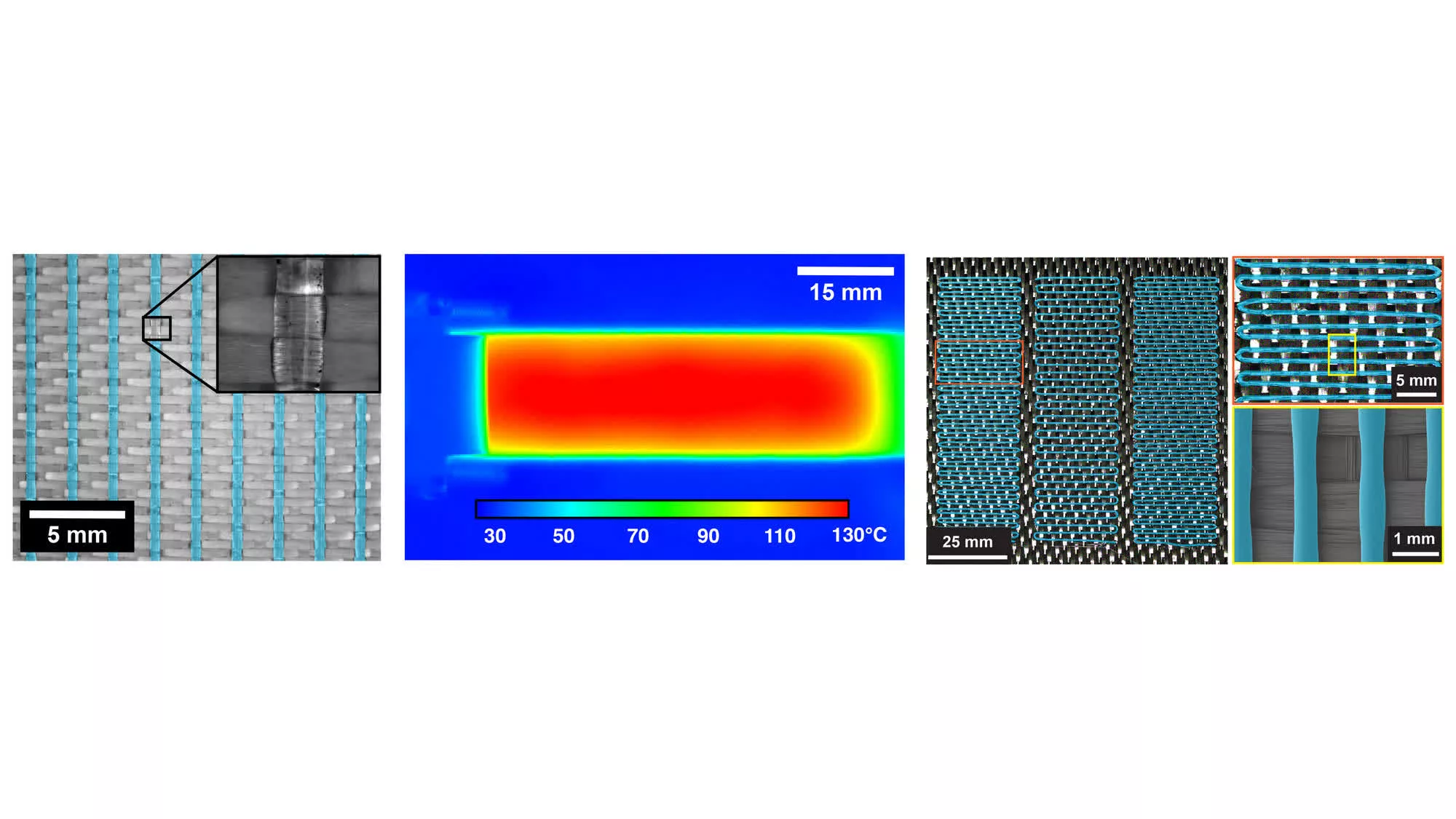
This breakthrough addresses the common problem of “delamination failure” in composite materials—where the layered structure within fiber-reinforced polymers (FRP) gradually separates over time during service, leading to cracking and even fracture. The new material looks similar to traditional FRP but is structurally more robust, effectively suppressing delamination, crack propagation, and overall structural failure.
Researchers used 3D printing technology to embed a layer of patterned thermoplastic “self-healing agent” between the layers of the composite material, achieving significantly enhanced resistance to delamination. This interlayer is made of poly(ethylene-co-methyl acrylate) (EMAA), increasing the material’s resistance to delamination damage by approximately 2 to 4 times compared to ordinary FRP, substantially reducing crack initiation and structural damage.
In addition to the self-healing agent interlayer, the material also integrates a carbon-based heating layer, considered another key innovation. When an external current is applied, these heating layers heat up and melt the EMAA interlayer, allowing it to flow into micro-cracks, refill, and “weld” the damaged interface, completing a so-called “thermal remending” process, based on the mechanism of polymer chain re-entanglement and reconstruction.
To verify the self-healing ability of this new material, researchers simulated actual service conditions by applying tensile loads and artificially creating delamination defects approximately two inches long in the samples. The team then repeatedly activated the self-healing process, cycling the loading—damage—repair test for up to 40 days, totaling 1,000 cycles, to assess the material’s structural integrity under repeated damage and repair conditions.
The experimental results showed that the material effectively repaired internal damage after multiple damage—self-healing cycles and maintained high toughness without significant structural degradation. The research team therefore judged that large-scale adoption of this material in industries such as aerospace, renewable energy, and automotive could extend the service life of critical components from the current typical decades to centuries.
Jack Turicek, the first author of the paper, stated that compared to traditional composite materials, this new material is stronger from the outset and better withstands structural damage in at least 500 damage—repair cycles. Although the material’s toughness gradually decreases with the number of repairs, this decay process is very slow, theoretically extending the usable life of related components to around 500 years, while the typical lifespan of traditional FRP composites is only 15 to 40 years.
Researchers point out that if this material can be applied to engineering practice, it will help reduce maintenance costs by extending the life of critical components and reducing replacement frequency, and reduce energy consumption and industrial solid waste emissions by reducing manufacturing and replacement needs, which is positive for industrial waste management and environmental protection. However, they also emphasize that current experiments are still mainly conducted in laboratory environments, and the material still needs to undergo long-term testing under real-world conditions before it can be truly considered a mature and reliable engineering solution.