Murky Interests: US Media Reports Sam Altman’s Personal Investments Shrouded in Mystery, Suspected of Using OpenAI for Personal Gain
On April 17th, the Wall Street Journal reported that OpenAI CEO Sam Altman’s side ventures blur the lines between the company’s interests and his personal interests. Altman’s personal investments remain opaque ahead of a potential IPO, making it difficult to identify potential conflicts of interest.
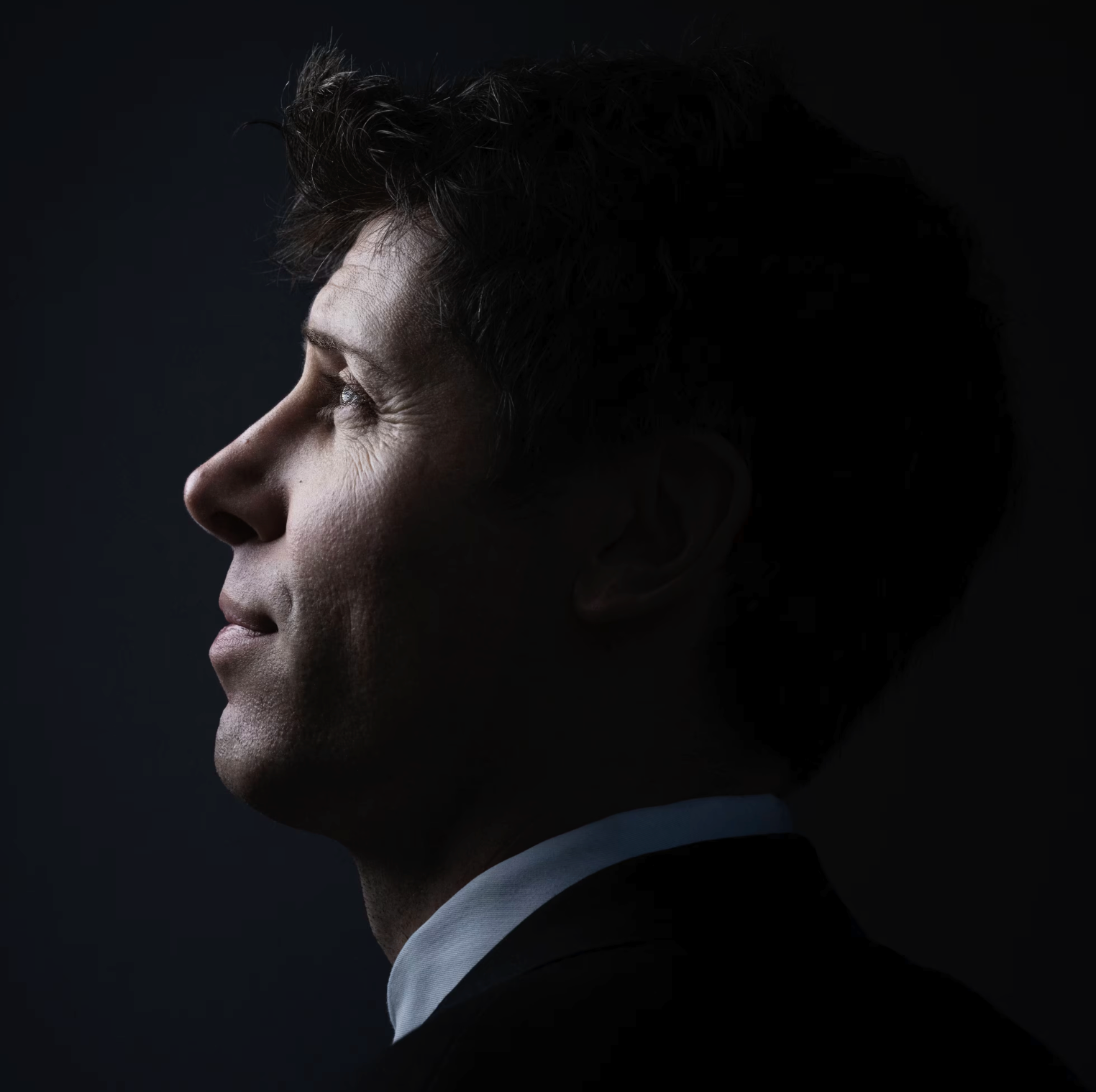
Altman Highly Controversial
In 2023, when Altman was briefly ousted and then reinstated as OpenAI CEO, the company’s board was concerned because they knew little about his personal investments and whether those investments constituted potential conflicts of interest.
The newly formed board promised to address the issue, but it never truly disappeared. As OpenAI accelerates plans for a potential IPO this year, with the company valued at $850 billion, the question remains: how to determine whether company decisions are in OpenAI’s best interest or Altman’s personal interest.
Letting the Company Invest in Personal Ventures
Recently, Altman asked OpenAI to lead a funding round for nuclear fusion startup Helion. Helion had failed to deliver on promises of breakthrough energy technology and was starting to run out of money. Altman is one of Helion’s largest investors, with a significant portion of his net worth tied to the company.
According to sources, Altman also sought to have OpenAI support Stoke Space, a rocket manufacturer aiming to challenge Elon Musk’s SpaceX. Altman holds shares in the company through Hydrazine, his venture capital firm turned family office, financial ties that had not been previously reported.
Currently, neither of these investments falls within OpenAI’s core business. Moreover, OpenAI recently told employees that the company needs to cut side projects and focus on growing competitive pressures.
After becoming a darling of Silicon Valley in recent years, OpenAI’s leading position in the AI race is slipping. Altman himself does not directly hold company equity and has relinquished many management responsibilities. Some of the projects he previously championed, including the video generation app Sora, have been scaled back or shelved.
Shareholder Doubts
OpenAI executives and major investors say they support Altman, believing he led the company to success.
However, according to sources, some shareholders have begun to privately question whether he is the right person to lead OpenAI through the turbulence of going public and have floated Chairman Bret Taylor, former co-CEO of Salesforce, as a potential replacement.
Taylor said in a statement: “As we embark on a new chapter, I am fortunate to see every day that Sam is the unique individual to lead this company.”
Altman said in a podcast last December: “Am I excited about being the CEO of a public company? The answer is zero. Am I excited about OpenAI becoming a public company? In some ways yes, but in some ways I think it would be incredibly annoying.”
Opaque Personal Finances
Before becoming OpenAI CEO, Altman ran venture capital firm Y Combinator and used that role to build a personal investment portfolio spanning hundreds of startups, large enough to rival major venture capital firms. According to the Wall Street Journal, some of those companies later secured lucrative deals with OpenAI, bringing wealth to Altman. He also used shares in his startups as collateral for a credit line from JPMorgan Chase and used that credit line to invest in other companies.
From Musk to Mark Zuckerberg, the net worth of many of the wealthiest tech tycoons is tied to shares in the companies they run, which are typically disclosed in public filings. Altman’s finances, however, are relatively opaque, making it difficult to determine how his personal investments might influence his decisions at OpenAI.
Boards of public companies typically prohibit executives from holding large stakes in outside companies while providing them with generous compensation packages, including equity tied to future stock performance. This is to ensure they have a financial incentive to drive the company forward.
Due to OpenAI’s historical roots as a non-profit organization, Altman never received direct equity in the company. According to the latest available data, his salary in 2024 was only $66,000. He stated at a Senate hearing on AI regulation in 2023: “I do this job because I love it.”
Altman’s potential conflicts of interest were also one of the reasons he was briefly removed as CEO in November 2023. At the time, the OpenAI board said he had not been “consistently candid” in his communications. The Wall Street Journal previously reported that some board members who voted to oust him believed they could not determine how Altman might have been pursuing personal gain when representing OpenAI in deals because he had not disclosed his startup investments.
After Altman was reinstated as CEO, the newly formed board said it had established an audit committee to review potential conflicts of interest involving directors and executives, including Altman. The board also developed stricter conflict-of-interest management policies, but has not disclosed the specifics.
Helion’s Hype
Helion claims its nuclear fusion technology is close to producing cheap, abundant energy for the world. Altman has been a shareholder in the company since 2014.
According to a source, Altman participated in a funding round in January 2025, which valued Helion at $5.4 billion. He was at the time negotiating a $400 million investment in OpenAI from SoftBank and invited SoftBank to participate in Helion’s funding.
This invitation ultimately led to SoftBank investing in Helion last year, a deal personally brokered by SoftBank CEO Masayoshi Son. According to the source, this surprised some SoftBank employees, as they were not involved in discussions about the deal.
Helion does not publicly release its research findings and strictly limits access to its technology, making it difficult for industry experts to assess its progress. The company initially said its seventh-generation machine, “Polaris,” was expected to achieve net energy gain in 2024. Helion failed to meet that goal and has not released further details. The company said the machine reached technical milestones that boosted confidence in its technology.
Altman has previously recused himself from OpenAI decisions regarding Helion. He said Helion is the most time-consuming project outside of OpenAI. He invested $375 million in the fusion company in 2021, his largest single investment at the time.
As one of Helion’s largest investors, Microsoft also agreed that year to purchase electricity from Helion starting in 2028.
$500 Million Investment Falls Through
In Helion’s latest funding round, expected to reach $1 billion, Altman proposed that OpenAI invest about $500 million. According to sources, the proposed deal would have valued Helion at about $35 billion, more than six times its previous valuation.
According to sources, some OpenAI employees familiar with the plan were uneasy with Altman’s proposal. He was asking his company to support another startup from which he could personally profit, with no direct benefit to OpenAI. These sources said company employees evaluating the request were skeptical of the feasibility of Helion’s technology.
According to people familiar with OpenAI’s internal discussions, some OpenAI employees avoided participating in a Slack channel created to discuss the potential investment. They feared that what they said in the channel could end up as evidence in court if the deal faced legal scrutiny.
OpenAI rejected the investment, but the company did reach an agreement to secure the right to purchase up to 50 gigawatts of electricity from the fusion startup by 2035, equivalent to the output of 25 Hoover Dams. Sources said Helion has been touting the contract as a selling point to investors, which would also boost the value of Altman’s shares.
Because OpenAI did not participate in the round, Helion has scaled back its fundraising goal. The company is now targeting $2.5 billion at a $15 billion valuation. Thrive Capital, another large OpenAI investor and a staunch supporter of Altman, is expected to lead the round, according to sources.
Rocket Project
Altman has tried to leverage OpenAI’s resources to support companies challenging Musk, his personal rival, who is suing OpenAI for abandoning its non-profit mission, a case that will go to trial this month.
OpenAI said in January that it was investing in Merge Labs, a brain-computer interface startup that Altman helped found last year as a competitor to Musk’s Neuralink. OpenAI said the two companies would collaborate on AI. A spokesperson for Altman said Altman serves on the Merge Labs board but does not hold shares in the company.
Last summer, Altman inquired about a partnership between OpenAI and rocket manufacturer Stoke Space to help the startup build data centers in space. According to a source, Altman proposed that OpenAI acquire or become a controlling shareholder in the company, which would put him in direct competition with Musk. Altman’s husband previously invested in Stoke through his family office, Hydrazine.
After the Wall Street Journal inquired about the deal last December, people close to OpenAI said the negotiations were no longer progressing. Altman had just issued a “red alert” at OpenAI, asking employees to pause other projects and focus on improving ChatGPT.
Altman downplayed the idea of building data centers in space at an event in India in February, calling it “absurd.” Some familiar with the negotiations were surprised by his comments, given his previous involvement. Sources said discussions between the two companies about a rocket launch agreement continued this year, and Altman remained interested.
Sources said some OpenAI board members were unaware of the negotiations with Stoke and privately expressed skepticism about the feasibility of building data centers in space.
More pressing challenges are looming. Fidji Simo, OpenAI’s head of product, told employees last month that Anthropic’s success should be seen as a “wake-up call” and urged them to devote more resources to building products for professional use cases.
Vision Unfulfilled
Many of Altman’s product visions have fallen through. OpenAI shut down Sora, the video generation app Altman launched last fall, and postponed “adult mode,” which was originally intended to enable ChatGPT to engage in explicit conversations. Simo instead shifted resources to building a new “super app” that she hopes will help OpenAI win more enterprise customers.
Altman had envisioned Simo playing a key role in OpenAI as a public company, including hosting quarterly earnings calls. But she took medical leave in August, due to a recurrence of a neuro-immune disease, forcing her to work remotely from her home in Southern California.
Simo began medical leave this month, creating a leadership vacuum at a vulnerable time for OpenAI. In a notice to employees, she designated four executives to take over her responsibilities during her absence.
Altman was not mentioned in the notice. OpenAI said he is currently focused on research, fundraising, and securing new computing power.