Attack on Sam Altman Exposes the Dark Side of the Anti-AI Movement
Last week, a 20-year-old man allegedly attacked the home of OpenAI CEO Sam Altman, an incident authorities believe may be part of a plan to harm executives in the AI industry. Mainstream AI safety organizations quickly distanced themselves from the event, but some online communities celebrated the attack.
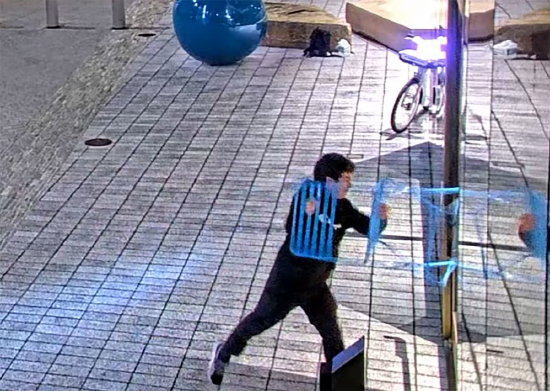
Daniel Moreno-Gamma was charged with throwing incendiary devices at Sam Altman’s residence and attempting to break into OpenAI’s San Francisco headquarters with a chair, threatening to harm everyone inside.
One X platform user compared the attacker to Luigi Mangione, who is accused of killing UnitedHealth Group CEO Brian Thompson for political reasons, posting that both were “heroes.”
Multiple users on X called the attack “understandable.”
One user posted in a Reddit group dedicated to anti-AI sentiment: “Incidents like these will only become more common if we allow this mad dash towards AI and the complete commodification of human value to continue.”
As AI technology rapidly advances, concerns are growing about its potential to take human jobs, disrupt the economy, damage the environment, and even pose an existential threat to humanity. Even tech industry executives have issued stark warnings.
But recent attacks suggest that an extreme fringe of the anti-AI movement has moved from anonymous online rhetoric to dangerous offline action, sparking discussion in Silicon Valley about how to respond.
The suspect who attacked Sam Altman’s home is being held without bail.
Three days before the attack on Altman’s home, reports surfaced that the Indianapolis home of City Councilor Ron Gibson was shot at late at night, with a note reading “No Data Centers” left at the door, after a data center project in his district was recently approved.
There have also been reports in recent years of vandalism and attacks on self-driving taxis and delivery robots, which some see as harbingers of a high-tech future not everyone welcomes.
Doug McAdam, a sociology professor at Stanford University who studies political and social movements, said, “Frankly, AI is a huge, looming problem that people don’t understand and can only react to with general panic.” He added that it’s not uncommon for such movements to “spawn extremist offshoots.”
Following the attack, OpenAI released a statement saying, “To ensure that society benefits from AI, we need to advance it through democratic processes, and robust debate of ideas is a vital part of a healthy democracy. But violence against individuals is never acceptable in our democracy, whether they work at an AI lab or stand on the other side of a debate. We are grateful for the swift response of law enforcement and relieved that no one was injured.”
“Emulate Luigi, Target Tech CEOs”
Daniel Moreno-Gamma, currently being held without bail, had been active in online spaces discussing the risks of AI before launching the attack.
In an online exchange with the host of the AI podcast “The Last Invention,” Moreno-Gamma spoke of “emulating Luigi to go after tech CEOs,” referring to the suspect accused of killing the UnitedHealth Group CEO.
The organization “Pause AI,” which advocates for pausing the development of advanced AI to allow safety measures to catch up, confirmed that Moreno-Gamma had posted on its Discord server in the weeks leading up to the attack. The organization distanced itself from the attack, stating that Moreno-Gamma was not a formal member and the Discord server is open to all.
“Our mission is to provide people with a peaceful, democratic channel to express their concerns about AI, and this attack is the antithesis of everything we stand for,” Pause AI CEO Maxim Lomas told CNN.
After the attack, OpenAI CEO Sam Altman posted a family photo on his blog, saying he hoped it would deter further violence.
Another organization calling for a halt to advanced AI development, “Stop AI,” said Tuesday that Moreno-Gamma had asked in its online forum earlier this year, “Will talk of violence get me banned?” The organization said he stopped posting after receiving an affirmative response.
“Stop AI” posted on X: “Our organization has always maintained a commitment to nonviolent activism, and current leadership firmly adheres to nonviolence in both action and rhetoric.” The organization also added that one of its co-founders was expelled last year for making “violent and provocative statements.”
According to a criminal complaint filed by the FBI, Moreno-Gamma was carrying a document at the time of the attack that discussed “the alleged risks of AI to humanity,” contained plans to kill Altman, and listed “the names and addresses of directors, CEOs, and investors of AI companies.”
Moreno-Gamma’s defense attorney, Damon Ward, a public defender in San Francisco, told the court this week that his client was experiencing a mental health crisis at the time of the incident. Ward argued that his client should be charged with “property crime” at most, and that the current charges are excessive. Moreno-Gamma’s parents released a statement saying their son had recently experienced mental health issues, had never harmed anyone, and they were deeply concerned about his well-being.
Movement Splitting
Some within the AI industry were already concerned. For example, OpenAI has long encouraged employees to remove their badges before leaving work.
Lomas expressed concern that there will be more violence, and that such attacks could stigmatize the AI safety movement, which is complex, diverse, and largely committed to peaceful advocacy.
“Our response is to double down on what we’ve always done – peaceful, legitimate advocacy,” he said. “I think movements like ours that are fundamentally peaceful need to be vigilant about what’s happening, because more extreme, darker forces may start to emerge.”
McAdam said that historically, extremist acts can actually boost the credibility of more moderate factions within a social movement.
He said that AI companies “need to think seriously about how to respond,” and that “even though this extremist fringe is condemned, the movement as a whole is gaining more attention and influence.”
That debate has already begun.
Chris Lehane, OpenAI’s global policy chief, told the San Francisco Standard on Tuesday that some criticisms of AI are “irresponsible.” He said, “There are consequences when certain views and rhetoric are amplified.” He added that the company needs to make clear that AI “will be hugely beneficial to people, to families, to society as a whole.”
But his colleague, Jason Wolfe, an OpenAI employee working on AI alignment, publicly disagreed with that view on Thursday on X.
Wolfe said, “I believe our responsibility is to earn trust by delivering on the promise of AI, being honest about risks and uncertainties, sharing research, measuring real-world impact, and supporting public oversight and risk mitigation. Of course, I unequivocally condemn the recent violence, which is abhorrent and likely the work of a few bad actors, but to paint all AI critics as ‘doomsayers’ and suggest they shouldn’t be allowed to express concerns is detrimental to public discourse.”