Medieval Diary Reveals Solar Storm: A Dangerous Solar Event from 1200 Re-emerges
Humans are often captivated by the splendor of auroras, but beyond Earth's magnetic field shield, solar activity can be highly destructive. Powerful flares and bursts of high-energy charged particles can pose a fatal threat to astronauts and spacecraft. Recently, a research team from the Okinawa Institute of Science and Technology (OIST) in Japan successfully pinpointed a solar proton event that occurred between 1200 and 1201 AD by combining precise carbon isotope measurements from tree rings with records from medieval literature, providing key clues for reconstructing past solar activity and improving future space weather forecasts.
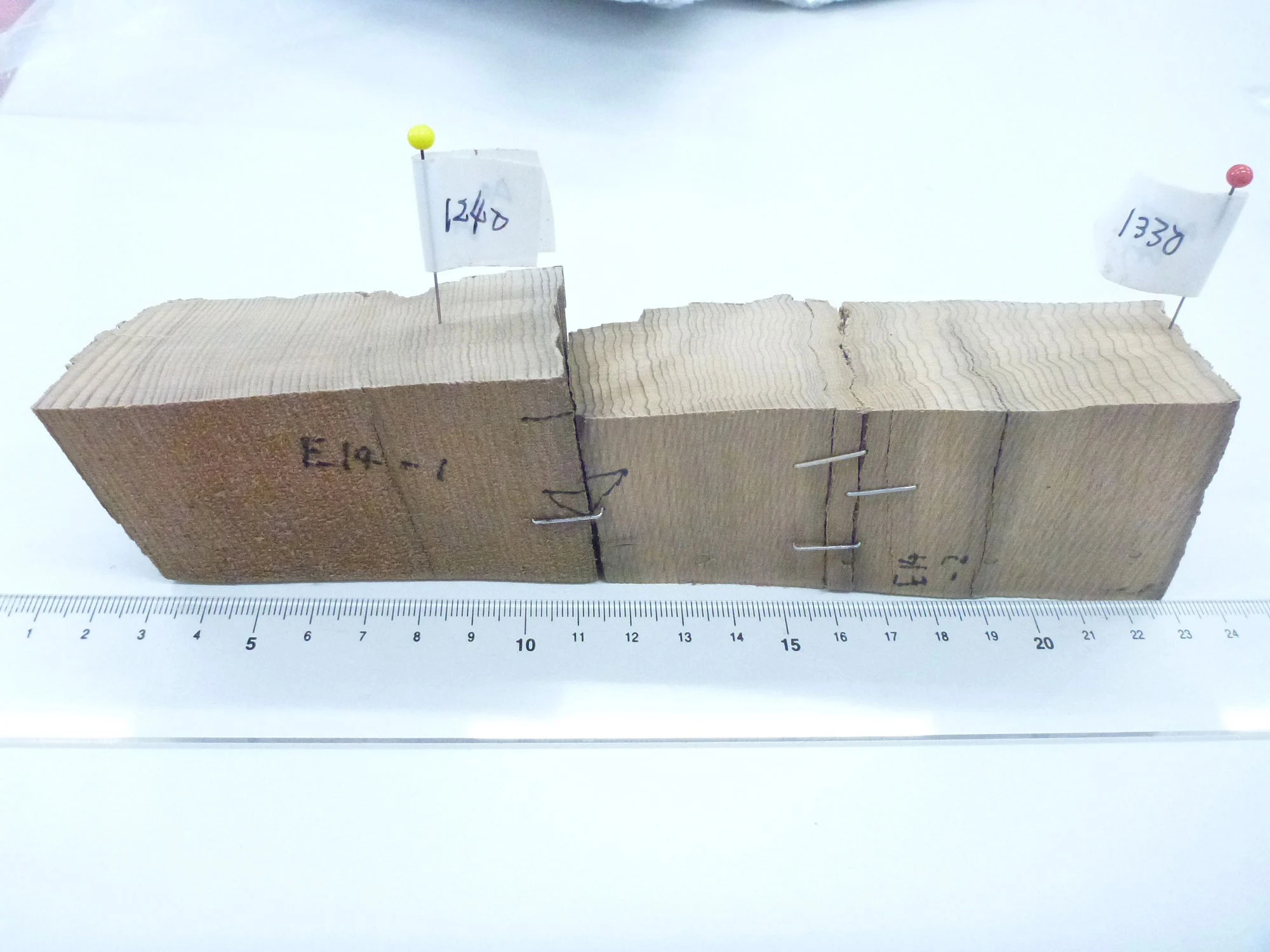
So-called Solar Proton Events (SPEs) refer to the ejection of high-energy protons and other particles from the sun towards Earth during violent outbursts. These particles can travel towards Earth at speeds reaching up to 90% of the speed of light. In 1972, the sun experienced several such events consecutively between the Apollo 16 and Apollo 17 missions. If astronauts had been on deep-space missions at that time without effective shielding, they would likely have been exposed to lethal doses of radiation. As crewed lunar missions and more distant human spaceflight plans are being revived, identifying and assessing the risks of these “sudden solar bursts” is becoming increasingly important.
The OIST research team adopted a novel “interdisciplinary forensic” approach: on one hand, they selected wood samples from buried *asunaro* (Japanese cedar) trees unearthed from the Shimokita Peninsula in northern Honshu, Japan, and performed annual high-precision measurements of their carbon-14 content. On the other hand, they relied on records of auroras from the medieval Japanese nobleman Fujiwara no Teika’s diary, *Meigetsuki*, and contemporary Chinese historical records to pinpoint periods of suspected strong solar activity, then searched for anomalies in the tree-ring data to “match” them.
Carbon-14 is a radioactive carbon isotope generated when high-energy particles bombard Earth’s atmosphere. It enters plant bodies through atmospheric circulation and is fixed in the tree rings of that year, essentially creating a “record” of cosmic rays and solar activity for that year. Previously, scientists have used this method to reconstruct the history of solar activity over a timescale of approximately 10,000 years, but capturing “sub-extreme” solar proton events, which are slightly weaker and more frequent, requires both extremely high measurement accuracy and minimizing the time search window as much as possible.
This is where historical records come into play. Fujiwara no Teika (1162–1241) recorded in his diary that in February 1204, he saw “red light in the northern sky” in Kyoto. Although solar proton events themselves do not directly produce auroras, they are often associated with strong solar activity that can excite them. This record provided a crucial clue to the research team. Based on this, they selected tree-ring samples from adjacent years for focused testing and ultimately discovered a significant increase in carbon-14 between the winter of 1200 and the spring of 1201, indicating that a “sub-extreme” level solar proton event had occurred at that time.
To further pinpoint the year and verify the correlation, the team also used dendrochronology and dendroclimatology techniques, comparing tree-ring widths with climate patterns to refine the event’s timeline. In addition to Japanese literature, there are also rare records of low-latitude red auroras in Chinese historical texts from the same period, which highly coincides with the time period indicated by the carbon-14 anomalies in the tree rings, further supporting the existence of this solar event.
Professor Yuko Notsu, head of the research team and of the Solar-Earth Environment and Climate Research Unit at OIST, pointed out that previous studies of historical solar proton events have focused on a very small number of “super events.” The significance of this work lies in providing a methodological basis for identifying more common but still significantly hazardous “sub-extreme” events. These events have an energy level of approximately 10% to 30% of the known most extreme events. While they do not cause global catastrophes, they can pose a serious challenge to the safety of satellites in orbit, deep-space missions, and future lunar bases.
Through high-precision carbon-14 measurements, the research team not only pinpointed a specific solar proton event but also reconstructed the details of the solar activity cycle around 1190 to 1220 AD. The analysis shows that, unlike the current solar activity cycle of approximately 11 years, the solar cycle at that time was only about 7 to 8 years, in an unusually active phase. The identified solar proton event occurred during a peak in one of these cycles, providing important evidence for understanding the sun’s activity patterns at different times.
Professor Notsu emphasized that carbon-14 data alone is not enough to fully restore solar behavior and must be corroborated with observations of sunspots and auroras from historical records. She pointed out that by comparing tree-ring data with literature records, researchers can more accurately reconstruct the timing of solar activity, thereby better understanding the conditions and characteristics of extreme space weather events. For example, the reconstruction results show that although this solar proton event occurred during a peak in solar activity, some historically long-lasting low-latitude aurora phenomena seemed to fall during the near-bottom phase of their reconstructed cycles. This “anomaly” suggests that the sun may trigger special space weather events through different mechanisms even during periods of minimal activity.