Blue Origin to Launch "Space Station" Rocket This Weekend, Intensifying Competition in Direct-to-Cell Satellite Services
Blue Origin plans to launch a new New Glenn heavy-lift rocket this Sunday, a mission considered a critical turning point in the reusable orbital launch vehicle landscape. A successful launch and recovery would break SpaceX's "exclusive monopoly" in the reusable orbital rocket sector and further fuel the three-way competition between Amazon's Leo, AST SpaceMobile, and SpaceX's Starlink in the direct-to-cell satellite business.
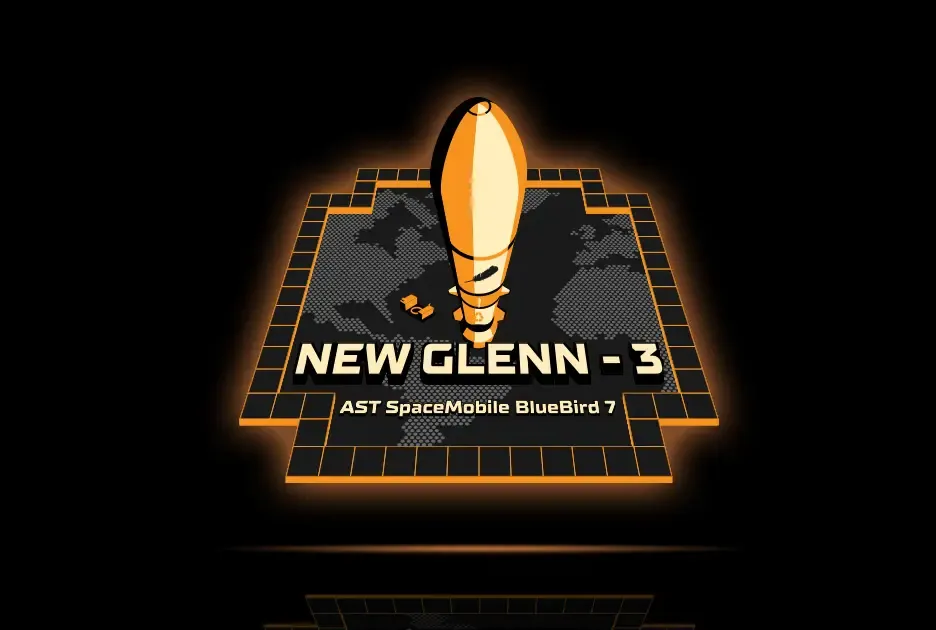
This mission will be carried out by the first-stage booster of the New Glenn, which completed its first flight and recovery during its second mission last November. Its ability to safely return again is crucial for Blue Origin to build a cost-competitive reusable launch system. In recent years, SpaceX has achieved overwhelming advantages in commercial launches and satellite internet deployment precisely by leveraging its reusable Falcon 9 rocket.
For Amazon, a mature and reliable proprietary reusable rocket has become an urgent need to advance its Leo satellite constellation. Due to the lack of such a launch platform, Amazon has so far only sent 241 Leo satellites into orbit, significantly lagging behind schedule. In contrast, over the past 12 months, SpaceX has launched more than 1,500 satellites to its Starlink constellation using the Falcon 9, and the gap in constellation size and deployment speed continues to widen.
This Sunday's New Glenn mission also has another significance – it will deliver AST SpaceMobile's BlueBird 7 satellite to low Earth orbit. Unlike Amazon and SpaceX, which prefer to "blanket" coverage by deploying thousands of small satellites, AST chooses to build a network with fewer but more powerful satellites. BlueBird 7 carries a phased array antenna of approximately 2,400 square feet, which will be one of the largest commercial communication antenna arrays ever deployed in low Earth orbit, essentially a massive "mobile base station" sent into space, and is the second of the company's next-generation "Block 2" satellites.
BlueBird 7 is designed to target ordinary smartphone users, providing 4G and 5G broadband connectivity directly to existing phones without the need to replace terminals, with a theoretical downlink rate of over 120 megabits per second. AST plans to deploy 45 to 60 satellites by the end of 2026 and officially launch the service sometime this year, at which point it will directly compete with Starlink's direct-to-cell service already launched in the US with T-Mobile, as well as with Globalstar, which was acquired by Amazon and currently provides emergency communication capabilities in "no signal" areas for iPhone and Apple Watch.
This is New Glenn's third orbital mission, and Blue Origin has reserved a launch window between 6:45 AM and 8:45 AM local time on April 19th (Sunday). For Blue Origin, Amazon, and the entire low-Earth orbit direct-to-cell industry, this launch window is not only about the success or failure of a single rocket, but may also determine when and how the "no service" indicator will gradually disappear from users' view in the coming years.