A Few Yuan for a Metronidazole Stick? It's Definitely Not a Miracle Skin Cure
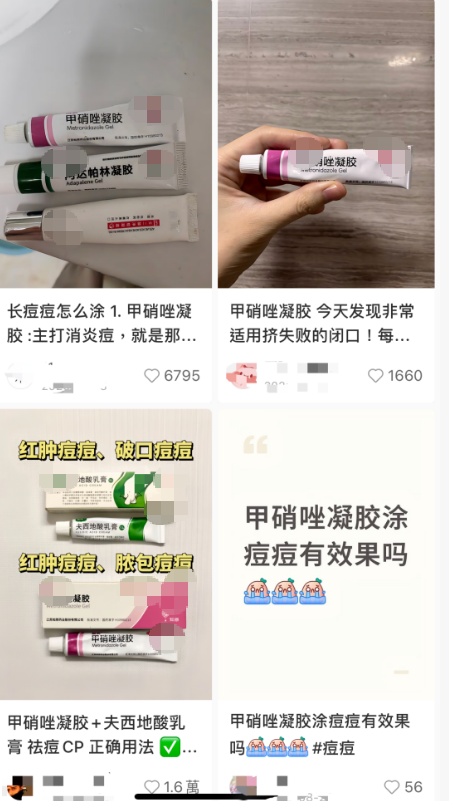
There are many posts on social media about using metronidazole to "remove acne" and "eliminate blackheads." Some people crush metronidazole tablets and apply them to their faces, while others recommend directly applying metronidazole gel, even considering it a "cheap acne-removing artifact." Does applying metronidazole gel to ordinary acne actually work? Is it as magical as it's hyped up to be online? Let's discuss it thoroughly today.
What is Metronidazole Primarily Used For?
Many people think of taking metronidazole when they have swollen gums, wisdom tooth inflammation, or periodontitis. In dermatology, metronidazole gel for external use is also common, and many families may keep it in their medicine cabinets as a frequently used medication. Metronidazole is a nitroimidazole derivative with a potent killing effect on anaerobic microorganisms. It works by inhibiting bacterial DNA synthesis, interfering with bacterial growth and reproduction, ultimately leading to bacterial death. It also inhibits the redox reactions of amoeba and trichomonas vaginalis, killing pathogens.
Because of this, metronidazole is also used to treat trichomoniasis, intestinal and extraintestinal amoebiasis, giardiasis, cutaneous leishmaniasis, and infections with *Strongyloides stercoralis*, and is widely used in the treatment of anaerobic bacterial infections. You don't need to understand these strange disease names; you just need to know that because of its pharmacological mechanisms, it can also "shine" in the treatment of skin diseases, especially acne.
Don't Believe These 4 Metronidazole "Acne Removal" Methods Anymore
Regarding how to use metronidazole to "remove acne," there are various "magical" methods online. Let's see how effective they are:
1. Crushing Metronidazole Tablets and Applying to the Face, Can It Save Acne-Prone Skin?
Many people may have come across such "strange" tutorials:
The truth is: Crushing metronidazole tablets, adding water, and applying to the face won't save acne-prone skin, but will likely cause a skin disaster and make things worse. First, oral tablets + water ≠ topical ointment. Metronidazole tablets contain not only the active ingredient metronidazole but also excipients such as starch, dextrin, and magnesium stearate. These substances are insoluble in water, won't be absorbed when applied to the face, and will only clog pores.
Furthermore, homemade "metronidazole tablet paste" can lead to uncertain concentrations. Direct application to the face can cause symptoms such as stinging, redness, and peeling, a series of skin barrier disruptions. This can turn ordinary acne into "upgraded" sensitive acne, without the expected "higher, faster, stronger" results, only leading to more red, more numerous, and more difficult-to-heal acne.
The Correct Approach: Saving Acne-Prone Skin Requires a Two-Pronged Approach
First, focus on daily skincare:
Step 1: Cleansing Use a mild amino acid cleanser, 1-2 times daily (frequency depends on skin oiliness). To protect the skin barrier, avoid deep cleansing (such as cleansing brushes, scrubs, soap-based cleansers, exfoliants, or cleansing masks).
Step 2: Moisturizing Prioritize refreshing, oil-free, and repairing (ceramide, panthenol, hyaluronic acid, etc.) lotions. Repair the barrier, and acne will decrease.
Step 3: Sun Protection Primarily use physical sun protection, choosing hats, masks, and umbrellas with a certain SPF.
Supplement with chemical sun protection, choosing lightweight sunscreen. Combining physical and chemical sun protection helps fade acne marks.
*Other functional skincare products are recommended after consulting a specialist doctor.
Second, focus on lifestyle habits:
Diet: Reduce sugar, dairy, and fried foods. Bubble tea, cakes, sugary drinks, skim milk, and fried foods can easily cause breakouts.
Sleep: Maintain a regular sleep schedule and avoid staying up late.
2. Metronidazole Tablets + Alcohol, Can It Remove Acne?
Are you moved by this simple and easy remedy? But wait, this is a face-ruining + life-threatening combination, absolutely do not use it. Besides the well-known rule that you shouldn't drink alcohol after taking cephalosporins (because it can cause a disulfiram-like reaction), this rule also applies to the combination of metronidazole and alcohol. Even just external use of metronidazole can be absorbed into the bloodstream through the skin.
When combined with alcohol products (including alcoholic beverages, alcohol-containing medications, and alcohol-containing foods), a reaction will occur in the body. Mild cases can cause facial flushing, headache, and palpitations. Severe cases can cause arrhythmias, a sudden drop in blood pressure, and even life-threatening situations.
The Correct Method: For "acne" on your face, it's best to visit a dermatology specialist at a regular hospital for a face-to-face consultation, listen to the doctor's advice, apply medication when needed, and take medication when prescribed.
3. Thickly Applying Metronidazole Gel, Can It Remove Blackheads and Pores?
Let's state the conclusion directly – thickly applying metronidazole gel won't remove blackheads. Blackheads are commonly known as open comedones, appearing as small black dots on the surface of pores, formed when sebum and keratin clog pores and oxidize when exposed to air.
Metronidazole gel, with its effects of killing *Demodex* mites and *Propionibacterium acnes*, is simply ineffective for this condition. It offers no help in "dissolving keratin, unclogging pores, dissolving blackheads, and controlling oil." Not only is the medication inappropriate, but this "thick application" method can also affect skin permeability, trapping pores, resulting in even more blockage.
The instructions for metronidazole gel clearly state "Take an appropriate amount of gel and apply a thin layer to the affected area." Therefore, everyone must be vigilant, and any "folk remedy" recommending thick application of metronidazole gel should be doubted. Similarly, thick application of metronidazole gel won't minimize pores, regardless of whether it's mixed with other "effective" ingredients… So, can metronidazole make pores smaller?
The causes of enlarged pores are usually threefold:
Excessive oil production causes pores to be stretched.
Keratin buildup or inadequate cleansing causes pores to be "blocked and stretched," appearing coarse and black.
Skin aging or laxity causes pores to appear droplet-shaped or oval.
The combination of vitamin B2, metronidazole, and masks has no effect on any of these problems.
The truly safe methods to reduce blackheads and gently shrink pores:
1. Gentle daily cleansing, avoiding harsh scrubbing. 2. Good moisturizing to reduce oil production and keratin buildup. 3. Unclogging pores and dissolving blackheads: External use of retinoids has the effect of improving follicular keratinization, dissolving microcomedones and comedones, and anti-inflammation. Skincare products containing 0.5%~2% salicylic acid can dissolve oil, thereby unclogging pores. Products containing 10%~15% azelaic acid can control oil, reduce inflammation, and refine skin texture. 4. Tightening and anti-aging: If necessary, medical aesthetic treatments such as light therapy can be used to promote collagen production and tighten pores.
4. Metronidazole for Acne Scars?
Is using metronidazole more effective for removing acne scars? This is likely an illusion. Red acne scars are caused by damage to the skin barrier and blood vessel dilation after acne subsides. The approach is to reduce inflammation, repair the barrier, and constrict blood vessels.
Unfortunately, metronidazole has no such effects. Azelaic acid can reduce localized blood vessel dilation, reduce skin sensitivity and redness, and help acne scars fade from "bright red" to "pale red" to disappear. In addition to azelaic acid, you can also try the following methods to remove red acne scars:
-Skincare products Skincare products containing 2%~5% niacinamide can have anti-inflammatory, repairing, and redness-reducing effects. Skincare products containing panthenol (vitamin B5), centella asiatica, ceramides, and squalane can repair damaged skin barriers.
-Medical aesthetic treatments such as pulsed light or pulsed dye laser
But no matter what method you use, remember during the acne scar period:
-Protect your face – strictly use sunscreen. -Control your hands – minimize squeezing and irritating acne to avoid worsening acne scars.
The Correct Way to Use Metronidazole for Acne
Metronidazole has 3 dosage forms, and the oral and topical forms are used in the treatment of acne.
Effective Local Treatment for Inflammatory Acne – Topical Metronidazole
The common concentration of topical metronidazole cream or gel is 0.75%, which can be used as an adjunct to the local treatment of inflammatory papules and pustules of acne.
Instructions:
-After cleansing the affected area, apply a thin layer to red and swollen pimples and pustules, once or twice daily. -Avoid contact with eyes, mouth, and nasal mucosa. -Use with caution during pregnancy and breastfeeding, or as directed by a doctor.
Systemic Medication Option for Moderate to Severe Acne – Oral Metronidazole
Oral metronidazole can be used as an alternative systemic antibiotic in patients with moderate to severe acne (cysts, nodules, numerous inflammatory papules), especially for patients with anaerobic bacterial infections. However, note that this medication must be prescribed by a doctor based on the condition and cannot be purchased and taken on your own.
The Red Lines That Must Be Followed When Using Metronidazole to Treat Acne: Do not use alcohol (whether oral or topical) within 1 week of starting or stopping medication.
In conclusion, acne improvement is not a matter of "quick success." Metronidazole is effective for inflammatory acne, but it is a medication, not an ordinary skincare product. Both topical and oral use have clear indications and usage guidelines.
To scientifically treat acne, you must first determine the type of acne, use medication reasonably under the guidance of a doctor, and avoid blindly following trends or using it for a long time on your own, to achieve healthy skin safely.