NVIDIA's Huang Renxun: 7nm Process is Good Enough, HBM Doesn't Necessarily Need EUV
AI chips require extremely high performance and energy efficiency to reduce operating costs. Current top-tier AI chips have shifted to 3nm and 2nm processes. However, NVIDIA CEO Huang Renxun believes that Chinese companies can still be competitive even using 7nm processes. In a recent interview with the popular podcast Dwarkesh Patel, Huang Renxun spoke for hours, providing a wealth of information, with a key focus on Chinese technology. He expressed dissatisfaction with US policies restricting chip exports and used the analogy of uranium resources.
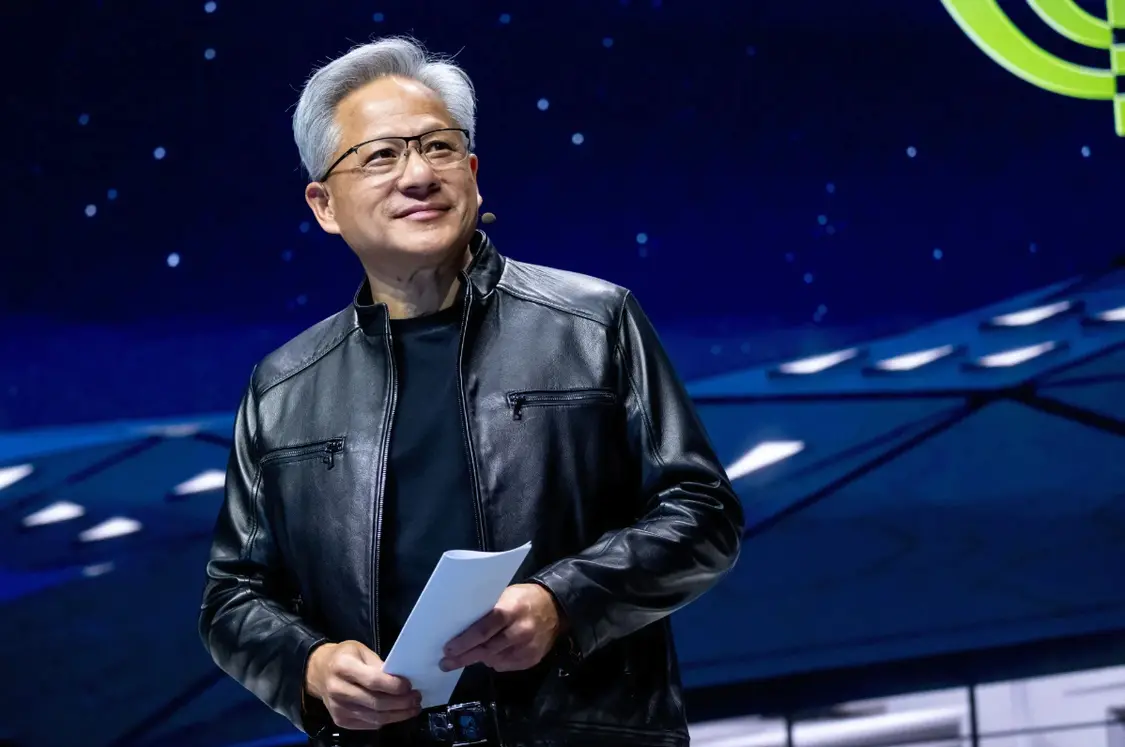
The US's suppression of China in the AI field centers around hindering domestic companies' access to advanced manufacturing processes. Currently, China's process technology is at the 7nm level. US politicians believe this is two or three generations behind the advanced processes available to US companies, enough to put Chinese AI companies a decade behind.
However, Huang Renxun does not agree with this view. He stated in the program that the 7nm process is good enough, and that 7nm is essentially the level for Hopper-class AI graphics cards (Note: Hopper is actually TSMC's 4N process, a customized 5nm, and A100's Ampere is the 7nm process). Many of today's large models are trained using Hopper.
Huang Renxun's belief that 7nm is sufficient also implies that Chinese companies have a sufficient energy advantage. Since there are no restrictions in this area, there is no need to worry about performance per watt. Therefore, even using a less advanced process is acceptable, and computational freedom can still be achieved through multi-card clusters, which is what domestic companies are currently doing.
If logic chips do not need more advanced EUV processes, does HBM, indispensable for AI computing, also rely on EUV processes? Huang Renxun also disagrees with this statement, saying it is also wrong, and that they can still be assembled, just as NVIDIA has done with the NVL72 cluster.
Huang Renxun also mentioned that Chinese companies have demonstrated silicon photonics technology, which can connect these computing capabilities to form a giant computer system.
In conclusion, on this issue, Huang Renxun does not agree that restricting China's access to advanced processes, especially EUV, will hinder AI development. Chips built with the 7nm process are good enough, coupled with the integration of superclusters and more advanced algorithms, Chinese companies' AI research is still top-notch, after all, half of the world's top AI researchers are Chinese.