Ultraman “World” Project Accelerates Human Authentication System Construction, First Collaboration with Tinder
The human identity verification project World, under Sam Altman, announced a new phase of development and its ambitious expansion plans at a trendy venue near San Francisco Bay, with dating app Tinder as its first major integration. ToolsforHumanity (TFH), the company behind World, plans to embed its verification technology into dating apps, event and ticket systems, enterprise services, email, and other public online platforms.
At the event, Altman told the audience that the world is moving towards a “very powerful AI era,” and while AI offers many benefits, it also means that AI-generated content and behavior online will surpass that of humans. People are increasingly asking themselves, “Am I interacting with AI or a human? Or both? How do I know?” World (formerly Worldcoin) aims to “stand out” in this context, positioning itself as a way to verify whether a digital service is backed by a real, living human while protecting anonymity. To this end, World uses cryptographic technologies such as zero-knowledge proofs to build a so-called “proof of human” tool to help distinguish human behavior in a network environment saturated with AI agents and bots.
World’s core verification tool is a spherical device called Orb, which scans users’ eyes and converts their iris features into a unique, yet anonymous, cryptographic identifier – a “verified World ID.” Users can access World-related services through this ID, and World also allows users to use the App directly without binding to the Orb. At the event, Altman’s speech was brief, as TFH co-founder and CEO Alex Blania was absent due to emergency surgery, and he delegated more demonstration segments to World Chief Product Officer Tiago Sada and his team.
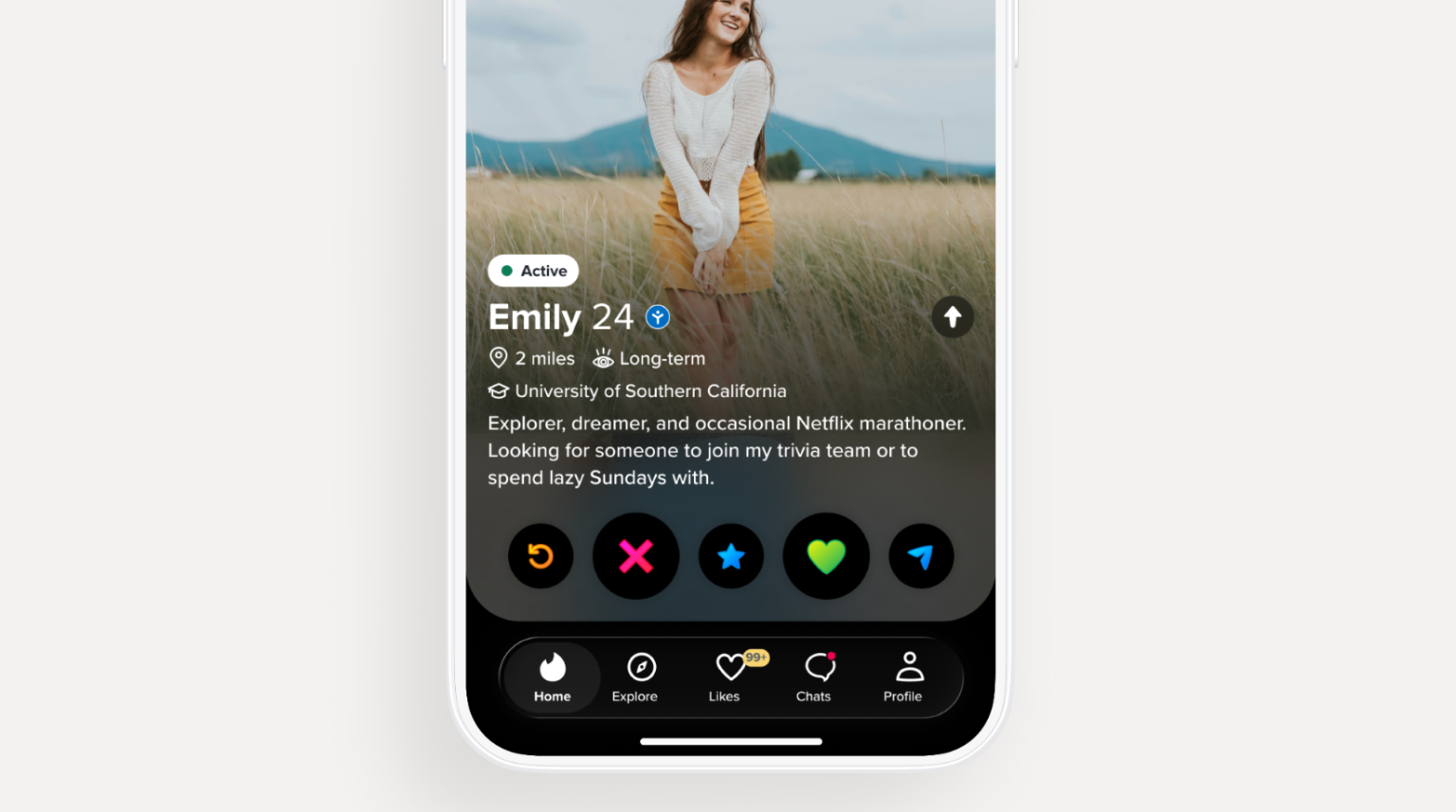
Sada introduced that World is launching a new version of the App (the previous version was released in December last year) and a series of new technical access solutions. A major focus is launching identity verification services for dating apps, with Tinder being the most representative example. After a year-long pilot program in Japan, Tinder found the project “successful” and announced that it would enable this integration in global markets, including the United States. In the new scheme, profiles of users verified by World will display a World ID badge to indicate that they are “real people.”
Beyond online dating, World is also beginning to exert influence on the entertainment industry, launching a new feature for the performance market called Concert Kit. Artists can reserve a portion of event tickets specifically for users verified by World ID, protecting fans from “scalper bots.” Concert Kit can be integrated with mainstream ticketing systems such as Ticketmaster and Eventbrite, and World has partnered with artists such as “30 Seconds to Mars” and Bruno Mars to plan to use this feature in their upcoming tours.
At the event, World also announced several collaborations aimed at enterprise users. One is a partnership with Zoom to launch World ID verification integration, attempting to address the growing risk of “deepfake” identities in enterprise video conferencing. The other is a collaboration with electronic signature platform DocuSign to ensure that online signatures are indeed from verified real users. Furthermore, in the face of the upcoming “intelligent agent network era,” World is also developing a feature called “agent delegation,” allowing a natural person to authorize their World ID to an AI agent, which will then act on their behalf online.
Under this framework, World is collaborating with identity verification company Okta to develop a system that is still in the testing phase to confirm that an online agent is indeed acting on behalf of a real person. Gareth Davies, Okta’s Chief Product Officer, introduced at the event that the system allows binding the World ID to a specific agent, and when the agent acts on behalf of the user online, the website can identify that there is a “verified human” behind it.
However, World has consistently faced questioning about “difficulty in scaling” during its expansion, with the bottleneck largely stemming from the verification process itself. For much of the project’s history, obtaining the so-called “gold standard” level of verification required users to physically go to offline locations and have their eyeballs scanned by the Orb – a process that was both cumbersome and made many people feel “creepy.” To this end, World has been lowering the threshold and increasing incentives, including distributing its own cryptocurrency Worldcoin to some new users, and deploying Orb devices to large chain retail locations, allowing consumers to complete verification while shopping or having coffee. This time, World also announced that it will significantly increase Orb coverage density in New York, Los Angeles, and San Francisco, and also offer “in-home verification” services, allowing users with needs to make appointments for staff to carry the Orb to their homes for scanning.
In an interview with TechCrunch, Sada also revealed that World has attempted to solve the scaling problem through “tiered verification.” The highest level is still Orb iris scanning verification, followed by a “mid-level” that verifies anonymously by reading information from the NFC chip in government-issued identification documents. On this basis, the company has newly established a “low-threshold verification” level, which Sada calls “low friction” but also “low security,” requiring only a selfie.
World named this selfie verification product Selfie Check and demonstrated it at the event. TFH executive Daniel Shorr emphasized that the feature is “designed with privacy as a priority,” minimizing processing within the user’s local device and keeping the user’s image data as much as possible on their own phone. Of course, selfie verification itself is not new, and fraudsters have already learned to “break” these systems in various ways. Sada admits that World’s solution is “striving to be best-in-class,” but still has its limitations. He said that developers can freely choose between the three verification levels according to their own security requirements when integrating World services.
From the entire release, World is trying to transform itself from a controversial “Orb eyeball scanning project” into a “human identity verification layer” for the mass internet and enterprise services infrastructure. With deepening partnerships with Tinder, Zoom, DocuSign, mainstream ticketing platforms, and Okta, this “human authentication empire” is rapidly taking shape, while also sparking a new round of industry and social controversy around privacy, data security, and power concentration.