Hesai Releases Next-Generation LiDAR Capable of Identifying Colors, Enhancing Autonomous Driving Safety
Hesai, a leading Chinese LiDAR company, has announced the development of a new generation of in-vehicle LiDAR sensors capable of identifying colors, which is expected to significantly improve the environmental perception accuracy and driving safety of autonomous driving systems. Hesai stated that this technological breakthrough aligns with the trend of the Chinese automotive industry shifting from a "price war" to "value-driven innovation," emphasizing that greater value in the field of autonomous driving should be created through technological upgrades rather than simply lowering prices.
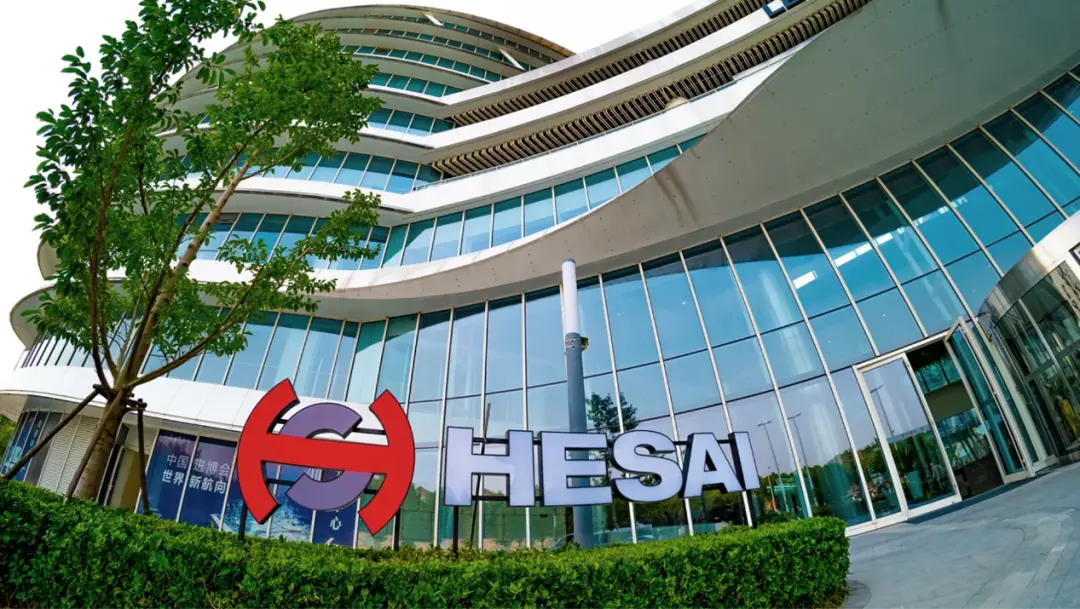
Chief Executive Officer Li Yifan told the media in Shanghai that if the entire industry only focuses on price, resources will be over-invested in cost reduction, sacrificing opportunities to explore better solutions and create higher value.
It is reported that Hesai’s newly released EXT series LiDAR is powered by its self-developed “Picasso” chip and is the first product in the industry to integrate spatial detection and color detection capabilities in a single device.
Company co-founder Sun Kai said at the launch event that the new product is planned to begin mass production later this year and is expected to be first equipped on several flagship models around 2027.
According to statistics from industry organization Gaisai Automotive Research Institute, Hesai’s market share in the in-vehicle LiDAR market will exceed 40% in 2025, with customers including leading Chinese electric vehicle manufacturers such as Li Auto, Xiaomi, and BYD.
In overseas markets, Hesai is also one of the core LiDAR suppliers for NVIDIA’s advanced driver-assistance systems, which will be adopted by international automakers such as Mercedes-Benz in the future.
However, data from the China Association of Automobile Manufacturers shows that as of 2025, the proportion of vehicles globally that are truly equipped with LiDAR is only about 3%, indicating that this technology is still in the stage of increasing penetration.
Not all automakers agree on the necessity of LiDAR, for example, Tesla insists on adopting a "pure vision" solution, while Xpeng Motors announced last year that it would remove LiDAR from its new models and rely more on AI-driven perception and decision-making technologies.
Sun Kai believes that LiDAR still has huge growth potential. LiDAR uses light to determine the spatial position of objects and "see" everything in the environment, and the addition of color information means that the sensor can not only recognize the shape and distance of objects, but also distinguish key signals such as red and green lights, thereby further improving the safety redundancy of autonomous driving systems in complex road scenarios.
In addition to its in-vehicle business, Hesai is also expanding into the broader market for “Physical AI.”
The company simultaneously launched a handheld device called “Kosmo,” which is shaped like a wine bottle and used to collect three-dimensional data from the real world in order to build a “digital twin” of physical space.
Hesai Chief Technology Officer Xiang Shaoqing said that this device hopes to provide more refined environmental understanding capabilities for the next generation of Physical AI systems, including humanoid robots, thereby supporting their navigation, operation, and interaction in the real world.
Hesai has not yet announced a specific commercialization schedule for Kosmo.
The company chose to release its next-generation LiDAR product on the eve of the Beijing International Automotive Exhibition. The exhibition is considered one of the largest automotive exhibitions in the world and is expected to feature over 100 brands showcasing the latest intelligent electric and autonomous driving technologies to compete for technology and discourse power in a new round of competition.