AI Remote Sensing Study Shows Global Expansion of “Floating Algae”
A recent global remote sensing study using artificial intelligence technology reveals that floating algae in the surface layers of the world's oceans are rapidly expanding, indicating a profound shift in marine ecosystems. The research team points out that this trend is closely related to changes in seawater temperature, ocean currents, and nutrient patterns, and may have widespread impacts on marine ecology, tourism, and coastal economies. The study was led by scientists from the University of South Florida and the National Oceanic and Atmospheric Administration (NOAA), highlighting the critical role of artificial intelligence in processing large-scale ocean observation data.
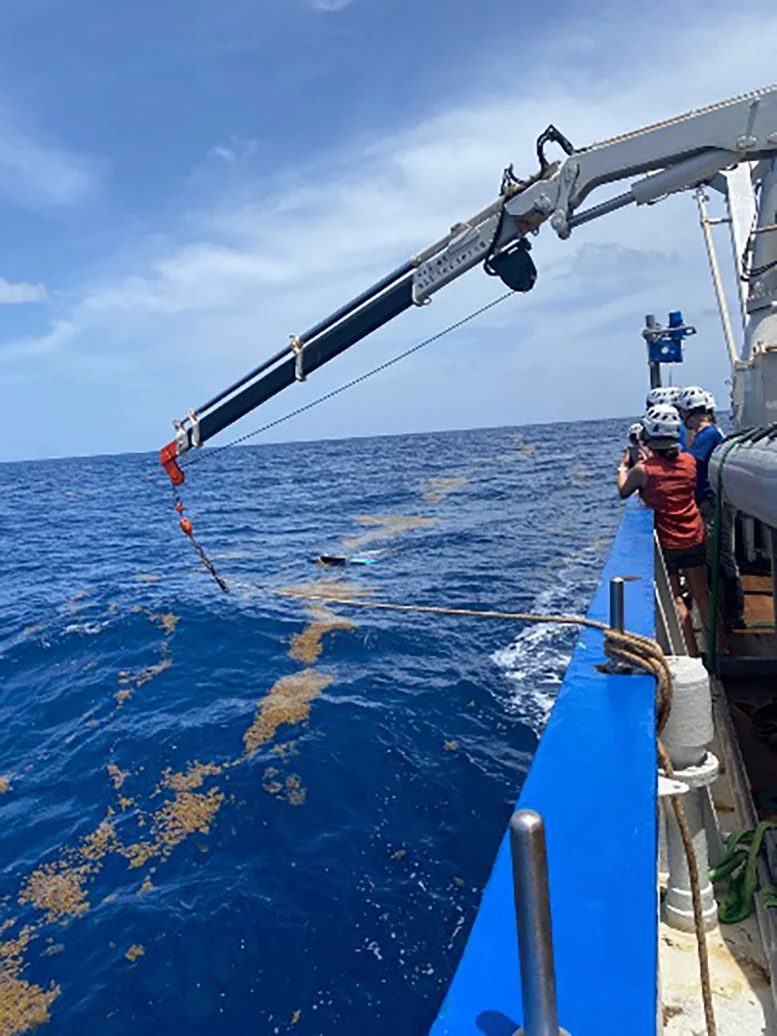
This is the first time researchers have systematically analyzed sea surface floating algae on a global scale, covering large macroalgal rafts and microalgal surface films, and provided an overall picture of their distribution and changes over the past two decades. Hu Chuanmin, a professor of oceanography at the University of South Florida’s College of Marine Science and the paper’s corresponding author, said the results show that today’s global marine environment is generally more conducive to the growth of floating macroalgae. He pointed out that in open ocean environments, macroalgae such as seagrass and kelp can provide habitat for a variety of marine organisms and serve as important nursery grounds for fisheries, having a positive ecological effect. However, once these algal blooms are transported to nearshore areas by currents, their large-scale death and decay can damage tourism landscapes, impact the local economy, and threaten the health of coastal residents and marine life.
The study utilized satellite observation data from 2003 to 2022 and found that both sea surface microalgal films and floating macroalgal blooms are increasing globally. Statistics show that the area covered by microalgae is steadily increasing at a rate of about 1% per year, while macroalgae in some sea areas are expanding at a much faster rate, with an annual growth rate of up to 13.4% in the tropical Atlantic and western Pacific regions, especially after 2008. By the end of the study period, the total area of global sea surface microalgal blooms had reached 43.8 million square kilometers (approximately 16.9 million square miles), a significant deviation from previous historical distribution patterns. The research team believes that these figures point to a “regime shift” from an “oligo-macroalgal” ocean to a “eutrophic-macroalgal” ocean.
Looking at the timeline, large-scale outbreaks of floating macroalgae experienced several key turning points around 2010. In 2008, large-scale green algal blooms of *Ulva prolifera* were first recorded in the Yellow Sea; in 2011, a large-scale bloom of brown seaweed *Sargassum* occurred in the tropical Atlantic; and in 2012, another large-scale *Sargassum* event occurred in the East China Sea. Hu Chuanmin pointed out that before 2008, there had been no such large-scale outbreaks of floating macroalgae in other regions except for the traditional *Sargassum* Sea. Today, similar events are occurring repeatedly in multiple ocean regions, leading researchers to believe that the global ocean is entering a new stage characterized by high abundance of floating macroalgae.
The success of this work is crucial to the application of artificial intelligence technologies such as deep learning. The research team trained a deep learning model for 13 typical sea areas and 5 different types of floating algae, performing pixel-by-pixel identification on approximately 1.2 million satellite ocean images. Floating algae often occupy only a tiny portion of a pixel, or even less than 1%, in a single satellite image, and their spatial distribution is highly scattered, making them easily overwhelmed by noise under traditional algorithms. By automatically extracting and classifying subtle “visual signals,” the AI model was able to screen for these difficult-to-identify algal traces on a global scale.
Qilin, the first author of the paper and an oceanographer at the Satellite Applications and Research Center of the National Environmental Satellite, Data, and Information Service (NESDIS), improved the team’s previous model to efficiently process global ocean remote sensing data for up to 20 years. The model training itself took months, and required analysis and optimization of millions of image features. The study also relied on the high-performance computing platform provided by the University of South Florida’s Research Computing Center to achieve parallel processing of multiple sets of images. Even with this infrastructure support, completing the analysis of all 1.2 million images still took months. Qilin emphasized that without this computing platform and the long-term stable cooperation between NOAA and the University of South Florida, this work would have been almost impossible to complete.
In terms of driving factors, the study believes that human activities and climate change are the two main causes of the expansion of floating algal blooms. Nutrient runoff from rivers and coastal areas is continuously transported into the sea, increasing the levels of nutrients such as nitrogen and phosphorus in the surface seawater, providing ample “fertilizer” for algae. At the same time, global warming is causing the ocean to warm continuously, changing the ocean stratification and current patterns, creating more favorable thermal and dynamic conditions for rapid algal reproduction in some sea areas. The research team pointed out that the specific driving mechanisms may vary significantly in different regions and need to be further analyzed and decomposed in combination with more regional observations and simulations.
From an ecological perspective, floating macroalgal blooms provide shelter for a variety of marine organisms, including *Sargassum* fish, enhancing local biodiversity and fishery resources. On the other hand, the large amount of detritus produced when they are transported to nearshore areas can cause beaches to be “covered in algae,” and the decomposition process consumes dissolved oxygen and releases harmful gases, exacerbating nearshore eutrophication and hypoxia risks. For coastal communities that rely on beach tourism, large-scale algal accumulation not only damages the landscape but also increases cleaning and maintenance costs, causing a chain reaction impact on related industries such as hotels and restaurants. In some low-income coastal areas, these ecological events, coupled with climate pressures, pose an additional challenge to the livelihoods of vulnerable communities.
Looking ahead, the research team plans to further integrate more satellite observation data to refine the expansion patterns of different sea areas and different algal species, and attempt to couple the AI identification results with numerical ocean models to improve the prediction of algal bloom formation, drift, and landing. Qilin said that the next step will focus on clarifying the relative weights of the main driving factors in each region, providing more targeted scientific basis for coastal governance and adaptive management. The study, titled “Global proliferation of floating algal blooms,” was published in *Nature Communications* in December 2025, further highlighting the rapid reshaping of marine surface ecological patterns in the context of climate change.