Blue Origin's New Glenn Rocket Suffers Orbital Deviation on Third Launch, Resulting in Customer Satellite Loss
Blue Origin's New Glenn rocket experienced a significant malfunction during its third launch on Sunday, placing a customer's communication satellite into the wrong orbit, rendering it unable to fulfill its intended mission.
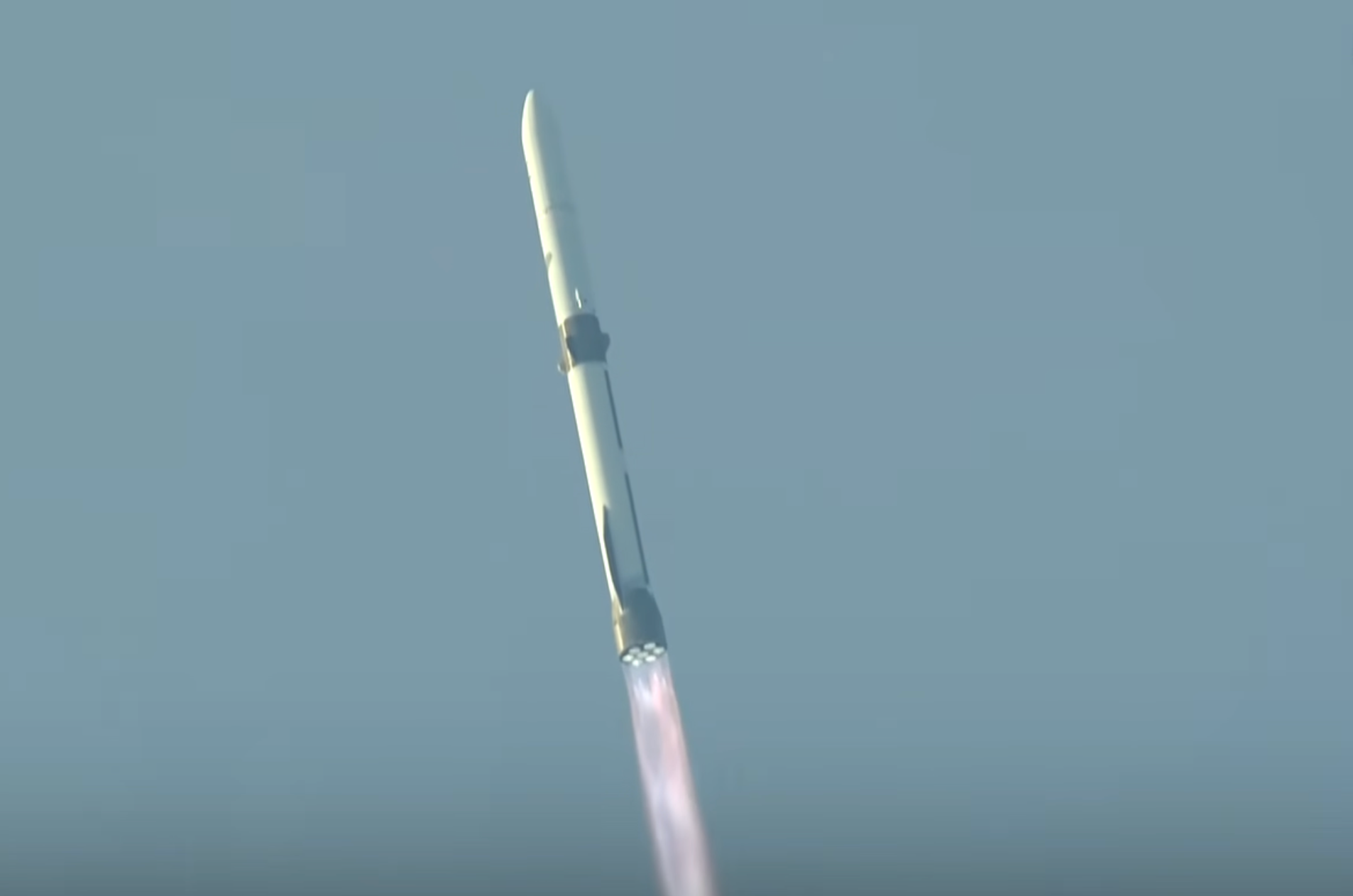
The mission was originally intended to deliver a communication satellite named BlueBird 7 for satellite operator AST SpaceMobile, and also marked the first flight of New Glenn with a reusable first-stage booster, considered a crucial step towards the project's commercial maturity.
AST SpaceMobile released a statement on Sunday afternoon stating that the New Glenn rocket’s upper stage placed BlueBird 7 into an orbit that was “below plan.”
Although the satellite successfully separated from the rocket and powered on, its current altitude was too low to support normal operations, ultimately necessitating a deorbit procedure, causing the satellite to burn up upon re-entry into Earth’s atmosphere.
AST SpaceMobile stated that the loss of the satellite is covered by insurance, and the company has subsequent BlueBird series satellites in hand, with the next batch expected to be completed within approximately one month.
The company has collaborations with multiple launch service providers and plans to send another 45 satellites into space by the end of 2026 to advance the deployment of its space-based mobile communication network.
Despite the breakthrough in reusability, this marks the first major mission failure for the New Glenn project.
New Glenn completed its first flight in January 2025 after more than ten years of development and is currently in the early stages of commercialization.
This was New Glenn’s second mission for a paying customer; previously, in November of last year, it successfully delivered a pair of Mars-bound twin probes on behalf of the National Aeronautics and Space Administration (NASA).
Blue Origin has not yet provided further explanation regarding the incident and has not responded to media requests for comment.
Observers generally believe that the suspected failure in New Glenn’s second stage impacts not only Blue Origin’s short-term commercial missions but may also affect its important position in the deep space exploration race.
Blue Origin is striving to become one of NASA’s primary launch service providers for the Artemis (lunar exploration) program and subsequent missions.
Both NASA and the Trump administration have pressured Blue Origin and SpaceX to land a lunar lander on the moon and ultimately achieve the goal of returning humans to the lunar surface before the end of President Trump’s second term.
Dave Limp, CEO of Blue Origin, has publicly stated that the company will accelerate NASA’s return to the moon “at all costs.”
Blue Origin has completed testing of its first lunar lander and plans to conduct an uncrewed test flight sometime this year.
The company revealed last year that it had considered using the third New Glenn launch mission to deploy this lander, but ultimately decided to use this opportunity to perform a commercial launch for AST SpaceMobile, postponing the lunar lander mission.
From the flight process, New Glenn successfully ignited and lifted off from Cape Canaveral, Florida, around 7:35 a.m. on Sunday, with a smooth takeoff phase.
The mission used a first-stage booster that had flown on New Glenn’s second mission, marking the first time the rocket had achieved booster reusability.
Approximately 10 minutes later, the booster returned as planned and landed vertically on a drone ship at sea, repeating the successful recovery scenario from November of last year.
Blue Origin founder Jeff Bezos subsequently posted drone footage of the booster landing on social media platform X, while platform owner Elon Musk also posted a congratulatory message on the same platform.
The real problem arose more than two hours later. Blue Origin posted a message on X stating that the New Glenn upper stage had placed AST SpaceMobile’s satellite into a “non-nominal orbit.”
Since that message, Blue Origin has not released more technical details, and observers can only infer, based on customer announcements, that this was a failure with a significantly lower orbital injection altitude.
The development cycle of New Glenn has been long, and Blue Origin was considered to have traded higher reliability by extending ground testing.
For this reason, observers generally view the company’s early-stage flight loading of paid commercial payloads as a reflection of its confidence in system maturity.
In contrast, competitor SpaceX has primarily used its giant “Starship” to conduct test flights in recent years and has long adopted simulated payloads, prioritizing solving the rocket’s technical problems.
However, even relatively mature reusable rocket systems cannot completely avoid failure cases during service.
Falcon 9 of SpaceX has also lost cargo spacecraft and commercial satellites during its development: in 2015, the 19th Falcon 9 mission exploded in flight, losing a cargo spacecraft carrying supplies to the International Space Station; and in 2016, a Falcon 9 exploded on the launch pad during ground testing, destroying an internet satellite for Meta.
In the commercial space industry, these accidents are both a reflection of technical risk and often prompt launch vehicle manufacturers and customers to optimize designs and improve verification processes to enhance reliability in subsequent missions.