Brain-Computer Interface Allows Monkeys to Experience "The Matrix," Freely Roaming a Virtual Forest
A recent brain-computer interface study has gained attention for allowing monkeys to freely move within a virtual world using only their thoughts, without relying on limbs – akin to a science fiction film. The research, from the University of Leuven in Belgium, involved implanting brain-computer interface devices in three rhesus monkeys and connecting them to a VR forest environment. Monkeys could control a virtual avatar to navigate the environment and switch between different tasks simply by thinking.
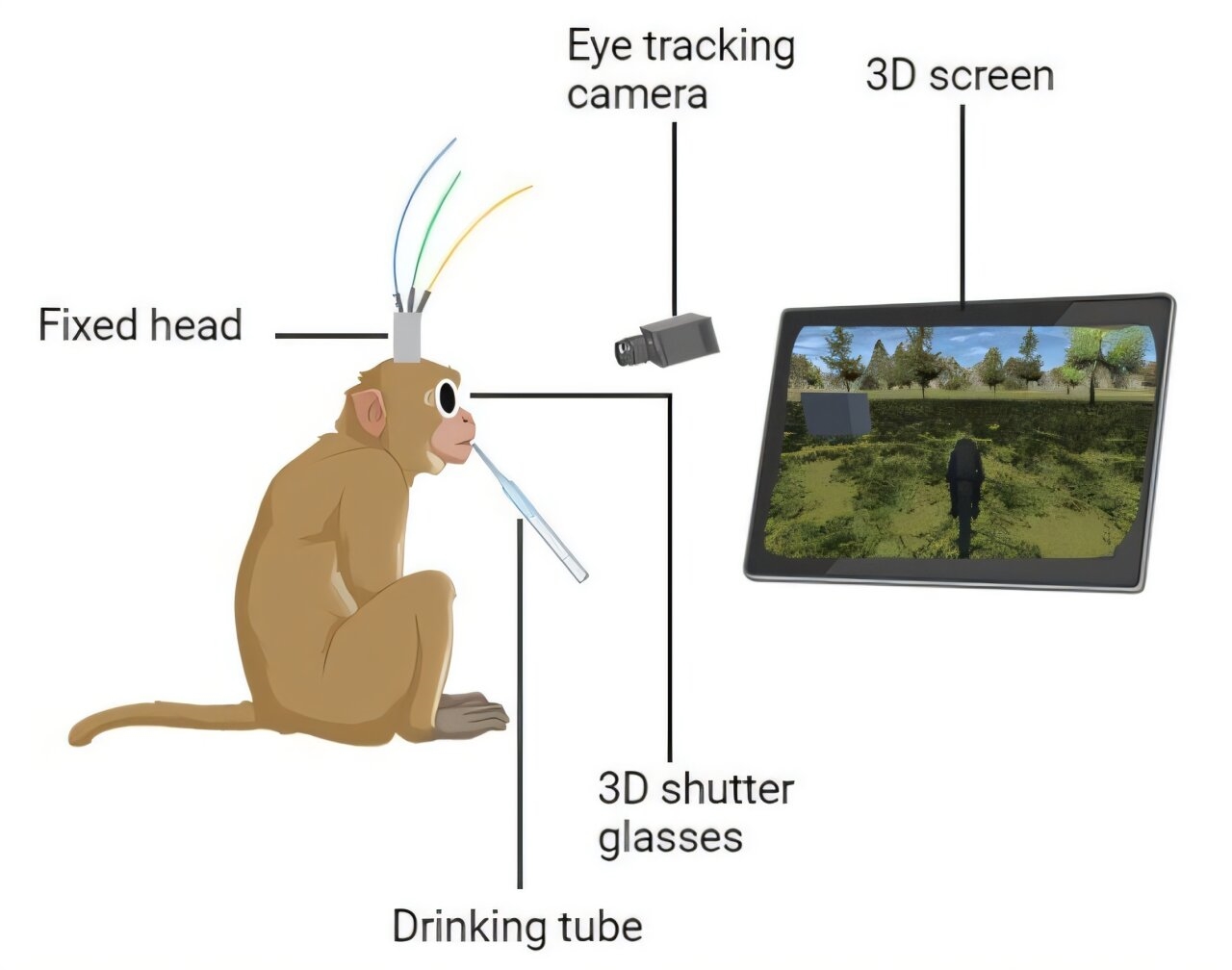
The entire process requires no physical movement, and is entirely driven by brain signals. The system can read the monkey's movement intentions in real-time, quickly converting them into movement commands within the virtual space, allowing them to explore the virtual scene smoothly.
Previous brain-computer interface experiments were mostly limited to completing simple instructions, such as controlling a robotic arm to grasp objects or performing a single action. This time is different; the monkeys can navigate continuously, autonomously change direction, and flexibly switch between multiple tasks, bringing them closer to real-world autonomous activity.
Researchers say this marks a shift for brain-computer interfaces, moving beyond simple laboratory demonstrations towards more practical applications. If this technology matures in the future, it could help people with limb paralysis regain mobility, control devices with their thoughts, and even communicate and act normally in the virtual world.
The experimental process was stable and reliable, and the monkeys quickly adapted to the mind-control method, becoming increasingly proficient in the virtual forest. This also proves that the brain can quickly adapt to external devices, naturally using the brain-computer interface as part of the body.
This breakthrough not only brings science fiction scenarios into reality but also opens up new space for medical rehabilitation and neuroscience research.