Zelim's ZOE Fall-Over-Board (FOB) AI Monitoring System Certified, Significantly Improving Maritime Rescue Success Rate
"Man overboard!" is one of the most alarming cries on a ship, often ending in tragedy. Now, Zelim, a maritime technology company, has officially certified its ZOE Fall-Over-Board (MOB) machine vision detection system, which is expected to significantly reduce the mortality rate of such accidents.
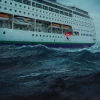
From small yachts to giant roll-on/roll-off container ships, the most terrifying alarm, second only to "fire" and "severe stern tube bearing failure," is "man overboard." In most real-world scenarios, once someone falls overboard, their chances of survival are slim unless it's a calm, bright day and someone happens to witness the fall or hear the splash. Even if someone witnesses it in time, it's only the beginning of emergency response – a whole person quickly becomes a fleeting "head" amidst the waves, while the ship continues to move forward, rapidly distancing itself.
According to traditional procedures, after a "man overboard" alarm is raised on board, at least one crew member will be designated to continuously monitor the person in the water, constantly pointing to their location to ensure uninterrupted visual tracking. Simultaneously, the captain and other crew members race against time to turn the ship around and initiate a rescue. This process is feasible on faster, more maneuverable boats, but in practice, the speed at which a head disappears in the waves is often surprising. On large passenger ferries or cargo ships in the North Sea, even stopping the ship can take several nautical miles, let alone turning back to the point of the fall. Therefore, many "man overboard" incidents ultimately turn into aimless searches for bodies, sometimes even the body cannot be found.
The ZOE system attempts to "buy time" at this critical juncture. It achieves this by deploying multiple multispectral sensing cameras around the ship, providing 24/7, 360-degree monitoring. These sensors consist of a combination of thermal imaging and high-definition visible light cameras, all connected to a recognition system based on computer vision and machine learning. Zelim has built a proprietary dataset of over 9.5 million labeled maritime targets to train algorithms to identify various objects at sea, especially people who have fallen overboard. With the cooperation of multi-source perception and algorithms, ZOE can complete detection the moment a person goes over the side and falls into the water, and achieve continuous automatic tracking, regardless of the time of day or weather conditions.
For "man overboard" rescue, "instant detection" is almost the dividing line between life and death. The article points out that once the initial detection is missed, the probability of successfully locating the person in the water drops sharply to about 20%, which is also the psychological reason why many crew members are reluctant to work alone in dangerous areas such as the forecastle: just one misstep could mean "a permanent farewell."
According to reports, on April 14, 2026, the ZOE system passed the official certification of Lloyd’s Register, complying with ISO 21195:2020 standards. During the 90-day certification test, the system’s actual detection rate reached 97%, higher than the minimum standard required by the relevant certification. Equally important, it triggers an average of only one false alarm per day during normal operation, which helps to improve safety without unduly disturbing crew members and navigation operations. Although this is not a mandatory requirement within the scope of certification, Zelim also conducted additional tests on ZOE to verify that it can not only identify adults, but also detect children and even infants falling into the water, further expanding the system’s applicability in passenger and cruise scenarios.
At a time when "man overboard" remains one of the most fatal emergencies at sea, ZOE, by combining multispectral sensing, machine vision, and large-scale maritime data training, provides ships with a new "automatic watch" tool, which is expected to win back survival opportunities that would otherwise be easily lost in the most critical seconds.