Nearly 70 Car Models Collectively Reduce Prices, New Energy Vehicles Down by an Average of 38,000 Yuan, "Selling at a Loss for Reputation" Becomes Normal
The price war in the automotive market continues to spread at the beginning of 2026, with nearly 70 models across the industry reducing prices collectively. New energy vehicles have seen an average price reduction of 38,000 yuan, further compressing automakers' profit margins after three years of price wars. The industry is now commonly experiencing "selling at a loss for reputation." At the 2026 Smart Electric Vehicle Development High-Level Forum, many industry executives bluntly stated that automakers currently struggle to achieve profitability solely through vehicle sales, and the entire industry is trapped in a systemic dilemma of "increased volume without increased revenue, and increased revenue without profit."
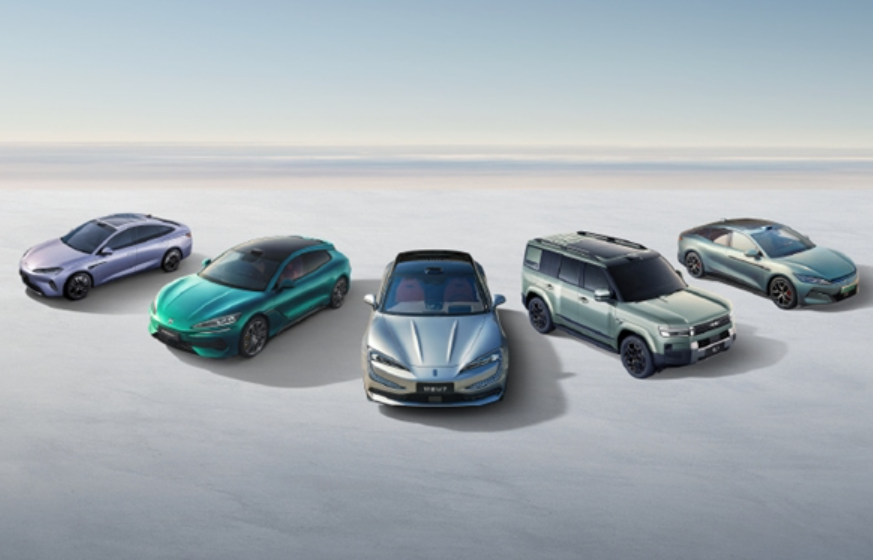
Data shows that from January to March 2026, the average price of new energy vehicles that reduced prices was 275,000 yuan, with an average price reduction of 38,000 yuan, a decrease of 13.7%.
The average price of fuel vehicles that reduced prices was 258,000 yuan, with an average price reduction of 37,000 yuan, a decrease of 14.3%.
Luxury brands and joint ventures have offered significant discounts, forcing independent brands to follow suit, leading to continued intense market competition.
Industry profit data is even more severe. In January-February 2026, the profit margin for the automotive industry was only 2.9%, a significant drop from 8% in 2017, and far lower than the 39.4% profit margin for non-ferrous metals and approximately 30% for the oil industry during the same period.
The profit distribution within the industrial chain is severely imbalanced, with vehicle manufacturers being the segment experiencing the most squeezed profits.
Li Bin, founder of NIO, stated that battery and chip costs now account for more than 50% of the cost of smart electric vehicles. Coupled with the accelerated iteration of core components, automakers face enormous supply chain pressure and difficulty controlling supply and demand balance.
This profit imbalance is particularly evident between upstream and downstream companies.
In the power battery industry, CATL's net profit has grown rapidly for five consecutive years, from 15.9 billion yuan in 2021 to 72.2 billion yuan in 2025, with a compound growth rate of as high as 66.9%.
In stark contrast, even BYD, a leading domestic vehicle manufacturer in terms of revenue scale, has struggled to escape the trend of "increasing volume and decreasing profit."
Faced with a profit dilemma, the industry is actively seeking breakthroughs.
Lu Fang, Chairman of Avatr, pointed out that improving quality and reducing costs internally, and optimizing product structure externally, are key to automakers achieving self-sufficiency.
Companies need to shift towards high-quality development, abandon simple scale expansion, and gradually emerge from the profit trough through technological innovation, supply chain optimization, and global layout.