Intel's Foundry Equipment Orders Surge 50% Year-on-Year, Supply Chain Prepares for Major Clients
Intel has significantly increased its orders for semiconductor production equipment, up approximately 50% compared to the same period last year, indicating an accelerated expansion of its foundry capacity. While Intel Foundry Services hasn't officially announced new major client signings, this aggressive capital expenditure is seen as a signal of strong confidence in future orders.
Reports indicate that industry observers generally believe that CEO Lip-Bu Tan, who also leads Intel Foundry Services, would not aggressively expand capacity without firm customer commitments. UBS previously predicted a new round of significant foundry contracts for Intel this fall, and the recent surge in equipment orders is viewed as the supply chain preparing for the mass production of new client orders.
According to Taiwanese media outlets such as Jihon, the companies involved in this round of expansion span numerous links in the semiconductor manufacturing chain, both front-end and back-end. The most attention is focused on ASML, the supplier of extreme ultraviolet (EUV) lithography machines, but the real backbone of the production line is the large number of diverse supporting equipment and consumables suppliers. For example, KINK provides wafer fabs with inspection equipment and laser processing tools, while E&R Engineering supplies diamond grinding wheels used for polishing and planarizing wafer surfaces – both are key components of Intel’s new equipment pull-in.
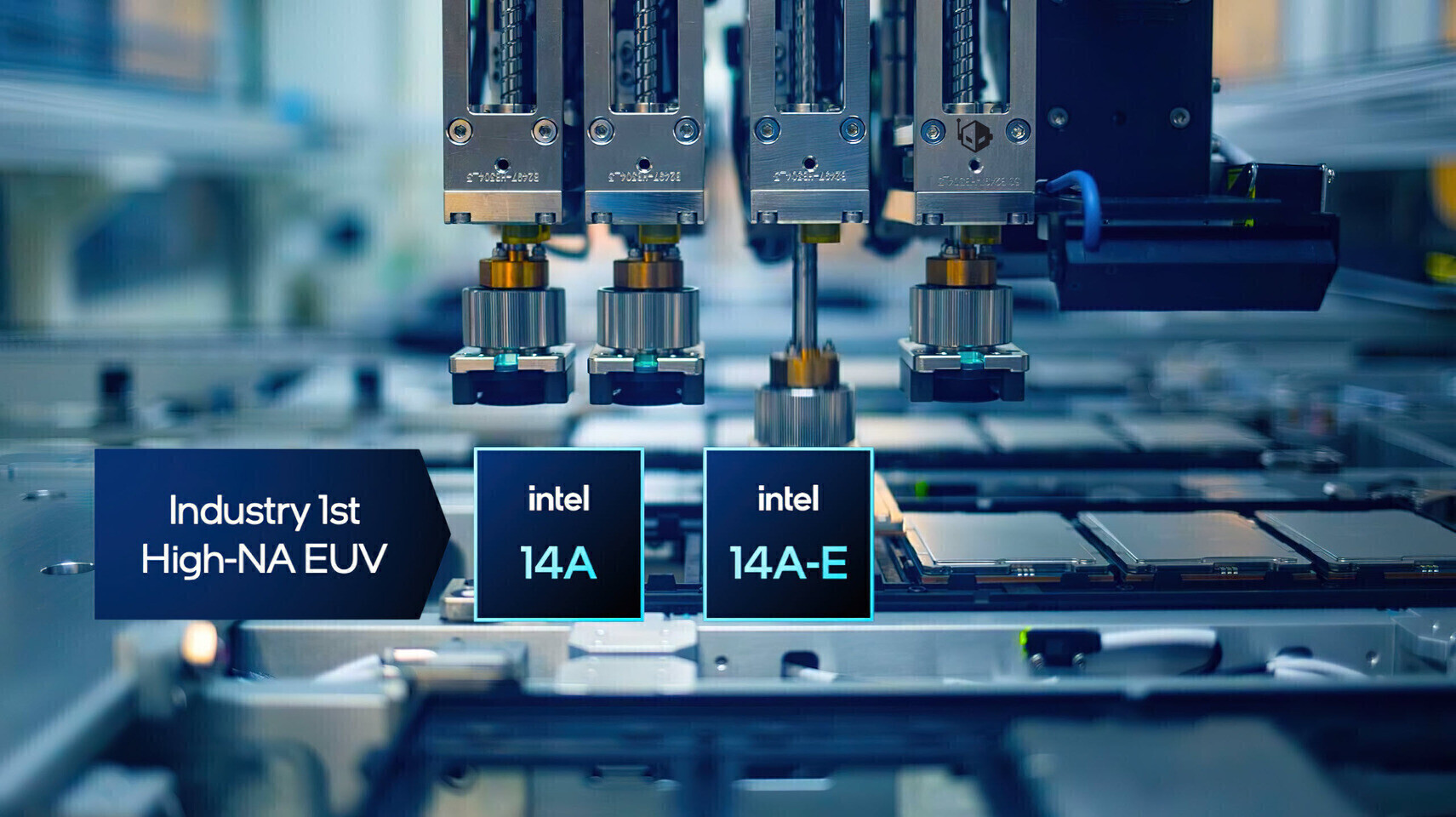
Modern semiconductor factories are far more complex than simply purchasing a few EUV exposure machines. Their production systems consist of numerous processes, including chemical processing, inspection, metrology, and surface treatment, each requiring dedicated equipment. Intel is already one of ASML’s major customers for High-NA EUV scanners, which will support the advancement of its 14A process node. At the same time, Intel needs to continuously import and upgrade a large amount of process equipment for the 18A, 18A-P, and 18A-PT nodes, while simultaneously increasing capacity for the 14A node to form a complete suite of advanced processes.
There have been numerous rumors that major chip design companies such as Apple, AMD, NVIDIA, Google, and Broadcom are evaluating Intel Foundry Services and its advanced packaging capabilities for use in their high-end product lines. Discussions have centered on Intel’s 18A, 18A-P, 18A-PT process nodes, as well as the upcoming 14A node, which are seen as alternative options for these potential customers in terms of high performance, low power consumption, and process diversity.
Specifically, sources say Apple is likely to shift some of its self-designed Apple Silicon notebook processors to Intel’s 18A-P node for production starting in 2027, to diversify its supply chain and differentiate its process roadmap. In addition, Google is reportedly considering using Intel’s EMIB and Foveros 3D stacking technologies to provide packaging and integration services for some of its TPU dedicated accelerator chips, to improve system-level bandwidth and interconnection efficiency.
Overall, Intel’s significant investment in foundry equipment demonstrates its determination to deliver on its previous promise of “catching up” on advanced processes such as 18A, and its hope to secure orders from leading customers such as Apple, AMD, NVIDIA, Google, and Broadcom in the high-end computing and artificial intelligence chip markets through 14A and advanced packaging technologies. Industry observers generally believe that if relevant foundry contracts are officially signed by the end of this year, Intel’s 50% increase in equipment orders will be a key prelude to its transformation into an “open foundry platform.”