Unveiling Apple's New CEO's Rise to Power: How a Nice Guy Reached the Peak?
On April 21st, the Wall Street Journal published an article detailing how Apple's new CEO, John Ternus, steadily climbed to the top. The article states that Ternus is decisive, deeply understands Apple's corporate culture, and knows how to get projects off the ground. Moreover, he is known as a genuinely nice person and has not made enemies within the company.
Apple's New CEO, John Ternus
Here is the full text of the article:
The Mac mini was long overdue for an update, and Ternus wanted to avoid going through design chief Jony Ive again.
Years ago, before Ternus was chosen to lead one of the world’s largest and most influential companies, he was in charge of Apple’s Mac hardware division. This was just one of many positions he held as he steadily climbed the ranks and learned to navigate Apple’s peculiar internal political landscape.
At the time, the AI revolution that would later make the Mac mini a hit was still years away, but software developers already needed a new version of the Mac mini with an updated chip. However, redesigning the Mac mini’s casing could involve the industrial design department led by Ive, potentially delaying the project.
Decisive Decision-Making
People familiar with the matter said Ternus approved the update after determining that the upgrade didn’t require a major exterior overhaul. He didn’t focus much on the product’s profitability potential, but rather on its value to Apple’s overall ecosystem. This, sources say, is just one of many examples demonstrating his decisive decision-making, deep understanding of Apple’s culture and product logic, and ability to get things done within the company.
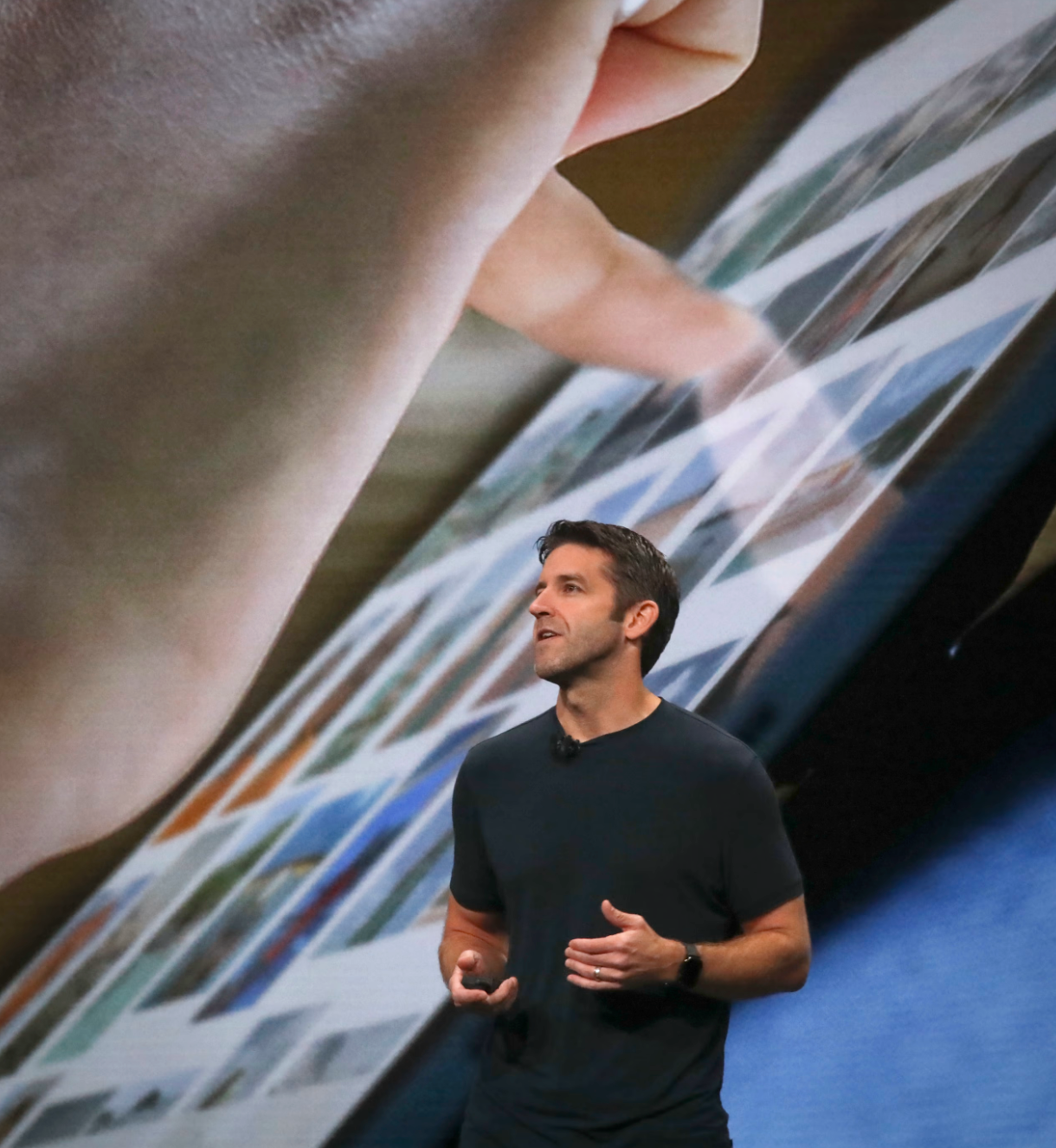
Ternus at WWDC in 2017
These qualities propelled Ternus to the company’s highest position during his 25-year career at Apple. Apple announced on Monday that he will officially take over as CEO on September 1st, instantly making him one of the most watched corporate leaders in the world. Longtime Apple CEO Tim Cook will become executive chairman.
Ternus is succeeding two corporate legends. Steve Jobs developed the most profitable product in history: the iPhone. Cook, meanwhile, unlocked trillions of dollars in value from the smartphone through the supply chain he built and the services and peripherals he launched.
Similar to when Cook succeeded Jobs, Ternus is a relatively unknown face to the outside world. If Jobs was a product visionary and Cook a supply chain master, Ternus is a hardware expert somewhere in between.
Ternus has a mechanical engineering background and most recently led Apple’s hardware engineering division for all products. He is taking the reins at a critical moment in Apple’s history. After launching a blockbuster new iPhone last fall, Apple’s iPhone sales are at their peak. However, it is still struggling to find its next hit product.
Apple must also reinvent itself in the age of AI. Over the past few decades, Apple has defined how people interact with devices—desktop, portable, and computing. But now, in the competition for the next generation of computing platforms, Apple is lagging behind competitors who are taking the lead with chatbots that can converse like humans. In contrast, Apple’s own Siri seems quite outdated, and is expected to receive an AI “brain transplant” upgrade this year.
A Nice Guy
Ask any Apple employee what they think of Ternus, and they will almost universally give the same answer: he is a very nice person. People who have worked with Ternus describe him as an excellent collaborator who inspires strong loyalty in his subordinates. He is calm and steady, and has made almost no enemies in a company previously known for some difficult and assertive figures—possibly not even one.
Employees also praise his ability to drive things forward in meetings, keeping discussions focused on the key points. He also tends to communicate directly with grassroots employees who have more detailed product knowledge, rather than dealing with management who have less specific information.
Ternus as a senior in college
Outside of work, Ternus enjoys racing his Porsche on tracks like Laguna Seca in California. People familiar with the matter say he can lap in under 1 minute and 40 seconds, which is considered quite good for an amateur driver.
Ternus is tall and slender, maintaining the physique he had as a swimmer in college. He attended the University of Pennsylvania. His former teammate, Andrew Berkowitz, recalls, “Ternus is a really good guy.” He also mentioned that the team would make freshmen run along Locust Walk in their swim trunks every winter as a hazing tradition.
Ternus graduated in 1997, worked for four years at a virtual reality startup, and joined Apple in 2001.
Greatest Achievement
Ten years ago, Ternus was one of the key executives responsible for developing AirPods. Today, AirPods are an essential accessory for the iPhone, but the development of the first-generation product was notorious for fierce infighting within Apple. At the time, several of Ternus’s peers argued about how to keep the wireless earbuds connected via Bluetooth. One person was later forced to leave, and another was transferred to China. Meanwhile, Ternus, who was under 40 at the time, successfully stayed out of the fray.
One of Ternus’s biggest achievements has been pushing Apple’s Mac computers to adopt self-designed chips. These chips outperform the Intel processors Apple previously used in terms of speed and heat dissipation. However, most of the credit for this transition is usually given to Johny Srouji, Apple’s head of hardware technology, who will take over and expand Ternus’s current role leading hardware engineering.
Ternus
Ternus’s “diplomatic” skills and long tenure at Apple will be key advantages in his new position. Apple has a unique organizational structure. Other large companies typically have general managers responsible for their respective business lines, while Apple is organized by function. Therefore, an insider familiar with the workings of all departments will be at an advantage as CEO.
According to people familiar with Ternus’s performance, he is not known for taking bold risks. This leaves an open question: does he have product vision, a quality critics have lamented since Jobs’s death?
Ternus has become one of the guardians of Apple’s corporate culture. He has led internal speeches to boost employee morale and reminded everyone not to discuss upcoming products, continuing the tradition of secrecy advocated by Jobs.
CEO Signs
For months, Ternus has been seen as Cook’s most likely successor, reflecting Apple’s efforts to engineer a smooth transition of power and avoid the chaotic transitions experienced by some other American legacy companies in recent years.
Apple has recently taken several steps to raise his public profile. When Apple unveiled its 2025 device lineup, it was Ternus who showcased the new iPhone Air model. Shortly after the device’s launch, he was sent to London to greet customers on the first day of sales at Apple’s flagship store in the UK. Last month, he also launched the company’s latest product: the affordable MacBook Neo laptop.
A few weeks ago, Apple held a 50th-anniversary celebration at New York’s Grand Central Terminal, with Cook and Ternus as the starring executives.