Apple's Leadership Change: Not Searching for Another Jobs
At the end of April, it's a good time for a CEO change. Apple announced on April 21st, Beijing time, after the US stock market closed, that Tim Cook will transition to Executive Chairman, and John Ternus, VP of Hardware Engineering, will take over as CEO on September 1st. This decision was approved by the board and is the result of long-term succession planning.
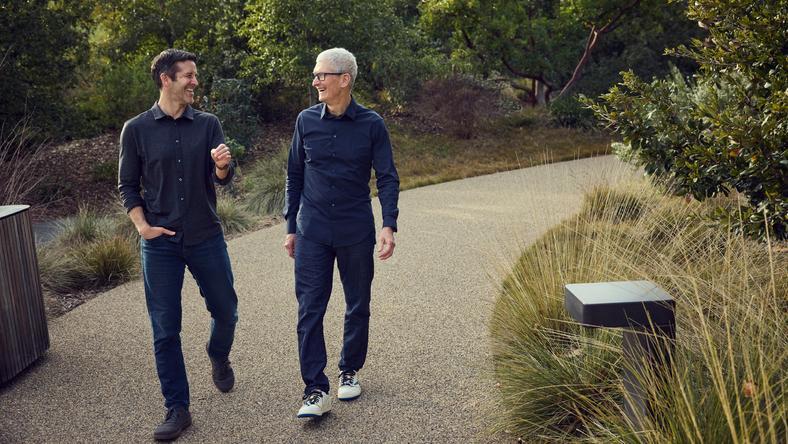
Following the news, Apple's stock price fell 0.49% in after-hours trading, with a relatively mild market reaction. As of the previous trading day, Apple's market capitalization was approximately $4 trillion. Cook will have led Apple for about 15 years, from taking over as CEO in 2011 to handing over the reins in September 2026. During these 15 years, Apple's market capitalization has grown approximately 11-fold under Cook's leadership. Cook will continue to serve as CEO until the summer to ensure a smooth transition.
Apple stated that after transitioning to Executive Chairman, Cook will assist with certain company matters, including liaising with decision-makers worldwide. In the official press release, Cook stated that serving as Apple CEO was the greatest honor of his life and that he will work closely with John Ternus in his new role as Executive Chairman.
Cook has brought Apple into a new phase, having just experienced its highest-revenue quarter in its 50-year history. The challenge for Apple now is finding the next wave of growth. From this perspective, John Ternus's appointment isn't about Apple searching for another Jobs, but rather finding a CEO more suitable for the post-Cook era.
No Firefighter Needed
Over the past decade, several significant CEO changes have occurred in the tech industry, many within the same timeframe. In 2014, Nadella replaced Ballmer as CEO of Microsoft, initiating a decade of rapid growth in Microsoft's market capitalization. In 2017, as Verizon's acquisition of Yahoo neared completion, Yahoo announced Meyer's departure after the deal closed. In 2021, Pat Gelsinger completed a comprehensive restructuring and power transition of core management.
The reason is straightforward: most tech companies release their first-quarter financial reports around April, which is a point to report operating performance to the capital market and a window for the board to adjust power structures and stabilize external expectations. During poor performance, it's a time to respond to pressure; during stable performance, it's suitable for a "peaceful handover" to convey strategic continuity to the market.
Apple's financial results are not announced according to the calendar year. Its first fiscal quarter corresponds to the year-end sales season, with iPhone launches and the Christmas season driving revenue. Therefore, the second fiscal quarter is often closer to the point where the company completes its annual strategic calibration. On August 24, 2011, Cook took over as CEO, following Steve Jobs's resignation due to health reasons and his strong recommendation to the board that Cook succeed him.
Importantly, this was during Apple's best performance. Apple's first-quarter operating cash flow reached a record $53.9 billion. Apple mentioned in its press release that during Cook's tenure, the company's annual revenue has grown from $108 billion in fiscal year 2011 to over $416 billion in fiscal year 2025. Service business revenue has also exceeded $100 billion, equivalent to the scale of a Fortune 50 company on its own.
In other words, Apple doesn't need a firefighter at this time; it's an efficiently operating "money-printing machine." The difficulty for the successor lies in creating new growth.
Why John Ternus?
Looking at his resume, John Ternus's promotion wasn't sudden.
Born in 1975, he is 50 years old this year, 16 years younger than Cook, who was born in 1959, and holds a Bachelor of Science in Mechanical Engineering from the University of Pennsylvania. His graduation design project was developing a mechanical feeding arm that could be operated by quadriplegic patients through head movements. He initially worked as a mechanical engineer at a virtual reality startup and joined Apple in 2001 as a member of the product design team, participating in the development of early Apple Cinema Displays.
In 2013, he became VP of Hardware Engineering, subsequently overseeing the development of AirPods, Mac, and iPad. He began leading iPhone hardware in 2020 and was promoted to Senior VP in 2021, becoming a member of the executive team. He was then referred to by the media as Apple's youngest executive and subsequently presented hardware at multiple WWDC conferences, becoming a frequent figure at Apple events.
However, what truly made him a frontrunner for the succession was the businesses he managed, which directly cover approximately 80% of Apple's revenue sources, and he has been highly successful in doing so. He doesn't just make products; he can also turn Apple's advantages into growth, and that's where John Ternus's value lies.
A typical example is the redefinition of the iPhone product line. During a period of rising component prices, the base model iPhone still achieved parameter upgrades with no price increase, and this generation achieved Apple's highest quarterly shipment volume ever.
Omdia Senior Analyst Sanyam Chaurasia stated that the base model iPhone 17's market performance exceeded expectations. At the same time, the Pro series gained further momentum with increased capacity during the quarter, while the iPhone Air served as a product showcase window, with its thin and light design helping retail marketing and reinforcing the high-end image of the Pro series.
Another representative case is the current popular MacBook Neo.
[Image source: Apple website]
This was also launched under his leadership. From a product perspective, the biggest difference from previous PCs is that Neo adopts an iPhone-level chip, the A18 Pro. More disruptively, it helped Apple enter a market below $600, which it previously had almost no share of but accounts for over 40% of laptop shipments.
Omdia analyst Kieren Jessop said this is a market of approximately 90 million units shipped annually, long dominated by Lenovo, HP, and Dell. The mainstream configuration in this price range is typically 8GB of memory and 512GB of storage, while Neo is equipped with 8GB of memory and 256GB of storage, supports 16 hours of battery life, and weighs only about 1.23 kg. Kieren Jessop believes this is a continuation of Apple's n-1 strategy, where a product with a list price of $599 may drop to $499 after two years, thereby continuously expanding Apple's market coverage.
The importance of this isn't that Apple has launched another new computer, but that it proves Apple is no longer relying solely on high-end premiums to make money; it can penetrate broader price bands through vertical integration capabilities. This will put pressure on the entire PC industry.
In February 2026, Omdia predicted that component costs for Windows OEMs will increase by $90 to $165 per unit, driving up the average laptop selling price. Calculating with an average selling price of $850 and an industry average gross margin of about 10%, manufacturers would need to raise product prices to over $1000 to maintain profitability, and the pressure on low-end products is imaginable. But this isn't the case for Apple, as its first-quarter product gross margin was 40.7%, and vertical integration improves cost efficiency, allowing it to maintain viable profitability at a price of $599.
Neo will also have an impact on the education market, providing a second choice to Google Chrome in the K12 market. Kieren Jessop said that for SMB (small and medium-sized business) markets and emerging markets, Neo is the first Mac that is affordable for mainstream buyers. A Beijing Apple Store employee told Huxiu that Neo has been popular among students and young women due to its colors. This aligns with analysts' observations.
John Ternus has already demonstrated the ability to turn existing advantages into expansion into new price bands, which are the basic qualities of the next CEO.
Best Opportunity vs. Biggest Challenge
What lies before John Ternus is the best performance. First-quarter operating cash flow reached a record $53.9 billion. Apple also stated in its press release that during Cook's tenure, the company's annual revenue has grown from $108 billion in fiscal year 2011 to over $416 billion in fiscal year 2025. Its most valued services business revenue has exceeded $100 billion, which is the annual revenue of a Fortune 50 company.
Furthermore, a March 2026 market research report by AppMagic predicts that by the end of 2026, Apple is expected to earn over $1 billion from competitors by charging commissions to companies like OpenAI in the AI field. This revenue will further increase if Apple releases a fully upgraded Siri assistant later this year.
Similar revenue streams include Google's payments for the default search engine, AppStore search advertising, Apple TV+ advertising revenue sharing, financial service fees, and the Apple Maps advertising slots announced in March 2026. This company, which recently celebrated its 50th anniversary, may be hinting at a generational change with its personnel changes.
Just a day before, at Huawei's spring new product launch, Yu Chengdong benchmarked all of Apple's comparable products against Apple, either larger in size or stronger in performance. In particular, imaging technology has become the core output point for the Android camp to dominate Apple. But Apple, relying solely on its supply chain management capabilities, forced the Android camp to raise prices, and Yu Chengdong had to announce possible price increases during the new product launch.
Therefore, at this time, Apple's defense is in place, and it needs someone who can find its next blockbuster product. He doesn't need to be a Jobs-like figure, but he needs to understand the ropes.
[Image source: Apple website]
According to foreign media citing Apple insiders' evaluations of John Ternus, he is considered a very good person who can efficiently complete tasks and maintain focus in meetings, and he also likes to communicate directly with grassroots employees who are more familiar with the products. However, he is not known for being bold and taking risks, and reminds employees not to discuss upcoming company products.
For John Ternus, simply being a good person may not be enough. He is taking over an Apple that may be difficult to surpass expectations. He faces several problems that must be solved:
Can Siri and AI capabilities truly make up for shortcomings? After Vision Pro, can Apple find a new hardware entry point? After the failure of the car project, how can Apple redefine the next generation of terminals? How to continue maintaining entry advantages and profit structures when global regulation is tightening platform power?
These problems cannot be solved by supply chain management.
Apple's personnel changes in recent years have also been paving the way for this day.
In July 2025, Jeff Williams, who was seen by outsiders as Cook's successor, announced his resignation as Chief Operating Officer. Although his style is extremely similar to Cook's, he is not a mid-generation force, born in 1963. In December of the same year, Alan Dye, former head of human-machine interface design, joined Meta, accelerating the adjustment of Apple's management team.
By March 2026, Apple's website showed management changes, with partial changes in the legal and design teams. This was seen as Cook building a regularized operating model for Apple, minimizing the company's dependence on individual genius figures.
At the same time as John Ternus takes over as CEO, Apple also announced that Johny Srouji, former Senior VP of Hardware Technology, will be appointed Chief Hardware Officer, a position newly created by Apple. The appointment is effective immediately, and he will take over the Hardware Engineering team and the Hardware Technology department.
Johny Srouji joined Apple in 2008 and led the development of Apple's first self-designed system-on-a-chip, the A4. Since then, he has continued to drive breakthroughs in key technologies such as Apple chips, batteries, cameras, storage controllers, sensors, displays, and cellular network modems.
The biggest difference from the Jobs era is that Apple is no longer betting on a genius to reinvent the world. John Ternus's rise isn't about Apple finding the next Jobs, but about Apple confirming one thing: the key to success in the post-Cook era is who can reorganize Apple's existing technology, brand, ecosystem, and supply chain into the next generation of product entry points.
This is just the beginning.