Apple's New CEO John Ternus Faces a Decisive Challenge: Reshaping the Company's AI Strategy
Despite largely remaining on the sidelines during the AI boom, Apple still dominates the consumer electronics market with a $4 trillion market capitalization. However, investors won't remain patient forever, and they are looking to new CEO John Ternus to present a clearer strategy for the company in the world's hottest sector.
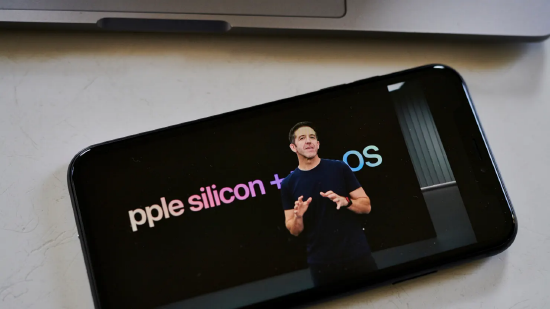
Apple announced on Monday that Tim Cook’s 15-year tenure as CEO will end on September 1st. Ternus, who has long led Apple’s hardware business, will take the helm, becoming Apple’s second leader since Steve Jobs stepped down in 2011. Jobs passed away from cancer less than two months after his resignation.
As Cook steps down, Apple faces multiple challenges: geopolitical conflicts are complicating supply chains, and unprecedented demand from AI development is driving up memory prices. But for Ternus, the most critical task of the new position is undoubtedly to push the company to deeply enter the field of artificial intelligence – where Apple is currently lagging behind many tech giants of similar size.
To date, Apple’s AI strategy has been to avoid large capital expenditures, while Microsoft, Google, Amazon, and Meta collectively invest hundreds of billions of dollars annually in building data centers and procuring expensive AI chips. In the development of foundational large models, Apple has also chosen to avoid it, instead relying on Google Gemini to support its AI functions, including a major Siri upgrade expected to be launched later this year.
In 2024, Apple launched “Apple Intelligence,” covering functions such as image generation, text rewriting, and notification summaries, and integrated OpenAI’s ChatGPT. Market response has been mixed, but iPhone sales remain strong, and users can also get a wealth of AI choices on their devices – albeit mostly from other companies.
ChatGPT and Anthropic’s Claude are currently the two most popular free apps on the iOS platform, with Gemini ranking fourth and Meta AI eighth. At the same time, Apple is betting that in the next few years, a large amount of computing tasks will be completed on the chips built into mobile phones, which aligns with its strengths – Apple has been integrating AI-capable chips into its devices since 2017.
“Choosing John Ternus, who comes from a hardware background, may indicate that Apple still believes that the future of AI will rely on highly integrated devices, rather than just software,” said Timothy Hubbard, assistant professor of management at the University of Notre Dame.
Currently, iPhone sales continue to bring strong growth to Apple. Last quarter, iPhone revenue increased 23% year-on-year to $85.3 billion, which the company attributed to strong sales of the iPhone 17 series released in September.
Cook described iPhone demand as “amazing” at the time. Apple is scheduled to release its second-quarter earnings report next week, where Cook will still serve as CEO, but investors will throw a lot of questions at Ternus, focusing on his plans for the future direction of Apple.
AI hardware is clearly the direction of market development, and its forms may include wearable devices, robots, spatial computing, or new products that Apple has not yet announced. In January of this year, reports stated that Apple will accelerate the development of three Siri-based AI wearable devices: smart glasses, a smart pendant, and AirPods with cameras.
Apple also plans to launch a foldable-screen phone, which Ben Bajarin, CEO of a creative strategy firm, called “the most important hardware development in recent years.”
“I think the biggest question is what comes after the iPhone,” Bajarin said in a March interview with CNBC. “Existing categories are maturing, no one knows what the next generation of flagship devices will be, but it’s safe to say it will be some kind of AI hardware.”
AI and Service Business
The 50-year-old Ternus also needs to advance the AI layout in Apple’s service business. Apple’s service revenue relies on iPhone users subscribing to AppleCare, iCloud, Apple TV+, and using Apple Pay. Apple can receive a share when users upgrade ChatGPT, Claude, and other generative AI paid services.
Forrest Research analyst Dipanjan Chatterjee said that in the next few years, “Apple will face turbulence because the way consumers interact with technology has changed dramatically,” especially with the popularization of generative AI.
Ternus also needs to decide whether Apple will continue to prioritize privacy or shift towards AI-driven personalization. For Cook, a user data strategy centered on privacy has always been a key differentiator for Apple from tech giants like Meta and Google – the latter being adept at reaching users through targeted advertising.
Gene Munster of Deepwater Asset Management said in a CNBC interview on Monday that his firm recently increased its Apple stock holdings due to the prospects for “personalized AI” at Apple.
“Apple has an opportunity to tell investors a very compelling story, proving that it can win this race,” Munster said.
In the press release announcing the CEO handover on Monday, Apple did not mention AI at all. The document focused on Ternus’s 25-year career at Apple and his key role in “launching new product lines such as the iPad and AirPods, and iterating on generations of iPhone, Mac, and Apple Watch.”
But it is clear that when the Ternus era begins in just over four months, AI must become a core issue. Hubbard of the University of Notre Dame said that Apple needs to return to its roots, at least in terms of innovation.
“The core advantage that established Apple’s dominance – rapid innovation – is where Apple started, and perhaps where the company needs to return,” he said.