Volkswagen Announces Voice AI Integration in China Models Starting in Second Half of This Year
German automotive giant Volkswagen has announced it will equip its vehicles for the Chinese market with a voice-controlled artificial intelligence system. Volkswagen stated on Tuesday that all models based on its China-specific in-car system, starting in the second half of this year, will feature an intelligent voice AI assistant, allowing users to control various vehicle functions through voice commands.
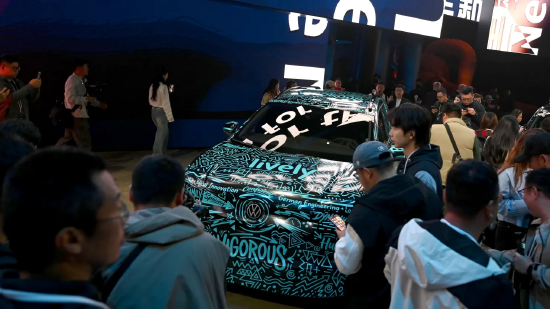
On April 8, 2026, the ID.Aura T6 prototype car was displayed at the Volkswagen Brand Night event in Beijing, China. Volkswagen plans to launch over 30 new hybrid and electric models in China by 2029.
“A car should be like a companion,” said Thomas Ulbrich, Chief Technology Officer of Volkswagen China, in an interview with CNBC reporter Yuna Kim.
He stated that Volkswagen’s in-car AI assistant will integrate technologies from companies such as Tencent, Alibaba, and Baidu, creating an intelligent tool with “personality” and the ability to anticipate driver needs.
The artificial intelligence utilizes a large language model trained locally, with all computations performed on the vehicle’s onboard computer, eliminating the need for cloud reliance.
Volkswagen unveiled four models in Beijing on Tuesday, including the ID.UNYX 09, which was jointly developed by Volkswagen and new energy vehicle company Xpeng Motors over two years.
This move is part of Volkswagen’s strategy to regain lost market share against the backdrop of China’s rapid transition from gasoline-powered vehicles to electric vehicles.
In recent years, Volkswagen has invested heavily in China, taking stakes in Xpeng Motors and automotive chip manufacturer Horizon Robotics.
Relying on these partnerships, the German automaker will no longer use Nvidia chips in its vehicles in the Chinese market. Volkswagen plans to equip an electric SUV, scheduled for delivery before the end of June, with Xpeng Motors’ Turing chip, while a high-end in-car chip project in collaboration with Horizon Robotics is still under development.
Volkswagen also announced on Tuesday that it will adopt agent AI technology starting next year to create a unified driving assistance and cabin control system.
Last November, the German automaker announced that its R&D center in Hefei can independently develop and approve technology for models in the Chinese market, shortening product launch cycles.
A report released by the German Chamber of Commerce in China on Tuesday shows that German-funded automotive companies in China have significantly increased their R&D investment in China over the past two years, aiming to serve both local and global markets.
The report states that nearly 80% of surveyed automotive companies reported lower costs compared to R&D in Germany after localizing R&D in China over the past two years; approximately 43% of surveyed companies said their innovation speed increased by more than 40%.