CATL Launches Shenxing, Kirin, Xiaoyao, and Sodium Batteries: Pure Electric Range Increased to 600km
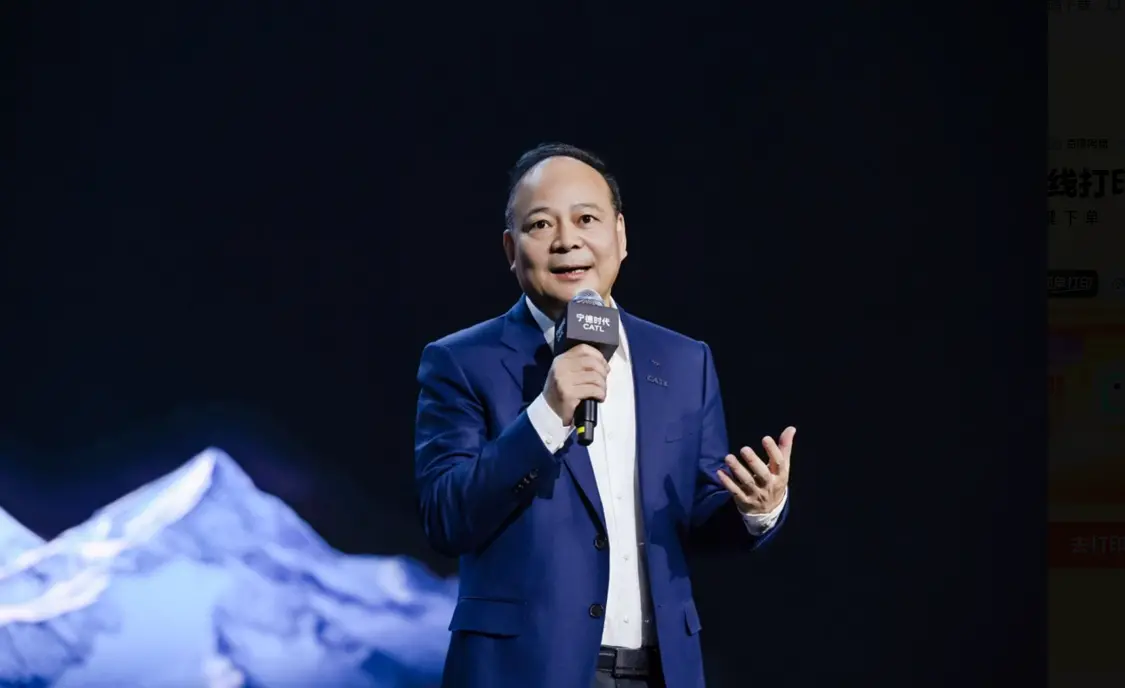
On April 22nd, CATL held its Super Technology Day in Beijing yesterday, launching the third-generation Shenxing supercharge battery, the third-generation Kirin battery, the Kirin solid-state battery, the second-generation Xiaoyao super-extended range battery, the sodium battery, and a plan for an integrated supercharge and battery swap network covering all scenarios.
The third-generation Shenxing supercharge battery achieves an equivalent 10C and peak 15C charging rate, taking 1 minute to charge from 10% to 35% SOC, 3 minutes and 44 seconds from 10% to 80% SOC, and 6 minutes and 27 seconds from 10% to 98% SOC. Under -30°C conditions, charging from 20% to 98% SOC takes approximately 9 minutes. Combined with the battery's self-heating technology and the integrated supercharge network, supercharging at low temperatures is not limited by the charging pile. Capacity retention exceeds 90% after 1000 cycles. Compatibility between supercharging and long lifespan is achieved through three key methods: reducing heat generation, strengthening heat dissipation, and improving precision.
The third-generation Kirin battery cell has an energy density of 280Wh/kg and is equipped with 10C supercharging as standard, enabling a range of 1000km. The battery pack weighs 625kg, a reduction of 255kg and a space saving of 112L compared to comparable lithium iron phosphate models. Energy consumption per 100km is reduced by more than 6%, 0-100km/h acceleration is shortened by approximately 0.6 seconds, elk test passing speed is increased by 8%, and 100km/h braking distance is shortened by approximately 1.44 meters. Instantaneous power reaches 3MW, and "thermal-electric separation" technology is adopted, designing independent sealing and exhaust channels for each cell to achieve directional discharge of high-temperature smoke in the event of thermal runaway.
The Kirin solid-state battery cell has an energy density of 350Wh/kg and a volumetric energy density of 760Wh/L, setting a record for mass-produced batteries. Sedan range can reach 1500km, and full-size SUV range exceeds 1000km, with the battery pack weight controlled within 650kg. This technology has already completed its first flight verification on a 4-ton commercial aircraft and will soon be verified on commercial aircraft weighing over 8 tons. The electrolyte is solid-state, achieving "no liquid leakage, no liquid flammability."
The second-generation Xiaoyao super-extended range battery, in its lithium iron phosphate version, offers a pure electric range of 500km, meeting the needs of "charging once a week." The new super-extended range system has an energy density of 230Wh/kg, with a range increased by more than 15% compared to single lithium iron phosphate batteries. The ternary version offers a pure electric range of 600km and a comprehensive range exceeding 2000km. Maximum instantaneous power is 1.5MW, with 1.2MW still output at 20% SOC. The bulletproof-grade bottom coating can withstand an impact of 1500 joules (10 times the national standard), and performance remains unaffected after continuous immersion in 2 meters of water for over 200 hours.
The sodium battery has overcome four major challenges: extreme water control, hard carbon gas generation, aluminum foil adhesion, and mass production of self-generated negative electrodes, and will be mass-produced on a large scale by the end of 2026.
In terms of energy replenishment, CATL has launched an integrated supercharge and battery swap station, sharing transformer substations and charging modules. The comprehensive power loss rate is reduced by more than 13 percentage points compared to charging stations with dedicated energy storage, equipment reuse rate exceeds 85%, and the service capacity per parking space is three times that of dedicated energy storage charging stations. The solid-state investment cost of the supercharging section is only 1/5 of the latter. The Chocolate battery swap block 26 battery has been released, with the first batch being 75kWh versions, compatible with B to C-class 800V vehicles, and will cover a complete matrix from A0 to C-class. The plan is to build 4000 integrated supercharge and battery swap stations by the end of 2026, covering nearly 190 cities and a 12 longitudinal and 11 transverse highway network. Initial partners include Changan, Chery, GAC, Seres, SAIC-GM-Wuling, and BAIC, with a plan to build over 100,000 shared energy replenishment infrastructure facilities by the end of 2028.