"Rural 'Dahuang' Becomes a Top Predator Abroad, Even Hunting Kangaroos"
Recently, netizens in Australia discovered a wild animal resembling the Chinese rural dog "Dahuang," sparking attention. This animal is actually the Australian dingo, retaining Dahuang's turmeric fur and erect ears, with a nimble physique, strong endurance, and a habit of cooperative hunting. Where did they originally come from?
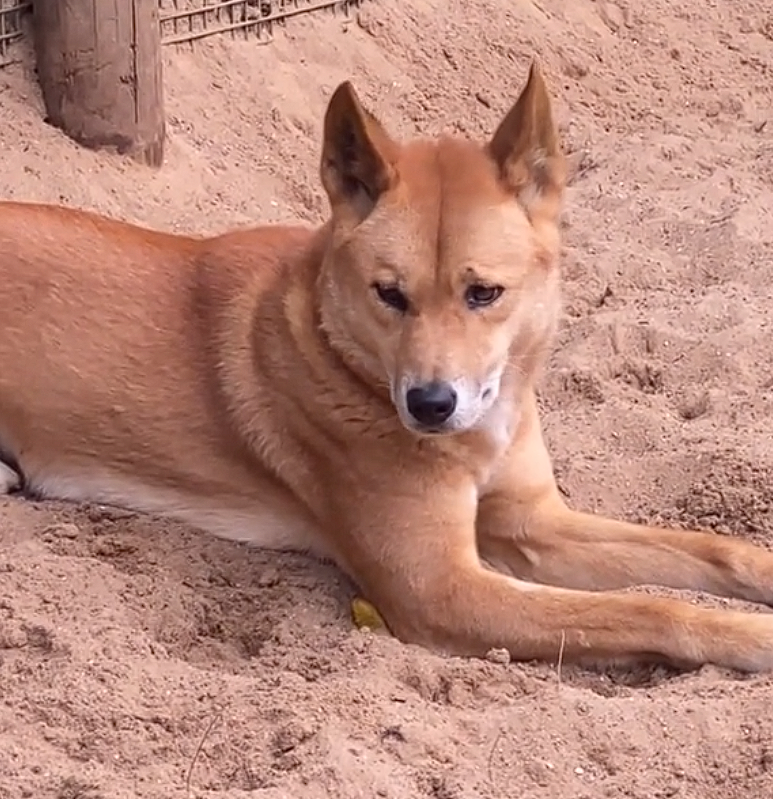
The Institute of Genetics and Developmental Biology of the Chinese Academy of Sciences and international authoritative gene sequencing have concluded that the direct ancestors of the Australian dingo are ancient domesticated dogs from southern China, sharing a common origin with the Chinese rural dog.
It is reported that a team led by Academician Zhang Yaping of the Kunming Institute of Zoology of the Chinese Academy of Sciences, in collaboration with an international team, completed whole-genome sequencing analysis of 109 individuals, confirming that the Australian dingo is not a native Australian species. Instead, approximately 9900 years ago, they originated from southern China, migrated through the Southeast Asian island corridor, and arrived on the Australian continent around 8300 years ago.
At that time, Australia lacked large predators such as wolves and tigers, and prey such as kangaroos and emus were abundant. Therefore, "Dahuang" shed its gentleness, awakened its primal wildness, gradually adapted to the wilderness environment, and after thousands of years of natural selection, completely became wild, becoming Australia's largest native carnivorous animal.
They replaced the now-extinct Tasmanian wolf with flexible tactics and exceptional endurance, becoming top predators. They not only prey on rabbits and small marsupials but also encircle and hunt kangaroos several times their size, effectively controlling the population of herbivores and maintaining local ecological balance. They are a key species in the Australian ecosystem.
In addition to hunting, they can also consume crabs, stranded dugongs, and even human garbage, demonstrating extremely strong survival resilience.
However, due to the lack of natural predators, "Dahuang" frequently attacks livestock, causing significant losses to farms. The Australian government has had to build over 6000 kilometers of isolation fences to control them.