Northrop Grumman's F/A-XX Sixth-Generation Carrier Aircraft Appears in Promotional Video
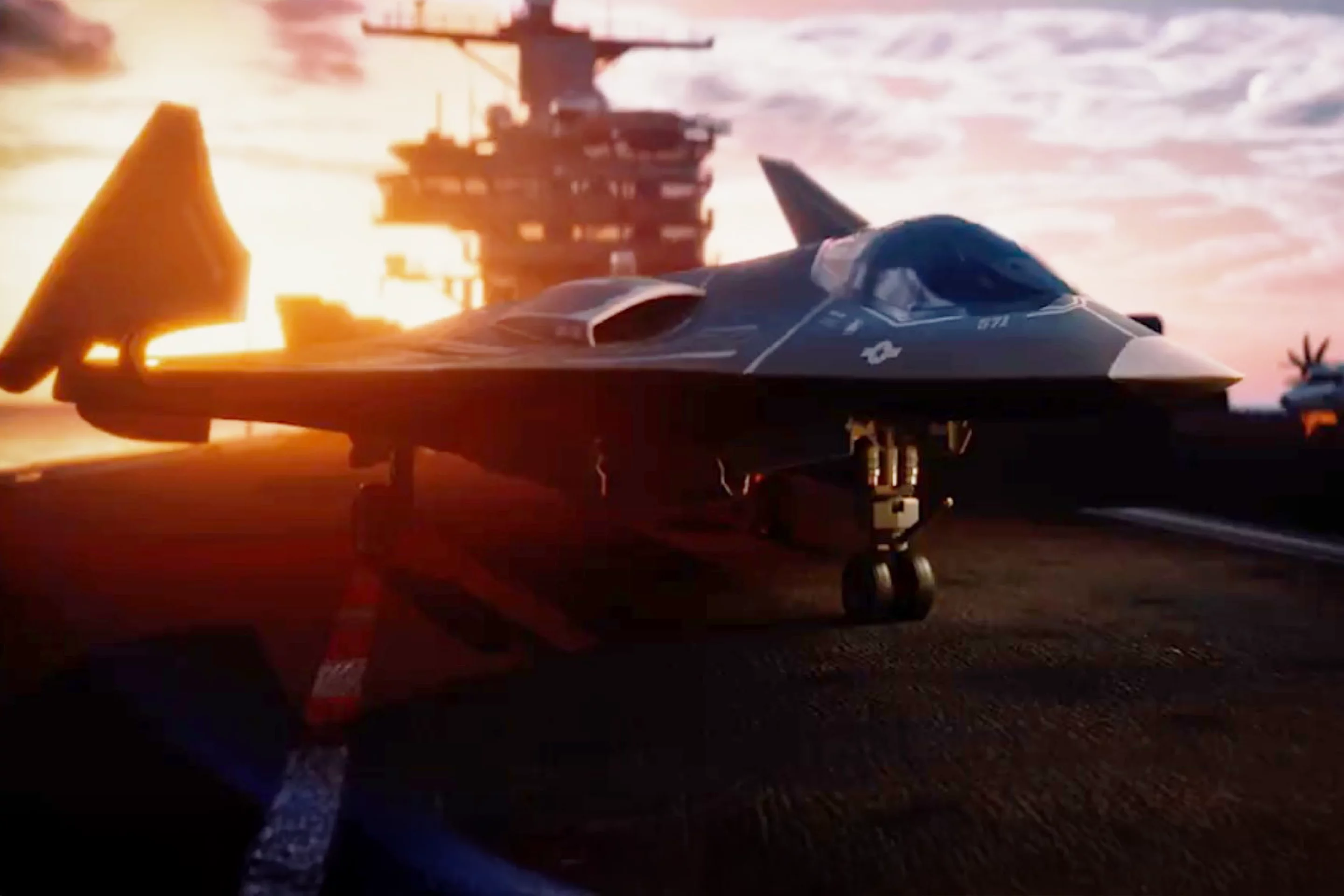
U.S. arms giant Northrop Grumman recently released another promotional video showcasing its candidate design for the U.S. Navy's F/A-XX fighter program, providing the most comprehensive public appearance to date of this next-generation carrier-based sixth-generation aircraft.
The timing of the video release is noteworthy: on April 20th, Chief of Naval Operations Admiral Daryl Caudle stated at the Navy League’s “Sea-Air-Space 2026” exhibition that the Navy is about to decide between Northrop Grumman and Boeing to continue advancing the F/A-XX program. Subsequently, Northrop Grumman CEO Kathy Warden publicly emphasized the company’s industrial capacity to mass-produce next-generation fighters, clearly intending to build momentum for this multi-billion dollar contract.
This newly released computer-generated short film is not only a marketing move but also provides outsiders with more intuitive clues about the F/A-XX’s final configuration and mission positioning. From the overall aerodynamic layout, the design highly aligns with the U.S. Navy’s positioning of the F/A-XX as a “multi-role carrier fighter,” rather than the air force’s preference for a dedicated air superiority fighter. The fuselage lines and contours are also said to have a noticeable “family resemblance” to the YF-23 “Black Widow II,” which lost in the F-22 competition in the 1990s, demonstrating Northrop Grumman’s continued technical approach in the field of stealth, high-speed fighters accumulated over many years.
Unlike previous partial renderings, this video clearly shows the aircraft featuring a tailless design for the first time.
The leading edge of the fuselage retains the “faceted” fuselage strips seen in previous exposures, but the traditional vertical tail is completely canceled, reducing the radar cross-section in both high and low-frequency bands, further enhancing stealth performance.
To complement the overall stealth design, the air intakes are arranged on the upper surface of the fuselage in a dorsal arrangement, which helps reduce the probability of detection by ground radar and infrared sensors, but has also raised questions from some industry insiders about its air intake performance in high-angle dogfighting.
The article points out that considering the F/A-XX is classified as a sixth-generation fighter, its future air combat form is likely to focus on long-range detection and beyond-visual-range attacks, rather than traditional close-range maneuvering dogfights, making this design trade-off easier to understand.
In terms of wing shape, the aircraft adopts a diamond-shaped main wing, suggesting it will have a strong advantage in high-speed cruise efficiency and long-range flight, but may sacrifice some low-speed maneuverability. The video footage also shows that the outer section of the wing appears to have a folding structure, a detail that is highly consistent with its carrier-based identity: within the limited deck and hangar space of U.S. aircraft carriers, folding wings are almost a standard configuration. The landing gear design is also “standing ready” for carrier operations: the nose landing gear is a reinforced twin-wheel design and is clearly equipped with a catapult tow bar, indicating that the aircraft is envisioned to use catapult launch and arresting landing (CATOBAR) methods, taking off from the carrier via catapult and recovering via arresting cables.
The cockpit canopy adopts a large-size design, also sparking speculation about a two-seat version in the industry.
Some analysts believe that in future high-task-load operations, the aircraft may launch a two-seat version, with the front-seat pilot serving as a “mission commander,” coordinating the execution of complex strike and reconnaissance missions with a swarm of “loyal wingman” unmanned aerial vehicles. However, Northrop Grumman has not yet provided more technical details regarding the cockpit layout and specific mission systems.
As the F/A-XX project is still in the stage of scheme selection and technical competition, how many of the configuration features shown in this video will be retained on the actual prototype, and how many will be modified or even abandoned in subsequent research and development, remains unknown. What is certain is that before the Navy makes a final decision, the technical competition and promotional war surrounding this next-generation carrier-based sixth-generation aircraft will continue to escalate.