Anker Launches Thus Chip, Bringing Local AI to its Entire Product Line
Charging accessory manufacturer Anker has announced the launch of its self-developed Thus chip, planning to fully integrate local artificial intelligence capabilities into its audio devices, mobile accessories, and IoT products. The company claims Thus is the world's first "compute-in-memory" AI chip designed for audio scenarios, offering a smaller size and lower power consumption compared to traditional chips, making it more suitable for small devices with limited space and power.
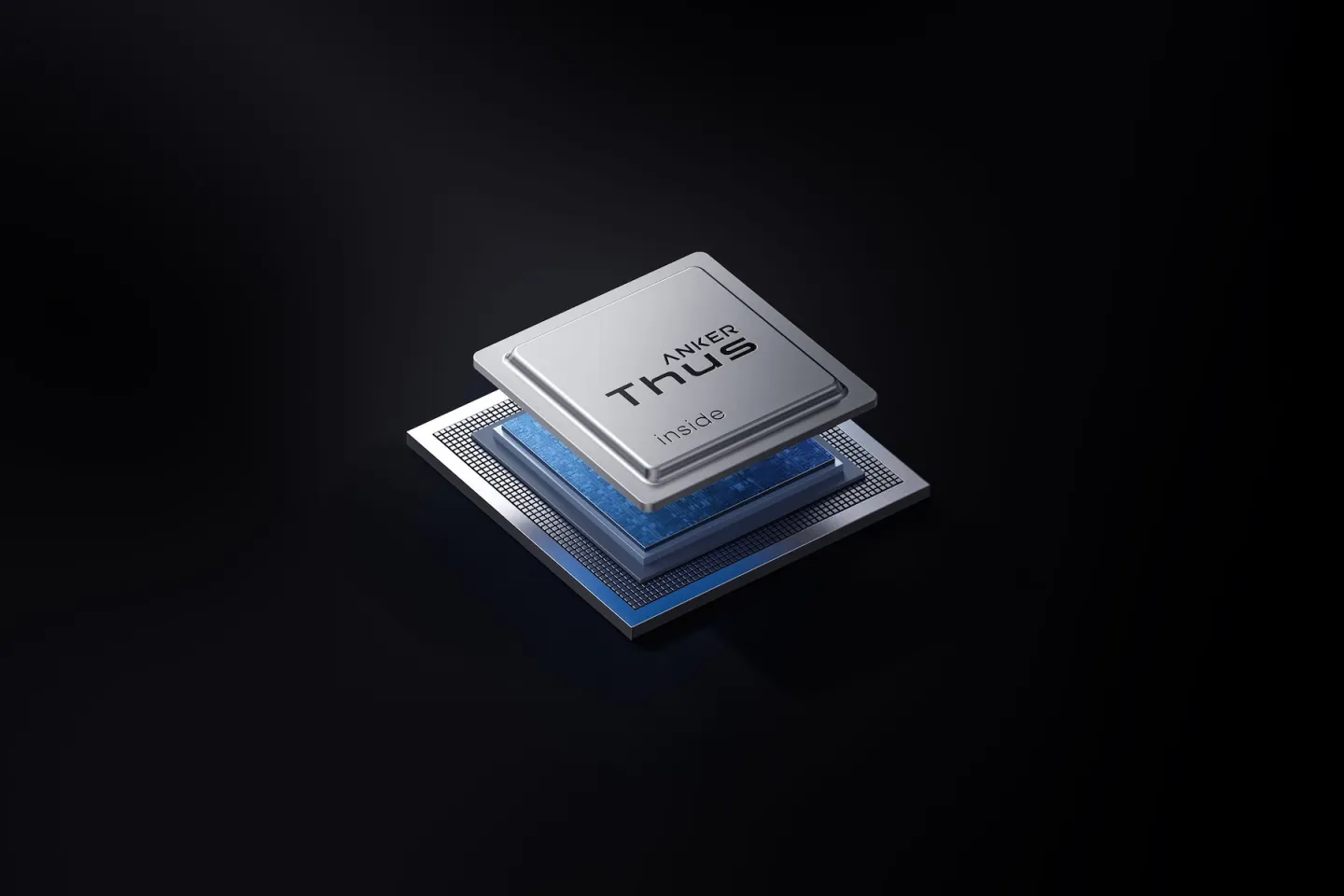
Anker co-founder and CEO Steven Yang stated that most existing AI chips adopt an architecture where "the model is stored on one side and computation is done on the other." This requires devices to frequently move large amounts of parameters between storage and computing units during each inference, which is both time-consuming and energy-intensive. Thus, however, directly deploys computing power where the model is located, "allowing computation to be completed where the model resides," thereby avoiding the repeated movement of model parameters within the chip, improving energy efficiency and response speed.
The first Thus chip will be first applied to Anker's audio brand Soundcore's upcoming flagship true wireless earbuds. Anker explains that they are starting with earbuds because they represent one of the most challenging product forms for integrating AI chips: extremely limited internal space, limited battery capacity, and the need for the chip to operate almost continuously while worn. Previously, this often only allowed for the operation of small neural networks with parameters in the hundreds of thousands. Thanks to the energy efficiency advantages of the compute-in-memory architecture, the Thus chip can handle millions of parameters, significantly enhancing local computing power under similar volume and power consumption conditions, and better addressing tasks such as complex environmental noise.
In terms of call noise reduction, traditional solutions rely on small local neural networks, which often struggle to accurately separate human voices in strong noise environments, leading to significant leakage of environmental noise or severe compression and distortion of human voices, affecting listening experience and call clarity. Anker says that based on the larger-scale neural networks available with the Thus chip, combined with the 8 MEMS (micro-electromechanical systems) microphones and 2 bone conduction sensors equipped on the earbuds for more concentrated capture of the wearer's voice, the new, yet-to-be-released earbuds will achieve cleaner call quality in various environments.
However, the actual performance of Thus remains to be tested by the market. This compute-in-memory AI chip will face direct competition from high-end true wireless earbuds, including Apple AirPods Pro 3 and Sony WF-1000XM6, in real-world use scenarios.