Google Reaches Multi-Billion Dollar Cloud Computing Partnership with Thinking Machines Lab
Sources reveal that Google recently entered a multi-year cloud computing and strategic cooperation agreement with AI startup Thinking Machines Lab, valued at billions of dollars. This signifies Google's increased investment in cutting-edge large model clients. The deal follows Thinking Machines Lab's previous large-scale computing power procurement cooperation with NVIDIA, securing leading suppliers for both underlying chips and cloud platforms.
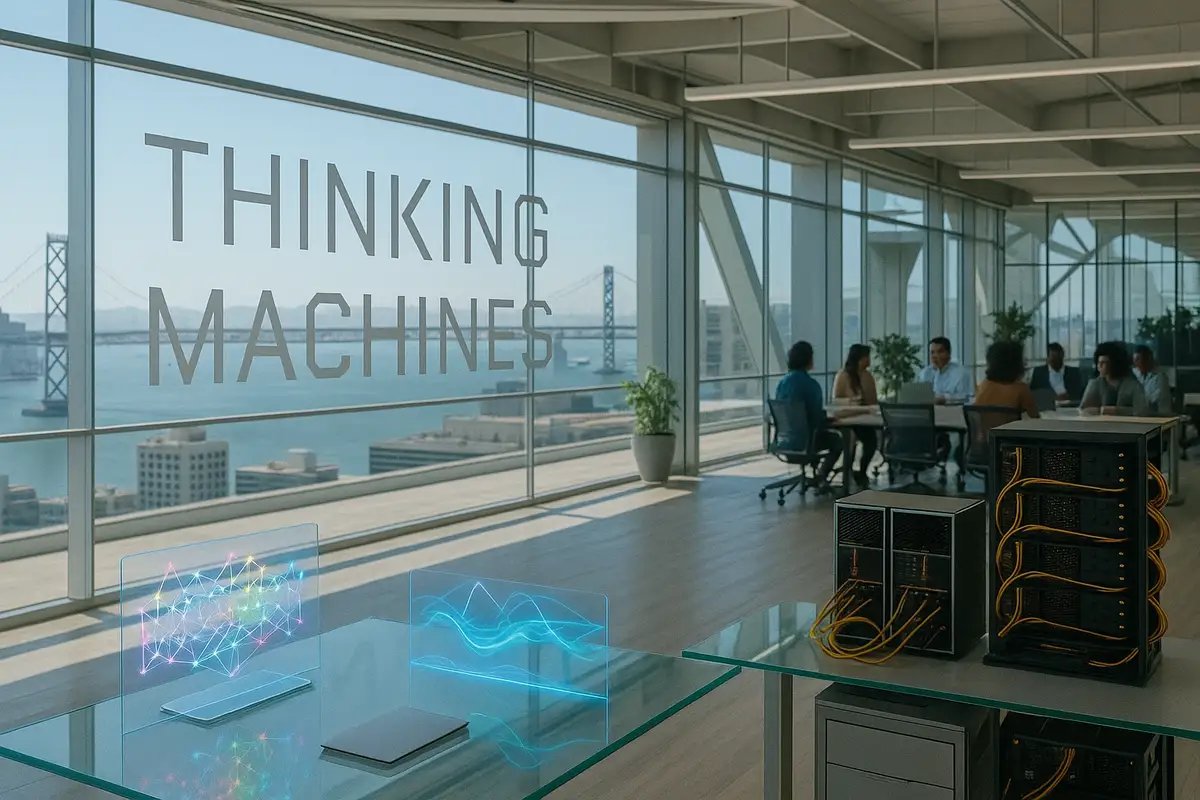
Thinking Machines Lab was founded in 2025 by former OpenAI Chief Technology Officer Mira Murati, and is headquartered in San Francisco. It completed a $2 billion seed funding round in its founding year, with a valuation of approximately $12 billion. Investors include Andreessen Horowitz, Accel, NVIDIA, AMD, and other institutions and industry players, making it one of the most talked-about cutting-edge AI laboratories. The company positions itself as a research and development institution for “general AI systems geared towards human collaboration,” emphasizing interpretability, customization, and interdisciplinary capabilities, aiming to bridge the gap between cutting-edge AI capabilities and scientific understanding.
In March of this year, Thinking Machines Lab announced a multi-year computing cooperation agreement with NVIDIA, deploying at least 1 gigawatt of NVIDIA Vera Rubin systems in its training and inference infrastructure starting in 2027. NVIDIA also made a strategic investment in the company. Industry insiders, based on Jensen Huang’s previous estimate of “up to $500 billion” for the cost of a 1 gigawatt AI data center, infer that the overall value of this cooperation is likely to reach “billions of dollars” or even higher over the contract period.
In this context, the recent cooperation with Google is seen as a key supplement to its computing landscape: NVIDIA provides chips and dedicated systems, while Google provides large-scale GPU/TPU clusters, networking, storage, and engineering support through its cloud platform for training the laboratory’s next-generation multimodal large models. Thinking Machines Lab had already established a partnership with Google Cloud after completing its seed funding round, and this agreement is seen as an amplification and locking-in of the existing relationship, allowing Google to establish a more solid infrastructure and ecosystem position in this laboratory, which is potentially “the next OpenAI or Anthropic.”
According to people close to the deal, in addition to cloud computing rental, the agreement includes a package of joint technical optimization and commercial terms, such as co-building training and inference systems around Google’s next-generation TPU platform, optimizing networks and data pipelines for large-scale distributed training, and in-depth cooperation in security and compliance. Google values the opportunity to establish deep binding relationships with early cutting-edge laboratories, which will potentially yield considerable returns in the future, whether through model hosting, API distribution, or enterprise-level solutions, based on the growth of these clients.
For Thinking Machines Lab, consecutive heavyweight collaborations with NVIDIA and Google mean a significant increase in the long-term guarantee of computing resources, which will help it continue its research and development path of “building reproducible cutting-edge AI models.” In an environment of continued tension in the AI industry over demand for high-end GPUs and computing power, this binding helps reduce the risk of training plans being constrained by resource supply, and also lays the foundation for the commercial APIs and research tools it may launch in the future.
However, these massive computing and cloud service contracts also mean that both parties need to provide convincing answers regarding cost recovery and commercialization paths. For Google, how to convert these high-risk, high-investment cutting-edge laboratory clients into a long-term growth engine for Google Cloud will be one of the focuses of the capital market. For Thinking Machines Lab, which is still in its early stages, it also faces challenges in consistently launching products, generating revenue, and realizing its vision of “more understandable and customizable general AI systems” while maintaining high computing costs.