Micron Lobbies US Congress to Further Tighten Chip Equipment Export Controls to China
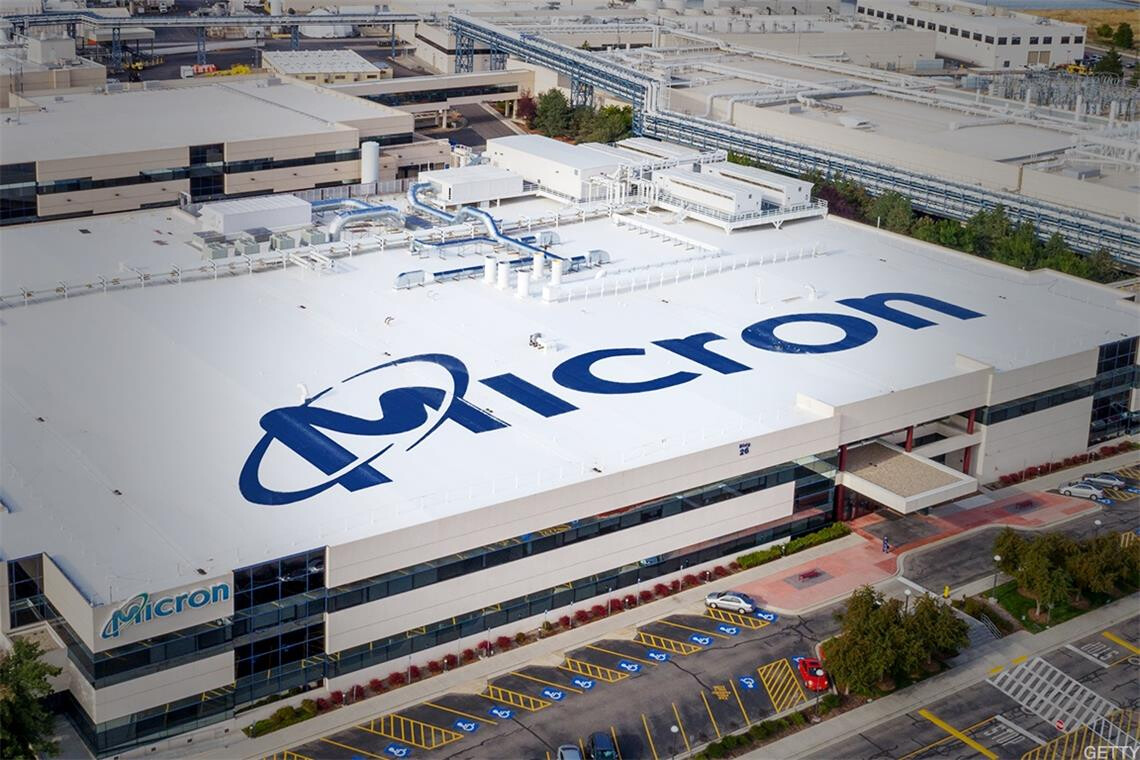
Micron Technology, the largest US memory chip maker, is actively pushing Congress to pass legislation imposing new export restrictions on equipment used by Chinese competitors to produce chips. A House committee began reviewing and voting on the so-called "MATCH Act" on April 22nd, aiming to close loopholes in existing chip manufacturing equipment export controls to China and pressure foreign companies supplying Chinese chipmakers to align with US restrictions, involving US equipment vendors like KLA, Applied Materials, etc.
The bill specifically targets factories operated by Chinese companies such as ChangXin Storage, Yangtze Memory Technologies, and SMIC, and covers key technological capabilities within China. Micron told lawmakers that Washington needs to take stronger measures to curb China's development in the memory chip market, to avoid China achieving dominance like it has in industries such as solar energy, elevating this to a national security level. Micron, ChangXin Storage, Yangtze Memory, and SMIC all declined to comment.
Currently, South Korea's Samsung Electronics and SK Hynix dominate the global memory chip market, with Micron ranking third and being the only major US memory chip supplier. Although the US Commerce Department has previously imposed export restrictions on Yangtze Memory and ChangXin Storage – with Yangtze Memory being added to the restricted trade list since 2022 and ChangXin Storage’s advanced production lines also being controlled – both companies are still expanding rapidly.
According to the current text, the MATCH Act will further restrict the export of more production equipment to China, including a comprehensive tightening of the supply of deep ultraviolet immersion lithography machines within China, a market currently dominated by Dutch company ASML. The bill will also require foreign companies like ASML to obtain a license when providing equipment maintenance and services to controlled factories. Sources said Micron representatives were involved throughout the drafting process of the bill and maintained close communication with members of Congress; about a month ago, Micron CEO Sanjay Mehrotra held a closed-door roundtable meeting with members of the House Foreign Affairs Committee, and last month held a similar exchange with Republican members of the Senate Banking Committee.
Micron is headquartered in Boise, Idaho, and is currently building a large chip manufacturing base in New York State. Other industry companies, including Tokyo Electron and US equipment vendors KLA, Applied Materials, and KLA Corporation, are also actively lobbying for the bill, according to other sources, as they have lost some sales to China due to export controls. This month, the US Commerce Department also released a photo of ASML CEO Peter Wennink meeting with US Commerce Secretary Gina Raimondo, showing that the US government is maintaining high-level dialogue with key equipment suppliers.
The MATCH Act is just one of a package of export control-related proposals scheduled for a vote by the House Foreign Affairs Committee that day, with other proposals covering the Commerce Department’s licensing process, interagency coordination mechanisms, the operation of the “Entity List,” enforcement, and penalty arrangements. A staff member of the committee described the series of bills as the largest legislative action in the field since the “Export Control Reform Act” of 2018.
Karen, who previously served in the Bureau of Industry and Security (BIS) of the US Commerce Department, which is responsible for export controls, and now works at the Center for Strategic and International Studies in Washington, said that these bills convey a message of congressional dissatisfaction with the leadership of the BIS. She pointed out that “over the past year, a fairly strong bipartisan consensus has formed within Congress that the BIS has not truly fulfilled its due functions.” Reuters previously reported that the bureau has been internally chaotic in recent years and suspended the introduction of new restrictions during trade easing negotiations with China, leading to a standstill of thousands of export approvals. A BIS spokesperson did not respond to a request for comment.
Even if the MATCH Act and other related proposals pass at the House committee level, they still have many hurdles to overcome before finally becoming law. The Senate has already proposed corresponding companion bills, and these contents may be incorporated as amendments into the annual “National Defense Authorization Act” for joint review.