Artemis II Lunar Mission Demonstrates Scalability of Laser Communication from Space to Earth
NASA’s Artemis II mission successfully sent four astronauts into lunar orbit earlier this month and, for the first time, extensively used a new generation of laser communication systems to transmit high-definition images back to Earth in real-time. The ground station receiving the mission included not only NASA’s main sites in the United States but also a low-cost experimental terminal jointly built and deployed at the Australian National University by startup companies ObservableSpace and QuantumOpus.
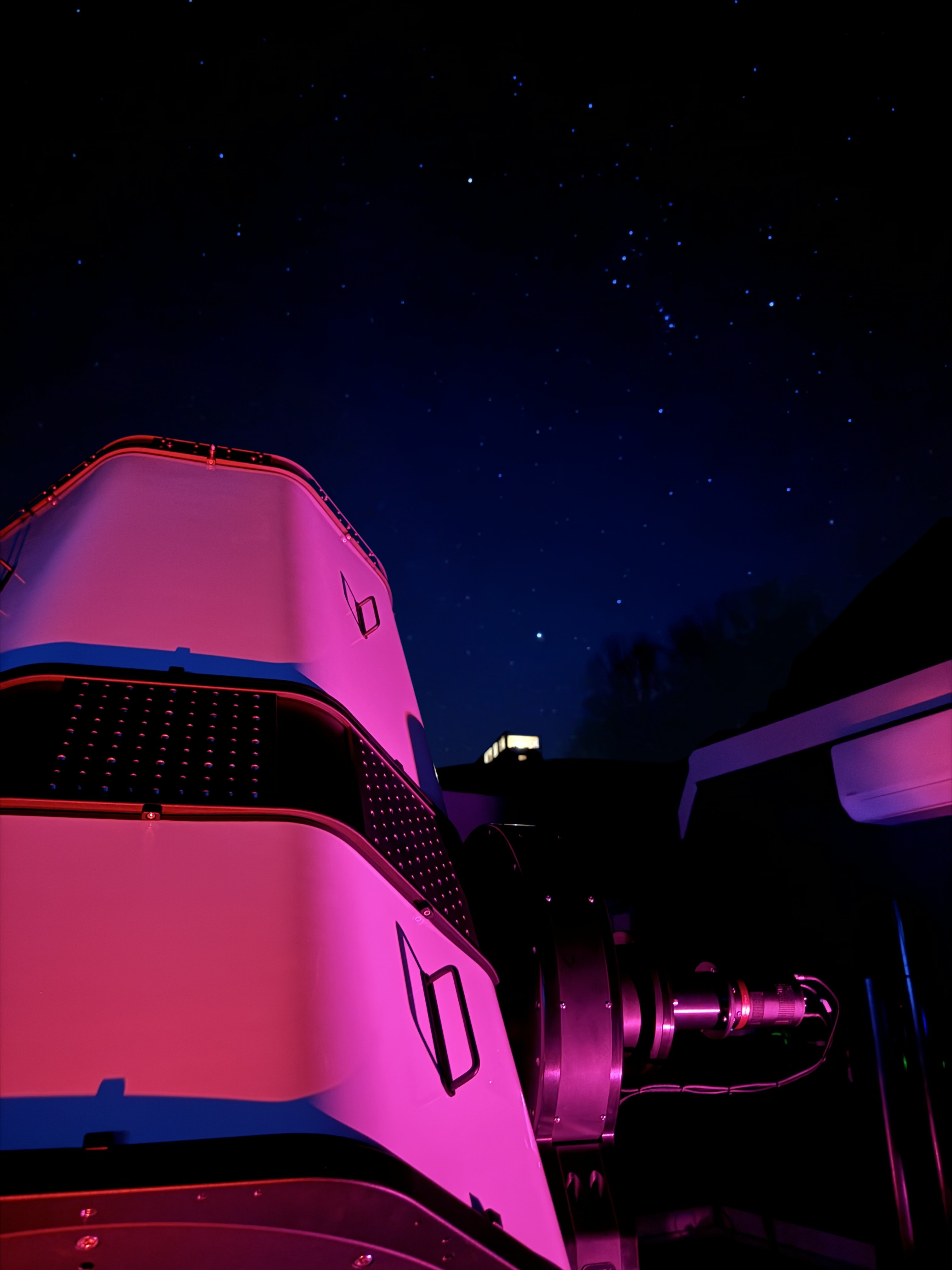
It is reported that this experimental terminal successfully received laser data signals from the Orion spacecraft orbiting the moon, achieving a downlink rate of 260 megabits per second for transmitting data such as images and videos taken during the mission. The two companies stated that this result proves that establishing high-throughput data links between Earth and deep space spacecraft does not necessarily require expensive dedicated facilities; relatively low-cost systems can also be competent.
The terminal uses telescopes and software provided by Observable Space to capture and lock onto laser signals from Orion, and then uses photon sensors developed by Quantum Opus to decode the data. The two companies said that compared to traditional deep space communication receiving facilities that often require tens of millions of dollars in investment, the overall cost of this system is less than $5 million, which is a significant cost advantage. During this demonstration, NASA’s main receiving stations in California and New Mexico, along with the low-cost experimental terminal in Australia, successfully received and decoded 4K video streams from the lunar orbital flight.
NASA has been continuously promoting the verification of deep space laser communication technology in recent years, including a demonstration of a data link with a spacecraft 218 million miles from Earth in an asteroid mission. Compared to radio frequency communication, which is still the mainstream choice, laser communication has significant advantages in bandwidth and data throughput, and is considered a key technology to meet the data needs of future deep space exploration missions and large-scale satellite networks. However, laser links are susceptible to clouds and weather, and must maintain a clear line of sight with the target. Therefore, the layout of ground stations requires distributed deployment across regions and longitudes to improve availability and reliability. The choice to set up a station in Australia outside the United States is precisely to cover time periods on the other side of the Earth.
Josh Cassada, co-founder of Quantum Opus and a former NASA astronaut, pointed out that in the first “Earthrise” photo taken by the Artemis II astronauts, the first continent to appear in the picture was Australia, which also gives this demonstration in Australia a special symbolic meaning.
After the mission, Dan Rolick, CEO of Observable Space, said that this mission proves that the downlink of laser data transmission from space to Earth is now ready to move towards commercialization and large-scale deployment. Currently, laser links are widely used in space-to-space communication between satellites, but have not been commonly used for direct data transmission from space to Earth in the past, largely due to the high cost. Rolick believes that with the emergence of low-cost terminal solutions, it is possible to begin envisioning a global laser ground receiving network open to various satellite systems.
He revealed that Observable Space plans to promote the expansion of this network in the next year and beyond, but has not yet announced a complete strategy. In terms of business model, the company is evaluating multiple paths, including independently building and operating a ground station network, cooperating with existing “ground station-as-a-service” providers, or collaborating with operators with ultra-large satellite constellations to build and own key infrastructure. In his view, regardless of the path taken, the key is to transform the high-end deep space laser communication capabilities that were previously “custom-used” in only a few missions into normalized infrastructure that can be used on demand and by volume.
Driven by the Artemis program to return to the moon, the demand for high-capacity data such as images and videos for deep space missions continues to increase, and the demand from commercial satellite operators in areas such as Earth observation, broadband internet, and scientific payloads is also growing rapidly. Industry observers believe that the laser communication demonstration during the Artemis II lunar flight is both a concentrated test of NASA’s years of technological routes and provides a realistic model for private companies to participate in building a global laser communication infrastructure. With the maturity of low-cost optical terminals and photon detection technology, commercial competition and cooperation around high-throughput optical communication networks between “space and Earth” are expected to accelerate globally in the coming years.