Toshiba Refuses New Replacements for Faulty 16TB Hard Drives, Offers Refunds at Original Price Only – Distributor Has No Authority
A consumer, Mr. Cai, complained to Hong Kong tech media HKEPC that his faulty 16TB Toshiba hard drive could not be replaced under warranty, with the Hong Kong distributor, Broadway, only offering a refund at the original purchase price. Mr. Cai is dissatisfied as current hard drive prices have significantly increased.
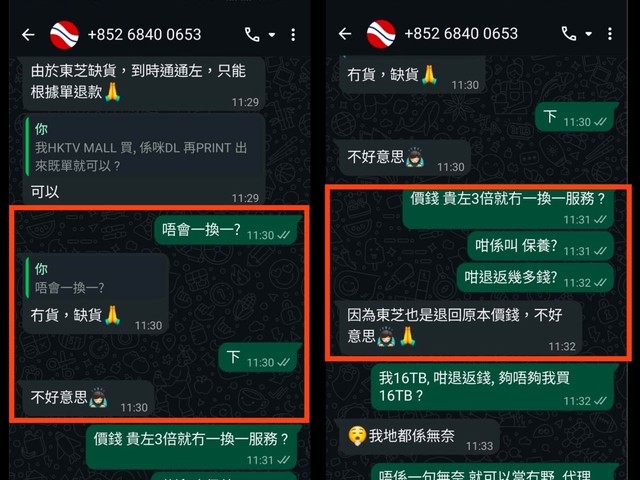
Mr. Cai expressed strong dissatisfaction, stating that the price of large-capacity hard drives has risen sharply, and the purchase price at the time could no longer buy a similar product of even half the capacity on today’s market, criticizing the warranty arrangement as extremely unreasonable.
In response to this complaint, HKEPC verified the matter with the distributor, Broadway. Mr. Li, responsible for RMA affairs, clarified that the warranty processing authority for Toshiba hard drives rests entirely with the manufacturer, not the distributor.
After receiving a consumer’s warranty application, the distributor can only submit materials to Toshiba and apply for RMA authorization. The final decision is made by the manufacturer independently for each case, and the distributor has no decision-making power throughout the process.
Mr. Li revealed that Toshiba’s warranty processing rules have changed significantly since the end of March this year. Initially, the manufacturer only adopted a refund-at-original-price approach for a few large-capacity models, while most models could still be replaced with new ones, and some cases even received capacity upgrades. However, in the past two weeks, the situation has deteriorated rapidly, with the vast majority of RMA applications being forcibly converted to refunds at the original purchase price by Toshiba due to global shortages.
Mr. Li admitted that many consumers applying for warranty services are extremely angry with this handling method and even suspect that Broadway is deliberately deceiving consumers, turning the distributor into a punching bag.
He also emphasized that this is not a separate decision by regional distributors. Toshiba has recently adjusted its warranty policies globally, and similar complaints from users have appeared on major forums such as Reddit overseas and PTT in Taiwan.
It is understood that before the AI boom, Toshiba’s hard drive warranty was mainly based on replacing with new products, and refurbished units were not used. Even during the special period of the Thailand floods, which caused a global shortage of hard drives, the manufacturer was willing to authorize distributors to use existing stock to complete replacements for users.
This sudden shift in Toshiba’s warranty policy has caught even cooperating distributors off guard. Even if consumers clearly state their willingness to wait a long time for a new product, Toshiba cannot provide a definite delivery date after the distributor relays the request to the manufacturer, potentially leaving consumers in an endless wait.
Mr. Li also said helplessly that distributors actually do not want to go through the refund process more than consumers do. Because refund processing means the distributor has to return all the profits from selling the hard drive at the time.
Broadway is aware that current hard drive prices have risen by two to three times, and only refunding the original purchase price will seriously damage its market reputation. However, the profit margin for hard drive distribution is already very low, and with hard drive prices having doubled, the distributor simply does not have the financial capacity to cover the manufacturer’s decisions.
In view of the current market situation and warranty risks, HKEPC reminds consumers that when purchasing large-capacity storage products in a sustained tight supply environment, they must pay extra attention to the details of the warranty terms. Considering the current warranty fulfillment risk of Toshiba hard drives, the media advises consumers to avoid purchasing Toshiba mechanical hard drives at this stage to avoid facing the dual risks of budget overruns and data security in the event of hardware failure.