Samsung Labor-Management Tension Escalates, Potentially Worsening Global Memory Chip Supply
Tens of thousands of Samsung Electronics employees gathered at the company's Pyeongtaek campus this Thursday, signaling their readiness to launch an 18-day strike next month. This labor dispute over compensation distribution is believed to further exacerbate the global shortage of memory chips. The union demands the cancellation of the current performance bonus cap and a direct allocation of 15% of the company's operating profit to employees, but Samsung has yet to agree, leading to a stalemate and legal battles.
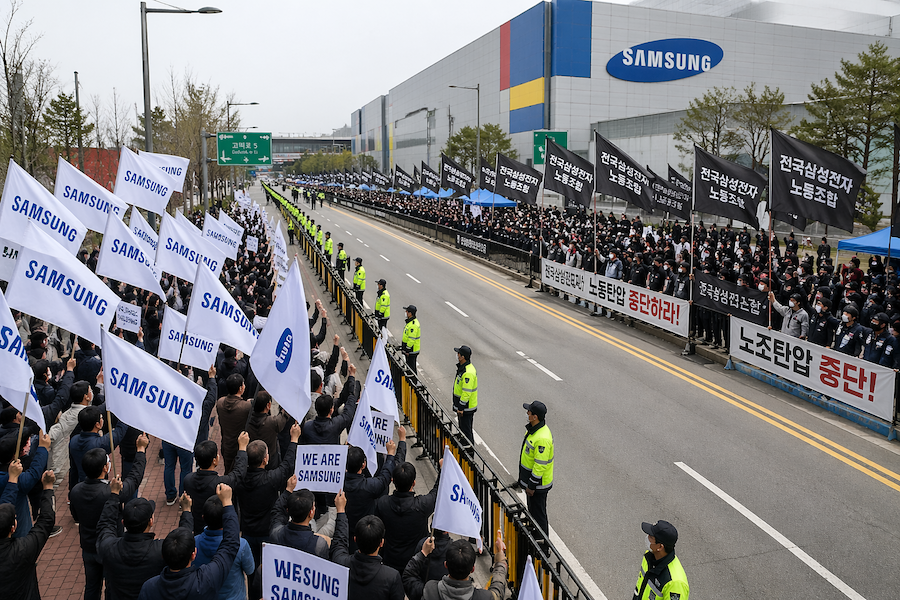
The timing of this dispute is particularly unfavorable for Samsung. Driven by the generative AI boom, the global memory chip market is experiencing a new round of supply shortages. Samsung, SK Hynix, and Micron are all striving to meet the strong demand from AI data centers and are shifting more capacity from traditional consumer businesses to high-bandwidth memory chips, as these products offer higher profit margins. Industry estimates predict that around 70% of high-end memory chips globally will be snatched up by data centers by 2026, further shrinking the share available to the general consumer market. Prices for conventional memory chips like DRAM have already risen sharply since early 2025.
The core of the conflict between the union and the company lies in bonuses and the allocation mechanism. Compared to its competitors, Samsung is facing increasing wage pressure. Reports indicate that SK Hynix plans to distribute a massive bonus of approximately $400,000 per employee to its roughly 35,000 employees as early as next year. Local media reports that Samsung has offered a comprehensive compensation package to its memory chip division employees, nominally exceeding that of its competitors, but it has been rejected by the union. Samsung did not respond to requests for comment before this article was published.
Samsung has long been considered one of the most attractive employers in Korea, but the “bonus gap” is now eroding this traditional advantage. Notably, not all attendees at the rally were on the union's side. Some shareholders gathered across from the rally, accusing workers of “sabotaging” the company at a critical moment and worrying that a strike would harm the company's performance and long-term competitiveness.
In the context of a highly interconnected global supply chain, if Samsung Electronics actually experiences a strike involving more than 35,000 employees next month, its impact will extend far beyond South Korea. Analysts point out that if Samsung's memory production lines are forced to reduce or halt production due to a strike, it will further drive up already tight memory chip prices, especially for high-bandwidth memory products used in AI data centers and high-end servers. From Silicon Valley to global cloud computing operators, the “aftershocks” could be felt.
Currently, Samsung, SK Hynix, and Micron have prioritized ensuring the capacity of high-end products to meet AI demand, forcing traditional consumer electronics businesses such as PCs and mobile phones to “yield.” Against this backdrop, Samsung's labor dispute is seen as a new variable layered on top of the existing supply-demand imbalance, making the market more cautious about the supply of memory chips in the coming months and even years. For AI startups, large tech platforms, and hardware manufacturers that rely heavily on memory chips, Samsung's strike, which hasn't even begun yet, has already become a new risk factor that cannot be ignored.
Related Articles:
Samsung's 5 Million Shareholders Hold Anti-Strike Rally: Resist Employee Huge Bonuses and Work Together to Protect Samsung
Samsung Electronics' 37,000 Workers to Hold Rally in Preparation for Next Month's Strike