Intel Wildcat Lake Laptop First Look: Targeting the Entry-Level, Affordable Market
Just one week after Intel officially released the Core 3 series "WildcatLake" processors, the first reference design laptop based on this platform has been revealed. This is the first physical sample of this entry-level chip. The industry generally sees it as a competitor directly targeting the MacBook Neo, focusing on the affordable entry-level PC market.
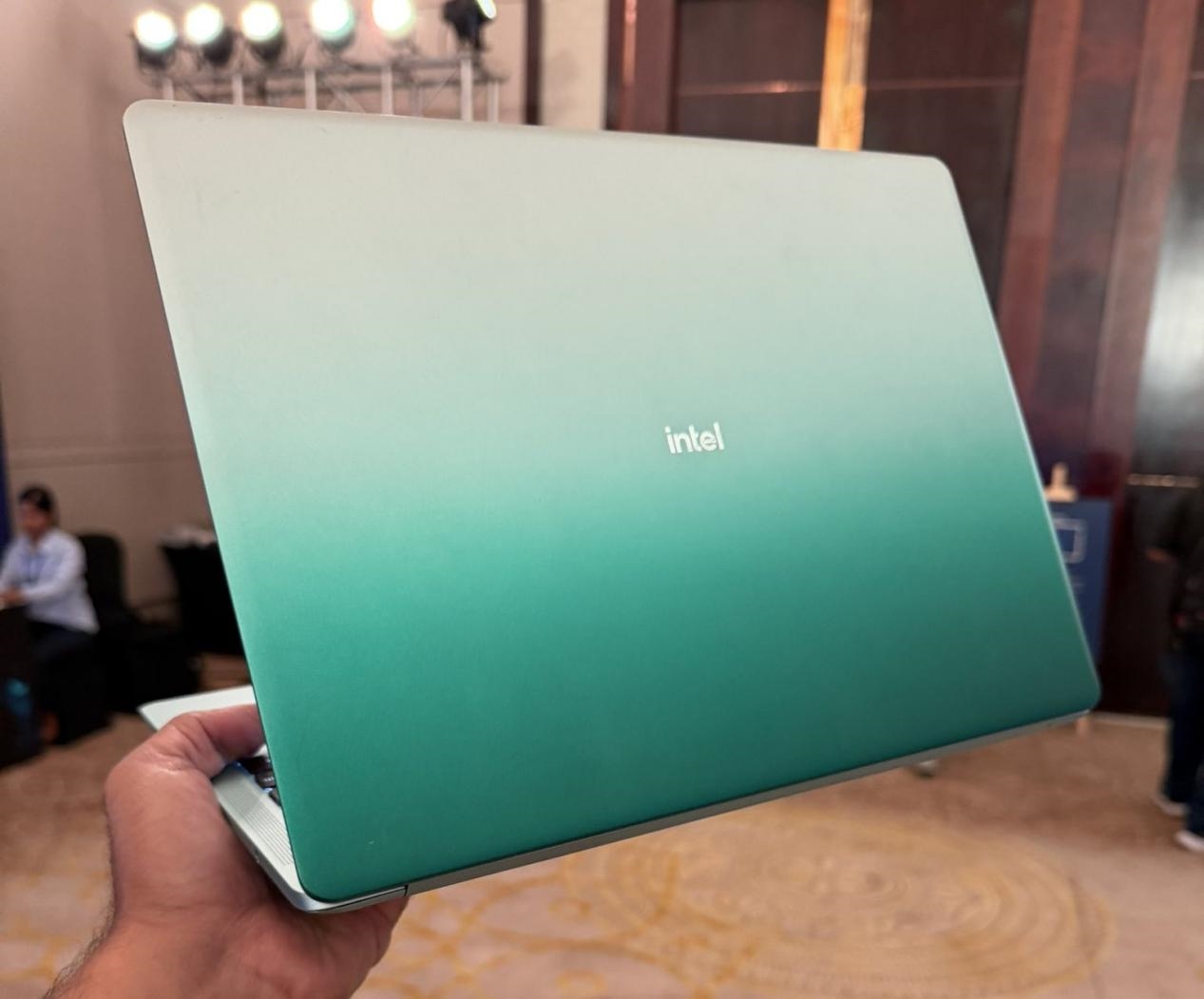
This reference design laptop features a gradient color scheme, making it much more recognizable than the black, white, and gray aluminum-cased laptops on the market.
The keyboard layout adopts a narrow bezel design similar to the MacBook, with speaker arrays surrounding both sides, and it feels very light in hand.
In fact, this approach of attracting young users with colorful designs and a lightweight aluminum alloy body is one of the key selling points that has contributed to the rapid popularity of Apple's MacBook Neo.
The MacBook Neo is available in four trendy colors. The Intel reference machine also uses an all-aluminum alloy unibody design, with a very obvious intention to directly compete with the MacBook Neo in terms of appearance, texture, and design language.
The processor equipped in the reference machine is expected to be the flagship model in the Wildcat Lake family: either the Core 7 360 or the Core 7 350. Both adopt the same 2P+4LPE six-core design, with consistent P-core boost frequencies.
At the same time, it is equipped with 2 Xe3 architecture core graphics cards, and a dedicated NPU unit with a computing power of up to 17 TOPS, which is sufficient to meet the basic needs of daily office work and edge-side AI tasks.
This laptop uses 16GB of LPDDR5X memory with an equivalent transfer rate of approximately 7467 MT/s, which is a very generous specification for an entry-level product.
In terms of power consumption, this chip provides three basic power modes: 17W PL1 basic mode, 22W PL1 Max performance mode, and 35W PL2 extreme boost mode.
It also includes an additional 11W fanless low-power mode, which can operate normally without any active cooling fans.
However, it should be noted that due to the physical thermal limitations of the fanless body, its 35W extreme boost can only be maintained for about 56 milliseconds before entering frequency reduction protection.