Canadian Singer Haley Smalls' Concert Canceled Due to Failure to Secure High-Speed Rail Tickets
A concert by an overseas female singer originally scheduled for April 30th in Beijing was suddenly canceled. The official reason given was surprisingly that they failed to purchase high-speed rail tickets, and the artist prefers not to fly frequently, ultimately leading to the cancellation of the performance. The singer is Haley Smalls from Canada, a relatively niche but popular R&B artist, and this was her first tour in China.
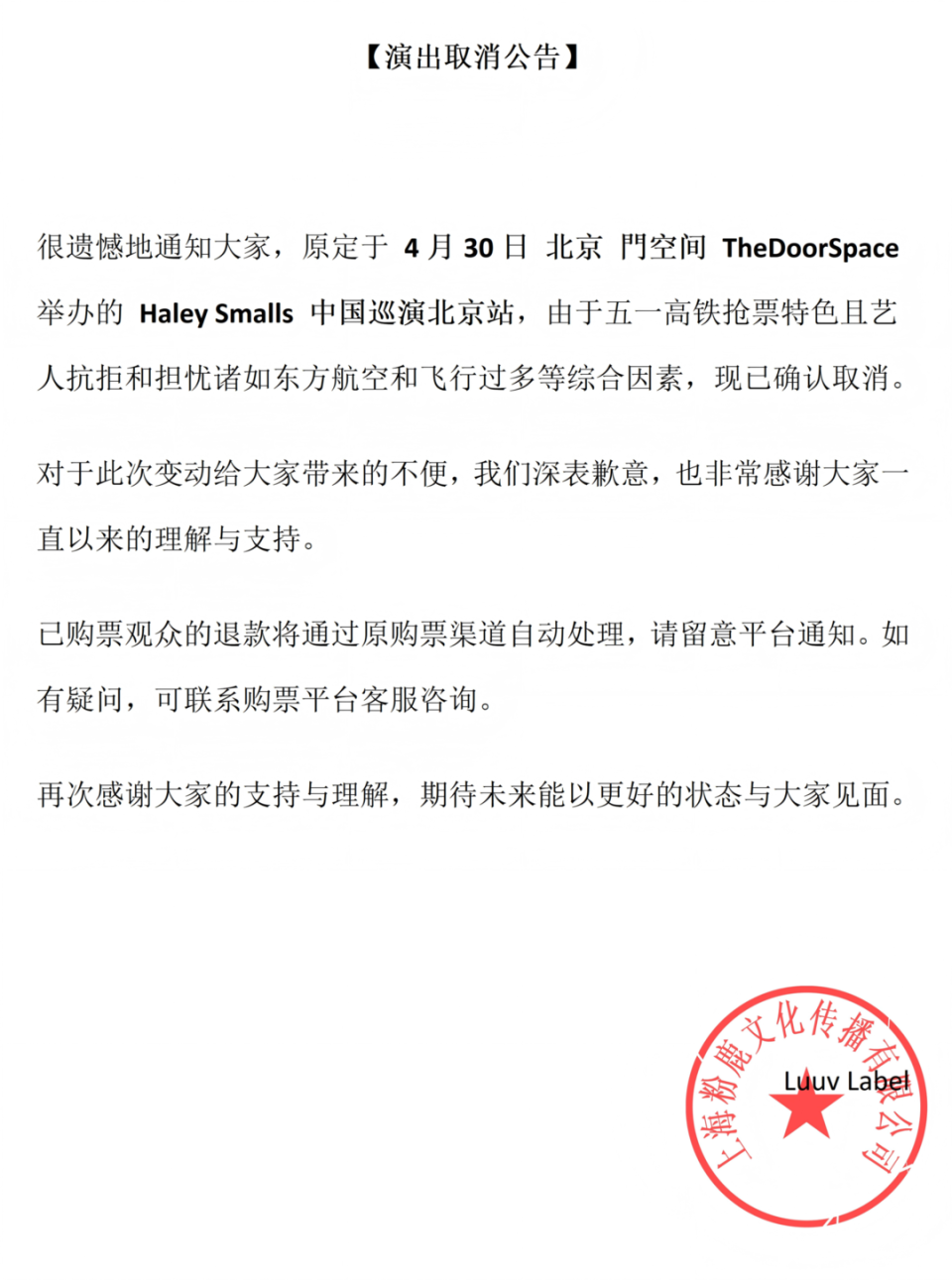
The concert was originally planned for April 30th in Beijing, followed by a performance in Shanghai on May 1st, requiring travel between the two cities by high-speed rail.
Unfortunately, it coincided with the peak travel period for the May Day holiday, making high-speed rail tickets from Beijing to Shanghai extremely difficult to obtain. Unable to secure suitable tickets, combined with the artist's reluctance to fly frequently and concerns about long-distance travel, the Beijing concert was ultimately canceled.
The organizers were straightforward, avoiding vague reasons like force majeure and directly stating the true reason – the inability to purchase tickets – in the announcement. They also promised a full automatic refund to all ticket holders.
Currently, the singer's concerts in Shanghai, Shenzhen, and Guangzhou are still on sale, and the organizers are working hard to coordinate the subsequent itinerary to ensure the remaining performances proceed smoothly.
A concert canceled due to high-speed rail tickets has become a particularly unique travel reminder before this year's May Day, indirectly reflecting the high travel enthusiasm this year.
Since ticket sales began on April 16th, tickets for popular routes from April 30th to May 1st have generally sold out as soon as they become available. The railway department has increased capacity, with the number of trains operating reaching a record high for the same period in history, but it still struggles to meet the concentrated travel demand.