Report Claims Apple's 20th Anniversary iPhone Will Feature a Custom "Micro-Curved" OLED Screen
Apple is reportedly preparing a custom "micro-curved" OLED screen from Samsung for its 2027 20th-anniversary iPhone. This panel will surpass existing solutions in brightness and thickness, and will also support Apple's planned radical redesign of its appearance.
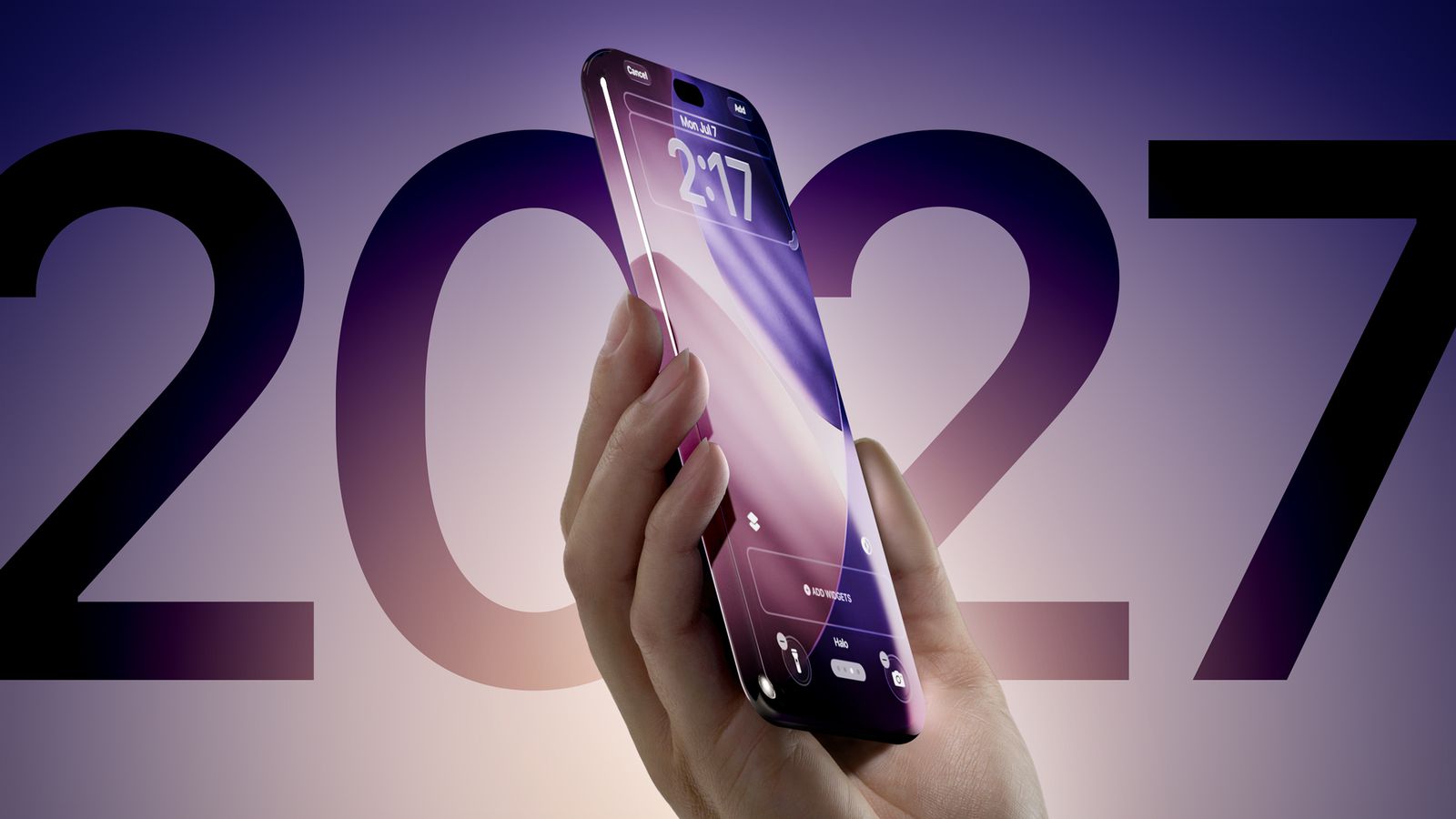
According to the latest supply chain news, Apple is collaborating with Samsung to develop a custom OLED display panel for the 20th-anniversary iPhone. Compared to current panels, this new screen will be brighter and thinner, and the display technology direction is also seen as an important part of Apple's next-generation high-end iPhone design upgrade.
Reports indicate that Apple is considering a major overhaul for this commemorative model, aiming for a nearly bezel-less full-screen design with the display area extending along all four edges of the device. To achieve this vision, Apple reportedly hopes Samsung will provide a "four-sided equally curved" panel solution, but unlike some of Samsung's existing products with larger "waterfall screens," Apple prefers a "micro-curved" design with a very shallow curvature.
This relatively restrained rounded edge solution may help improve the soft feel of the device when held, and also allow users to have a more natural interactive experience when sliding from the screen edges. At the same time, the shallower curvature is also expected to reduce distortion issues in the screen edge areas, balancing visual effects and practical usability.
In addition, the leak also mentioned that Apple hopes Samsung will equip this new device with a so-called "polarizer-less" display panel, which removes the polarizer layer on top of most current OLED screens. This claim is consistent with information disclosed by Korean media in September 2025: Apple plans to introduce Samsung's COE (Color Filter on Encapsulation) OLED technology to further enhance the brightness performance of the 20th-anniversary iPhone screen and compress the overall panel thickness.
According to related reports, the core idea of COE technology is to cancel the polarizing film in the OLED panel and place the color filter directly on top of the display encapsulation layer. This can reduce the thickness of the entire display stack structure, while increasing light transmittance, enhancing brightness and reducing power consumption.
However, canceling the polarizing film will also bring new challenges in reflection control. The report mentioned that Apple has added new anti-reflective coatings to the latest generations of iPhones, and this solution is expected to continue to be strengthened in subsequent iPhone products to compensate for the reflection problems that may be caused by the polarizer-less design.
There are also reports that Apple plans to introduce a "crater-shaped" light diffusion layer into this display, used to further balance the brightness of different areas, making the entire screen present a more consistent and uniform luminous effect.
2027 will be the 20th anniversary of the iPhone's release, and Apple reportedly hopes to take this opportunity to create a high-end all-glass model and eliminate openings and notches on the screen as much as possible. However, there are still disagreements regarding under-display components.
Display industry analyst Ross Young believes that by 2027, Apple may still not be able to prepare a mature under-display Face ID solution for the iPhone. However, other leakers believe that it is not impossible for Apple to achieve under-display Face ID at this time point.
If Apple ultimately cannot hide all the front components completely under the screen, the front design may fall back to a compromise solution combining under-display Face ID with a small punch-hole for the front camera. The latest rumors show that Apple is still testing under-display front camera technology applicable to the 2027 model, so the possibility of complete "full-screen" remains.