Results of the Largest-Scale Gravity Test in the Universe Released: Newton's Inverse Square Law Stands the Test Again
A recent study by the University of Pennsylvania shows that researchers, using the Atacama Cosmology Telescope, conducted the most extensive gravity test to date on galaxy clusters separated by hundreds of millions of light-years. The results indicate that on a super-large scale, the way gravity weakens with distance still conforms to the inverse square law proposed by Newton and later incorporated into Einstein's general theory of relativity. This result not only provides new support for the standard cosmological model but also further strengthens the evidence chain for the "real existence of dark matter."
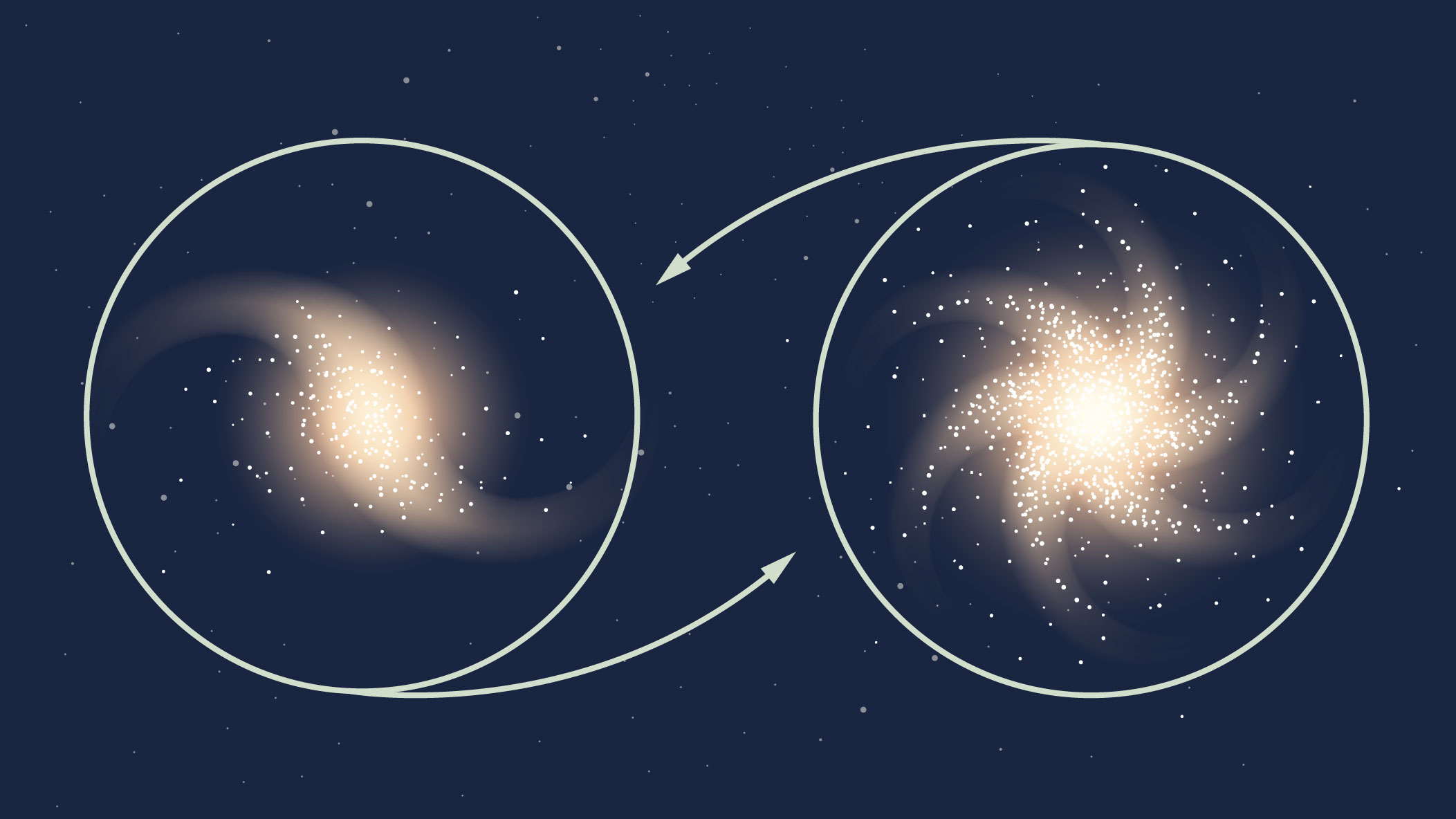
The research team pointed out that gravitational phenomena in daily life seem intuitive, such as apples falling and planets orbiting the sun, but on a cosmic scale, gravity has always been one of the most critical objects for testing fundamental physical theories. It determines how galaxies form, how galaxy clusters move, and shapes the large-scale structure of the entire universe. However, for a long time, astronomers have faced a difficult problem in observations: calculating only based on the mass of visible matter, the movement speed of many stars and galaxies is obviously too fast, and it seems impossible to explain it with the gravity produced by existing visible matter.
One of the paper's authors, cosmologist Patricio A. Gallardo, said that this "huge discrepancy in the cosmic accounts" has plagued the astrophysics community for years. Both the rotation of stars within galaxies and the movement of galaxies within galaxy clusters show that some celestial bodies move much faster than allowed by visible matter. Faced with this contradiction, the scientific community usually proposes two explanations: one is that there is a large amount of invisible dark matter in the universe, providing extra gravity for these celestial bodies; the other is that the existing gravitational theory needs to be modified on a very large scale.
To verify which explanation is closer to the truth, the researchers used data from the Atacama Cosmology Telescope. The telescope, led by researchers at the University of Pennsylvania, is an observation device about three to four stories high, mainly used to measure the cosmic microwave background radiation, which is the faint afterglow left over from the Big Bang. The research team focused on analyzing the subtle changes produced when this ancient light passes through massive galaxy clusters, thereby inferring the motion state of the galaxy clusters as they approach each other, and further testing the actual strength of gravity on a super-large scale.
The cosmic microwave background radiation was born about 380,000 years after the Big Bang and fills the entire universe. When this light passes through regions containing hot gas galaxy clusters, it will experience extremely weak but measurable distortions due to the movement of the galaxy clusters. Researchers analyzed this signal to statistically study a sample of hundreds of thousands of galaxy clusters across tens of millions or even hundreds of millions of light-years to determine whether gravity still decays with distance as predicted by classical theory.
The results show that the observed data is highly consistent with the predictions of Newton's theory and Einstein's general theory of relativity. If alternative theories like "Modified Newtonian Dynamics" (MOND) are correct, the decay pattern of gravity on a super-large scale should deviate from the expectations of traditional theory; however, this measurement did not find such a deviation. The researchers therefore believe that, at least on the cosmic scale currently tested, there is no evidence to suggest that the law of gravity must be modified to explain the observational results.
Gallardo said that surprisingly, the inverse square law proposed by Newton in the 17th century can still stand the test on such a grand cosmic scale after entering the 21st century. When Newton discussed this law, he mainly focused on the motion of celestial bodies within the solar system, while today, scientists have extended this principle to test distances and mass scales that were unimaginable in his time.
Researchers point out that this means that the "missing mass" problem is more difficult to explain by "failure of the gravitational theory," but instead further supports the existence of a substance that has not yet been directly observed in the universe, namely dark matter. In other words, if gravity itself does not show anomalies on a large scale, the extra gravitational effects manifested in galaxies and galaxy clusters are more likely to come from invisible mass sources, rather than rewritten physical laws.
However, the study also emphasizes that the true nature of dark matter remains one of the most unsolved mysteries in modern physics. This work strengthens the evidence that "dark matter is one of the components of the universe," but it does not answer what it is made of. In the future, as the accuracy of cosmic microwave background radiation observations further improves and larger-scale galaxy surveys continue to advance, scientists are expected to conduct more refined tests on the law of gravity and the dark matter problem.
This research paper is titled "Testing the Law of Gravity on Cosmological Scales Using the Kinetic Sunyaev-Zel'dovich Effect" and was published in *Physical Review Letters* on April 15, 2026. The research was completed in collaboration by P. A. Gallardo and other scholars, and the project also received support from institutions such as the U.S. National Science Foundation.