Meta and Amazon Reach Multi-Billion Dollar Deal, Adopting its CPU Chips to Support AI Business
Meta has reached a multi-year, multi-billion dollar cooperation agreement with Amazon. The social media giant will use tens of millions of Graviton chip cores from Amazon Web Services to provide computing power for its agents and other AI projects. Both companies declined to disclose the specific amount and duration of the agreement, but Amazon VP Nafi’a Bushna revealed the cooperation period to be three to five years.
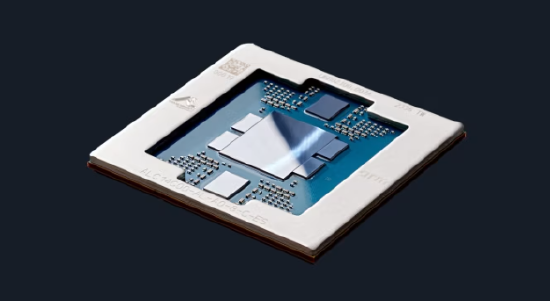
Bushna, who is also a co-founder of Amazon Web Services’ in-house chip department, Annapurna Labs, stated that the vast majority of these tens of millions of Amazon Web Services Graviton chip cores will be deployed within the United States.
Currently, major tech giants and AI labs are fiercely competing for computing resources to achieve their AI development goals. Analysts point out that Meta has successively reached cooperation agreements with companies such as NVIDIA, Cerebras Systems, and Arm Holdings this year, and signing with Amazon Web Services is one of them, highlighting the urgent need for diversified chip layouts for AI development.
Amazon executive Bushna stated, “It is well known that Meta has a wide range of choices in the supply chain, but ultimately chose our fifth-generation Graviton chip based on 3nm process technology, with cost-effectiveness being the core consideration.”
This Meta purchase is of Amazon Web Services Graviton central processing units (CPUs). In the context of the AI industry’s long-term focus on graphics processing units (GPUs), CPUs were once marginalized.
However, with the rapid rise of agent technology, CPUs have once again become a popular computing product, and traditional CPU manufacturers such as Intel have also benefited from this industry trend.
Meta stated that this new cooperation reflects the company’s strategic approach to diversifying its infrastructure layout, and also proves that a single chip architecture cannot efficiently adapt to all computing tasks.
Brandon Burke, Semiconductor Research Director at Futu Group, a market research firm, interpreted that CPUs can efficiently run various applications and provide data synergy support for GPUs. In other words, when agents perform various complex tasks, CPUs and GPUs can form an efficient complementary combination.
At the same time, the CPU is also a core hardware component in the optimization phase after large language model training, which mainly focuses on targeted reinforcement training of pre-trained models to adapt the model to specific business goals.
This is not the first time Meta and Amazon Web Services have joined hands. Bushna introduced that the cooperation between the two tech giants dates back to 2016, but previous cooperation was mainly focused on basic cloud services, the use of Amazon Bedrock AI platform, and Meta renting Amazon Web Services GPU computing clusters.
Burke mentioned that Meta’s acquisition of AI startup Manus for over $2 billion last December is enough to show its strategic ambition in the agent field, and this layout has directly driven the demand for CPU computing power in data centers. Manus focuses on the research and development of advanced agents capable of performing complex tasks.
Burke bluntly stated, “For leading-edge AI research institutions, the demand for CPU computing power is almost unlimited.”
To optimize its operating structure and share the huge AI R&D investment, Meta announced on Thursday that it will lay off 10%, or about 8,000 people, in May. Earlier this month, the company released its brand-new AI model, Muse Spark, after a year, and said it will continue to launch multiple new products.
Futu Group analyst Burke believes that for Amazon Web Services, this cooperation with Meta effectively validates the practical value of its self-developed Graviton series CPU chips in AI scenarios. Bushna said that after this cooperation is implemented, Meta will officially become one of the five core customers of Amazon Web Services Graviton chips.
Earlier this week, Amazon announced an additional $5 billion investment in AI company Anthropic, with the cooperation also including the company’s large-scale procurement of Amazon Web Services Graviton CPU cores.
As early as before 2018, Amazon Web Services had already started research and development of self-developed chips, and launched its first-generation Graviton processor based on the Arm architecture in the same year.
However, Amazon Web Services has not been limited to the self-developed chip route. In March of this year, the company reached a cooperation with Cerebras Systems to deploy the startup’s AI inference chips in its own data centers, enriching the computing hardware matrix.