New York Times Reveals: How Musk Used SpaceX to “Blood Transfuse” Himself and His Business Empire?
On April 24th, a New York Times investigation found that the rocket manufacturer SpaceX has been a key financial tool for Elon Musk, providing the billionaire with low-interest loans and funding his other struggling companies.
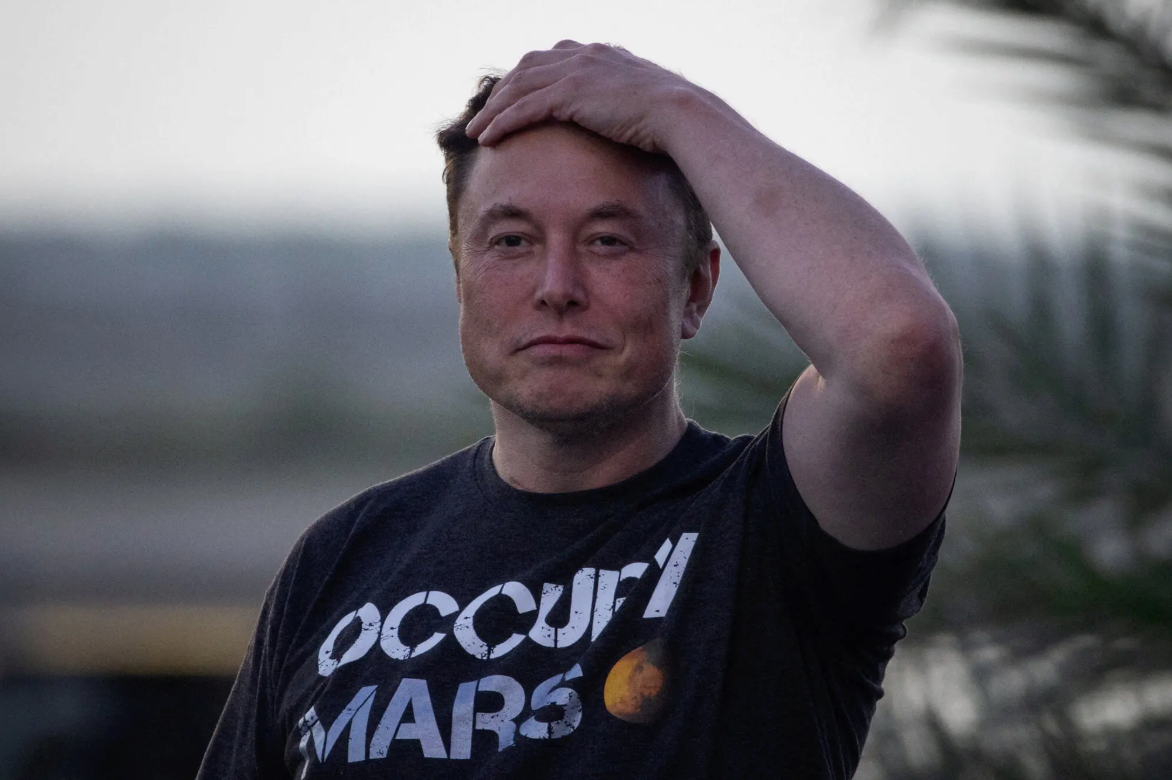
Musk
Obtaining Loans for Personal Use
In January 2018, Musk needed $100 million. Instead of going to a bank, he turned to the rocket company he founded and leads: SpaceX.
Over the next three years, Musk borrowed a total of $500 million from SpaceX, including the $100 million in 2018, which was the first of three loans. According to SpaceX internal documents obtained by the New York Times, the interest rates on these loans ranged from less than 1% to nearly 3%. In contrast, the best rates banks offered to high-credit customers remained close to 5% for much of the loan period. The documents do not specify how Musk intended to use the funds.
By the end of 2021, Musk had fully repaid these loans, paying nearly $14 million in interest. If these loans had been calculated at a 4% interest rate, the total interest due would have been closer to $40 million.
Musk Borrowed $500 Million from SpaceX
These loans and their exceptionally favorable terms would not be permitted in a publicly traded company. They were made possible solely because SpaceX is a private company. According to the New York Times’ investigation, based on company documents, court filings, internal materials, and interviews with people familiar with the matter, this is just one way Musk has used SpaceX as a kind of “ATM” over the past two decades.
Funding a Business Empire
The New York Times investigation found that Musk not only secured loans from SpaceX for himself but also relied on the company to support at least three other struggling businesses under his control. These operations included: SpaceX providing loans to electric car company Tesla (which was in desperate need of funds); investing in solar energy company SolarCity (which was in dire straits, and Musk held a large stake); and acquiring his money-losing AI startup xAI.
These transactions benefited Musk and his other companies to an extent rarely seen even in the opaque world of private companies. Two people familiar with the thinking said some SpaceX investors expressed concern that Musk was prioritizing his own interests at the expense of other shareholders, including Founders Fund, the venture capital firm co-founded by Peter Thiel.
“These are all conflicted transactions,” said Ann Lipton, a law professor at the University of Colorado Boulder. She added that this conflict is the “risk” of investing in someone who runs multiple companies simultaneously.
Musk said in a 2016 interview that he borrowed $20 million from SpaceX to help the car company when Tesla faced challenges during the 2008 global financial crisis. He said he later repaid the loan.
SpaceX’s Starship
Nearly a decade later, he again turned to SpaceX for help rescuing SolarCity. The solar installation company was founded by his two cousins in 2006. Musk was one of SolarCity’s largest shareholders and served as chairman. The company went public in 2012 but consistently lost money, accumulating more than $1.4 billion in debt by 2014.
In 2015, Musk arranged for SpaceX to purchase some of SolarCity’s debt, which credit rating agencies at the time considered to be at high risk of default. Court and public records show that by 2016, SpaceX had invested $255 million in SolarCity.
According to court testimony, SpaceX purchased the debt despite internal rules prohibiting it. If SolarCity went bankrupt, SpaceX’s investment could have been lost. Musk said SpaceX’s rules had “exceptions,” but did not provide details.
In 2016, Tesla acquired SolarCity in a stock deal worth $2.6 billion. This angered some Tesla investors, who sued the company, arguing that the deal wasted company resources.
A judge in Delaware’s Court of Chancery ultimately ruled in favor of Musk in the deal, but said the billionaire’s “level of involvement…exceeded what a conflicted fiduciary should have done.” Musk said Tesla had repaid SpaceX for the money it spent buying SolarCity’s debt.
SolarCity
He once explained the financial ties between the three companies, saying he didn’t want “some house of cards where if one piece of Tesla, SolarCity, and SpaceX collapses, the whole structure comes down.” But he later distanced himself from the remark.
In March 2025, xAI acquired X. Musk said the deal valued xAI at $80 billion and X at $33 billion. He proclaimed “xAI has rapidly become one of the world’s leading AI labs.”
He then urged Tesla shareholders to invest in the newly merged xAI and X. Some Tesla investors objected, as both xAI and Tesla are developing AI products.
Others sided with Musk. Last year, a Tesla shareholder proposed a shareholder resolution recommending that the car company invest in xAI. At Tesla’s shareholder meeting last November, shareholders voted down the resolution.
However, this January, Tesla defied the vote, announcing it would invest $2 billion in xAI.
A month later, Musk announced that SpaceX would acquire xAI, which is spending billions of dollars investing in AI research and development. He said the move created “(Earth and beyond) the most ambitious and vertically integrated innovation engine,” valuing SpaceX at more than $1 trillion.
People familiar with the matter said investors in SpaceX, such as Founders Fund, were concerned that their stake in the company would be diluted.
Restrictions on Publicly Traded Companies
Founded in 2002, SpaceX’s goal is to send humans to Mars. Today, the company dominates the space industry with its rocket business and “Starlink” satellite internet service. SpaceX is valued at more than $1 trillion, the jewel of Musk’s business empire, and has given him significant geopolitical influence. The 54-year-old entrepreneur has repeatedly praised SpaceX as “incredible” and a venture to “extend consciousness to the stars.”
Now, as Musk prepares to take SpaceX public, likely in one of the largest initial public offerings (IPOs) in history, he will need to answer to Wall Street and other investors. As a major contractor for the federal government, SpaceX will be required to disclose its financial performance in detail, as well as transactions between Musk and his affiliated companies.
Under the 2002 Sarbanes-Oxley Act, publicly traded companies are prohibited from providing corporate funds loans to many senior executives, as such loans can pose risks. Banks typically assess loan risk, but this objectivity can be compromised when a board of directors provides funds to company executives. The law was passed after companies like energy giant Enron collapsed due to accounting scandals (Enron had provided loans to its executives).
Previously Used Tesla
Before borrowing from SpaceX, Musk had also taken similar steps with his publicly traded company, Tesla. Public filings revealed that he had long used his Tesla stock as collateral to secure hundreds of millions of dollars in personal loans from Wall Street banks.
Tesla Texas Factory
This practice is risky and prohibited in many publicly traded companies. This is because: if the stock price suddenly falls, banks may be forced to sell the pledged stock to avoid losses, triggering a chain reaction that further depresses the stock price, creating a “downward spiral.”
Michael Garland, assistant comptroller for the city of New York, said the city’s five pension funds, which collectively hold 3.4 million shares of Tesla stock, have opposed Musk’s practice of borrowing against his Tesla stock.
“I don’t think any investor likes this, because it introduces risk,” Garland said. He also said Musk has become “increasingly opaque” over time.
In a 2021 filing, Tesla said that the amount borrowed by executives, including Musk, using company stock as collateral could not exceed 25% of the value of those shares. But some shareholders argued that this policy was still too lenient and could put the company at risk if Tesla’s stock price fell.
In 2023, the Tesla board took further steps to limit the total amount Musk could borrow through his stock to the lower of two figures: either $3.5 billion or 25% of the value of his shares.