Japan Launches Folded CubeSat, Expanding to 25 Times Its Size in Orbit
On April 23rd, the Japan Aerospace Exploration Agency (JAXA) implemented the "KakushinRising" mission, sending multiple small satellites into a sun-synchronous orbit approximately 540 kilometers above Earth. Among them, the "OrigamiSat-2," a cube satellite with sides of only 10 centimeters, is particularly noteworthy. This satellite is equipped with a deployable reflector array antenna that can unfold like origami once in orbit, increasing its size to 25 times its folded state.
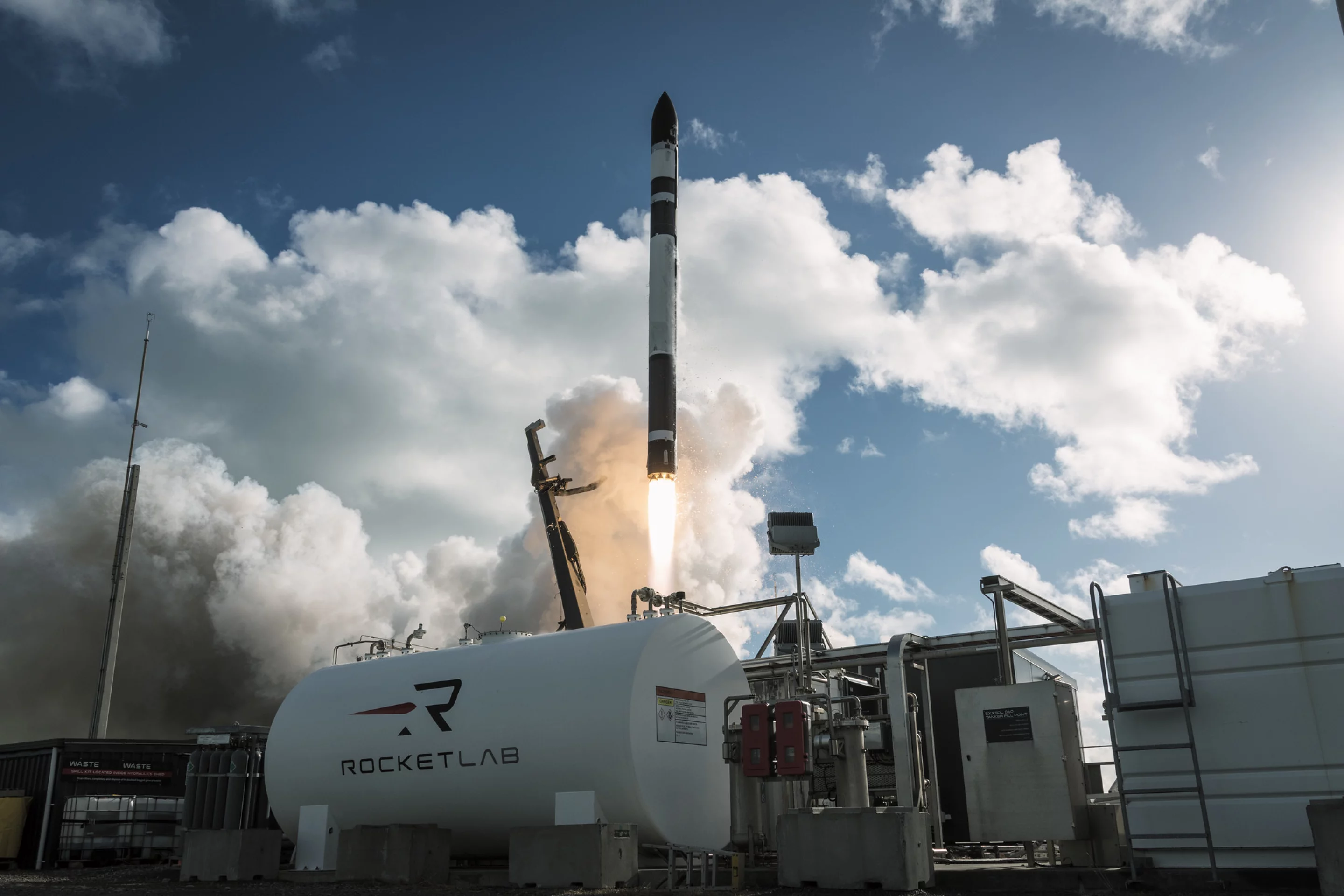
This launch is the latest phase of JAXA’s “Innovative Satellite Technology Verification Program.” Approximately 53 minutes after liftoff from New Zealand, the mission successfully deployed a total of eight small satellites, with payloads serving a variety of technical verification and application goals including earthquake electromagnetic precursor detection, ocean monitoring, and multispectral imaging with ultra-small cameras.
Reports indicate that the use of origami and related "paper-cutting" concepts in engineering design has a long history in Japan and other countries. In 1970, Dr. Miyura Koryo proposed the famous "Miura-ori" structure, initially used for large maps that were easy to store and unfold, with its research background intrinsically linked to deployable structures for space. By 1995, Japan’s “Space Flyer Unit” satellite had already utilized this structure for its solar panels, successfully deploying them in orbit and having a lasting impact on the solar wing design of subsequent spacecraft.
A similar approach has also been applied to solar sail spacecraft. Japanese designers refer to these spacecraft as “space yachts,” which operate not by relying on engines or rocket fuel, but by utilizing photon pressure to propel the solar sail forward. In 2010, JAXA launched IKAROS, the world’s first small solar sail spacecraft, which traveled 80,800 kilometers to Venus using an origami-style solar sail, becoming a representative case of the application of foldable space structures.
In the space sector, launch costs have always been a key limiting factor. The article cites data showing that as early as around 2000, the construction cost of a conventional weather satellite was approximately $290 million, and a reconnaissance satellite approximately $390 million, with additional launch fees ranging from $10 million to $400 million. Large rockets cost more than $4,000 per pound of payload to launch, while small rockets can reach $14,000. Taking the 2009 commercial communications satellite TerreStar-1 as an example, its antenna and solar panels expanded to a large size after deployment, with the entire satellite weighing approximately 6.91 tons, construction and insurance costs of about $350 million, and a launch fee of $165 million paid to Arianespace 5.
In contrast, CubeSats have significant cost advantages due to their small size, light weight, and short development cycles. University teams can develop CubeSats within a relatively short period of time with budgets at the level of thousands of dollars. These satellites can weigh as little as 1 kilogram, up to about 10 kilograms, and even light enough to be launched using new platforms such as “balloon rockets.” The article mentions that Spanish company Zero 2 Infinity is developing the Bloostar system, which theoretically can send 140 kilograms of payload into a near-Earth orbit of about 200 kilometers, or 75 kilograms of payload into a sun-synchronous orbit of about 600 kilometers.
The foldable reflector array antenna adopted by OrigamiSat-2 also reflects the development trend of low-cost, high-gain communication technology. Unlike traditional reflector antennas, reflector array antennas work in coordination with a feed unit and passive planar reflectors to control the phase of reflected electromagnetic waves, thereby forming a focused beam, suitable for orbital and deep space missions.
It is worth noting that this is JAXA’s second satellite launch mission using the American commercial space company Rocket Lab in the past five months. Rocket Lab is headquartered in Long Beach, California, and operates launch facilities in the United States and on the Mahia Peninsula of New Zealand. Its Electron two-stage rocket is primarily aimed at small payload launches, and some configurations have the ability to be recovered.
Rocket Lab founder and CEO Peter Beck stated that successfully executing two dedicated launches for JAXA in a matter of months, and precisely delivering satellites to their target orbits, demonstrates that the Electron rocket has become one of the preferred small launch vehicles for national space agencies. The article also mentions that the global CubeSat industry has reached $355 million in scale. Rocket Lab claims to have deployed over 250 satellites, with its business covering launch services, spacecraft platforms, satellite components, and on-orbit management, and collaborates with organizations and companies such as NASA, the U.S. Space Force, DARPA, and Canon.