Musk vs. Altman Lawsuit to Begin Next Week, Seeking $134 Billion in Damages
A years-long legal battle between the world’s richest person, Elon Musk, and OpenAI CEO Sam Altman will go to trial on Monday in Northern California, setting the stage for a dramatic showdown between two prominent figures in the tech world. Musk’s $134 billion lawsuit alleges that OpenAI, CEO Altman, and President Greg Brockman violated their prior commitment to keep the AI lab permanently non-profit. OpenAI subsequently restructured to operate a for-profit subsidiary, currently valued at…
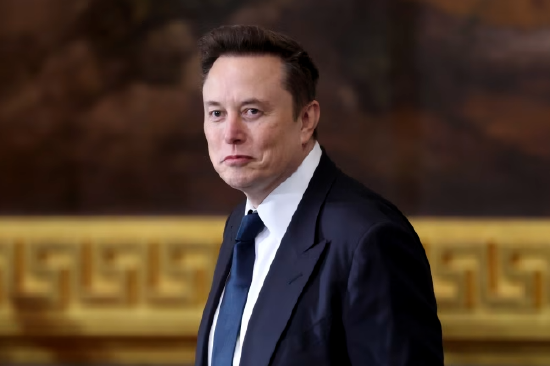
Musk and Altman were once friends, co-founding OpenAI in 2015 with a group of tech individuals, sharing a common focus on the potential of artificial intelligence and the necessity of advancing it in a way that benefits humanity.
Today, they have become targets of criticism and adversaries. Musk founded xAI in 2023 to compete with OpenAI and recently merged it with SpaceX, resulting in a combined valuation of $1.25 trillion. The trial comes as Musk prepares to take SpaceX public, a move expected to break IPO records.
According to CNBC’s previous reporting, OpenAI plans to go public in the fourth quarter. In a document sent to potential investors earlier this year, OpenAI described the ongoing lawsuit with Musk as a potential risk to its business.
The startup has repeatedly dismissed Musk’s lawsuit as “meritless,” calling it “a harassment campaign driven by ego, jealousy, and a desire to slow down a competitor,” according to an article on the X website in early April.
This war of words has been ongoing for months.
“Fraudulent Altman lies as easily as breathing,” Musk wrote in an August post on X (a part of xAI).
“So excited to have Elon testify under oath in a few months – like, April!” Altman wrote on X in February.
Jury selection for the Musk vs. Altman case will begin Monday at the Oakland Federal Court, located across the bay from San Francisco, where OpenAI is headquartered.
Musk stated that if he wins, he wants the court to return all “ill-gotten gains” to OpenAI’s non-profit entity, not to himself. He also requests the removal of Altman and Brockman from their positions and “the reversal of OpenAI’s for-profit conversion and restructuring.”
This is not Musk’s only lawsuit against OpenAI. X (formerly Twitter) and its subsidiary xAI sued OpenAI and Apple in 2025, alleging anti-competitive behavior. A hearing in that case is scheduled for May in Texas.
Additionally, in February of this year, a federal judge in California dismissed another lawsuit filed by xAI, which accused OpenAI of stealing its trade secrets.
The conflict between Musk and Altman dates back to 2018, when Musk left OpenAI’s board due to numerous disagreements with Altman and Brockman regarding the company’s direction, including a failed attempt to merge the startup with Tesla.
After Musk’s departure, OpenAI established a for-profit subsidiary, making it easier to attract external investment.
OpenAI briefly considered transitioning to a for-profit company in 2024, which would have relinquished control of the non-profit and maintained it as an independent division. However, facing pressure from civic leaders and former employees, including Musk, the company changed its plans. OpenAI completed a capital restructuring in October, solidifying its structure as a non-profit with a controlling stake in its for-profit business.
In 2024, Musk sued OpenAI, Altman, and Brockman, claiming they “deliberately misled” and “deceived” him, as they promised the company would “chart a safer, more open course than for-profit tech giants.”
However, Musk’s claims and desired outcomes have significantly evolved in recent months.
In a filing in January, Musk’s lawyers stated he should receive up to $134 billion in damages from OpenAI and Microsoft. Microsoft, a long-time supporter of OpenAI, was also named as a defendant, accused of aiding and abetting OpenAI in breaching its charitable trust obligations.
As of November 2024, of the 26 allegations Musk made against OpenAI, Altman, and Brockman, only four remain: unjust enrichment, fraud, constructive fraud, and breach of fiduciary duty. Musk’s lawyers are seeking to dismiss two of those claims – fraud and constructive fraud – before trial to “simplify the case,” according to a filing.
OpenAI’s lawyers described Musk’s actions as a “tactical maneuver” on Wednesday.
“The trial is five days away, and the plaintiff still refuses to clarify what claims he intends to pursue and what remedies he seeks,” they wrote in their filing.
Judge Yvonne Gonzalez Rogers is presiding over the case, appointed to the U.S. District Court for the Northern District of California by former President Barack Obama in 2011. Judge Gonzalez Rogers has presided over several high-profile lawsuits involving tech companies, including the antitrust case between Epic Games and Apple.
According to a filing in March, nine jurors will be selected, with no alternate jurors.
Judge Gonzalez Rogers’s team has chosen to divide the trial into two phases: a liability phase, to determine if any wrongdoing occurred; and a remedies phase, to determine appropriate damages and next steps. The jury will only deliberate during the liability phase, and its findings will be advisory, meaning Judge Gonzalez Rogers will make the final decisions in both phases of the trial.
The liability phase of the trial is expected to last until mid-May, with court in session from 8:30 a.m. to 1:40 p.m. Pacific Time, Monday through Thursday each week.
Opening statements will follow jury selection. Judge Gonzalez Rogers’s team has allotted approximately 20 hours of statement time to Musk and OpenAI’s lawyers each, with Microsoft receiving 5 hours.
All three parties have submitted a list of potential witnesses, including Musk, Altman, Brockman, and Microsoft CEO Satya Nadella.
If OpenAI is found liable, Judge Gonzalez Rogers will hear arguments during the remedies phase, scheduled to begin on May 18.
“However, if the jury finds that Musk did not file his lawsuit within the statute of limitations, the court is likely to accept that finding and enter judgment in favor of the defendants,” Gonzalez Rogers wrote.
Related Article:
U.S. Judge Grants Musk’s Request to Dismiss Fraud Claims in OpenAI Case