The Most Radical "AI Pioneer" Duolingo Has Let Go of Employees
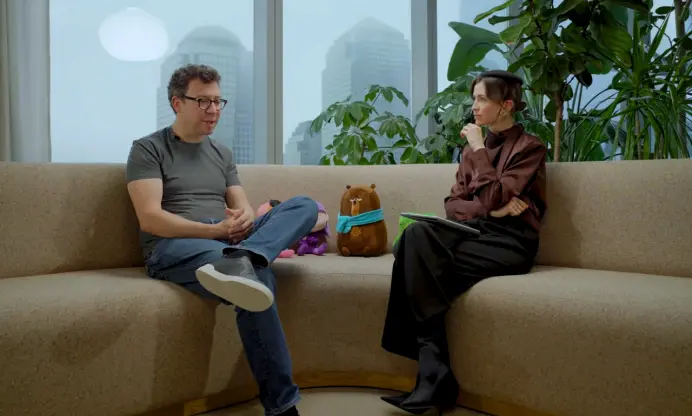
From "AI-First" to "No Forced Use of AI," from a market capitalization of $25 billion to $4 billion, it took Duolingo only one year. What exactly has happened to this "evil" little green bird that is both loved and hated by global users? In April 2026, Luis von Ahn stated in a podcast that Duolingo no longer includes employee AI usage in performance evaluations. He said the most important thing in performance is "to do the job as well as possible"; AI can often help, but if it can't, "I won't force you to use it."
This company was once one of the most radical companies globally—in April 2025, Luis announced in an open letter to all employees that the company was shifting to "AI-First," requiring that human positions only be necessary when it could be proven that "AI couldn't do it."
From "forced use" to "use if you want," this language learning giant, once considered the most radical benchmark for "All in AI," completed a strategic reversal within a year.
Why is the company that was the first and most aggressively pushing AI the first to withdraw this system?
Top businesses meet tireless AI
This green owl may be the bird with the worst attitude towards humans in history. Not only does it "change its face" without warning, but it often threatens its 50 million daily active users: "Ultimatum! Your streak is about to end!"
In this way, Duolingo used a game-like mechanism to turn learning, a tedious task, into an addictive daily check-in, soaring to become a "model student" in the eyes of the capital market—fast growth, good profitability, and strong user stickiness.
When the AI wave arrived, Duolingo was definitely one of the fastest movers among consumer internet applications.
In March 2023, Duolingo partnered with OpenAI to launch AI learning features and officially released Duolingo Max. Subsequently, in the following year, Duolingo entered the first stage of "enjoying the AI dividend."
In early 2024, the company laid off approximately 10% of its contract workers and explicitly stated that it was relying more on AI to generate content.
Soon, Duolingo did demonstrate AI's "magic" in production efficiency. With the help of AI, Duolingo launched more than 7,500 new content units in 2024, while this number was only 425 in 2021 before AI was widely used. The efficiency of content production was raised to an unprecedented level.
Financial data provided the strongest endorsement for Duolingo's AI strategy. In fiscal year 2024, Duolingo's total bookings reached $870 million, a year-on-year increase of 40%; the number of paid subscribers reached 9.5 million, a year-on-year increase of 43%.
In the annual letter to shareholders, management defined 2024 as a "record-breaking year." At this time, the capital market saw a clear and attractive story: AI truly became Duolingo's new growth engine.
Duolingo, having tasted success, stepped on the gas in 2025 and entered the radical "AI-First" year. In April 2025, Luis announced the company's shift to "AI-First," followed by a set of hardcore "combos": gradually stopping contractors from doing work that AI can do, emphasizing AI usage skills in recruitment, examining AI usage in performance evaluations, and requiring proof that work cannot be automated before requesting additional staff.
In this company, the default producer shifted from humans to AI, and humans not only needed to prove their irreplaceable value but also compete with AI, and even the evaluator of performance evaluations not only came from the boss but also from AI—AI checks how much and how well you use AI.
The enthusiasm for AI also drove the product and financial performance of that year, making 2025 the year Duolingo's AI narrative was most favored by the market.
In the second quarter, the company's daily active users (DAU) increased by 40% year-on-year, and net profit soared by 84% year-on-year. By the third quarter, the company began to emphasize the increase in average revenue per user (ARPU) brought by Duolingo Max and "Family Plan," and excellent performance drove the stock price to rise by about 24% after the release of the report.
Fast Company reported that the market rewarded Duolingo's AI story with real money. Even on the cost side, Duolingo gave a "counterintuitive" signal: AI costs were lower than expected. This means that AI can not only improve efficiency but also its cost controllability has been proven.
AI made it, AI broke it, the "little green bird" falls from grace
However, beneath the glamorous financial figures, cracks had begun to appear.
Externally, a large number of users began to question the quality of the courses and complain that it was "too mechanical." Internally, the practice of tying AI usage to performance made employees start to "use AI for the sake of using AI."
In 2025, several media outlets (such as Customer Experience Dive, Polygon, etc.) mentioned that users began to concentrate feedback on problems at the course quality level, such as "AI-generated sentences are 'unnatural' and 'like machine stitching,'" "exercise content is repetitive and the context is unrealistic," and "the quality of some language courses fluctuates significantly."
In communities such as Reddit and X (Twitter), the wave of questioning the deteriorating "teaching" experience of mutual interaction between people became louder and louder: "The courses are no longer taught by humans," "The dialogue lacks real interaction, as if talking to a template."
Internally at Duolingo, Gallup's survey showed that a large number of employees held cautious or distrustful attitudes towards AI. They worried that "not being able to use AI = poor performance," their job responsibilities would be redefined or marginalized, and they were more anxious about whether AI would replace them.
The impact of public opinion did not stop at the emotional level but quickly manifested in specific business indicators. The company let "AI compete," and users began to "vote with their feet." Some users chose to delete the App, even abandoning years of accumulated consecutive check-in records; at the same time, there were a large number of subscription cancellation threats and boycotts on social media, and Duolingo's TikTok and Instagram were flooded with angry comments, and all videos were deleted.
According to Reuters, Duolingo's user growth slowed down in 2025 and was expected to fall to about half of its previous level in 2026.
The market reaction was more direct. After releasing guidance for slowing growth, Duolingo's stock price fell by more than 23% in a single day, with a cumulative decline of about 38% for the year. This marked a shift in market judgment: investors no longer cared only about the efficiency brought by AI but began to question its negative impact on products and business value.
Faced with a double denial from users and the capital market, Duolingo was forced to press the pause button and make a strategic callback in 2026.
When releasing its 2025 fiscal year results, Duolingo explicitly stated that it would prioritize user growth and teaching effectiveness in the new fiscal year, improve the free user experience, and invest heavily in new business lines such as chess, mathematics, and music, even if this would depress short-term profits.
At the same time, the company plans to open up more AI features to a wider range of users, rather than just limiting them to the high-end subscription tier, in an attempt to repair user relationships damaged by the excessive pursuit of AI monetization. These moves are Duolingo's attempt to regain its original brand essence of being interesting and effective after leading users astray in the AI high-speed race.
Looking at Luis's latest statement, it's not surprising that "AI unbinding" has naturally occurred within Duolingo.
Luis publicly stated in a podcast that he would no longer include employee AI usage in performance evaluations, emphasizing that "the most important thing is to get the job done."
This actually negated the attempt to use AI usage as an assessment indicator and, in management, to some extent alleviated the employees' "using AI for the sake of using AI" performance behavior, reducing the "efficiency watering rate."
Furthermore, when a designer is forced to use AI to generate pictures in scenarios where AI is not needed, and a course designer generates a large amount of homogenized content in order to boost numbers, this not only improves efficiency but also creates internal anxiety and may lead to outsourcing of thinking—employees no longer delve into the essence of the problem but mechanically seek AI's "help."
In just a few years, Duolingo has completed its "obsession" and "disillusionment" with AI.
03
The pain is not unique to Duolingo
Duolingo's predicament is not an isolated case. It is just the first to expose the discomfort caused by the deep integration of AI into the commercial world. Perhaps Duolingo's problem is not that it uses too much AI, but that it used it too early and too aggressively. Behind Duolingo, tech companies are experiencing similar growing pains.
Take e-commerce platform Shopify as an example. Its CEO Toby Lütke once explicitly stated, "Before hiring, first ask if AI can do it," placing AI ahead of manpower in priority. This concept is the same as Duolingo's "need to prove that humans cannot be replaced by AI" logic: advocating for extreme work efficiency.
After all, in terms of extreme efficiency, humans cannot be better than AI, because AI does not need to rest, does not need to take leave, and will not protest on social media.
Shopify did not lay off a large number of employees, but many job postings no longer appeared on the recruitment market, such as junior positions, repetitive positions, and supportive functions. In addition, Shopify also emphasized internally that AI can enable the team to complete more work, even increasing efficiency by a hundredfold.
Shopify's strategy was quickly spread on social media after being exposed, causing a lot of discussion. The Washington Post reported that practitioners openly criticized this practice as "not recommending such a company," believing it was unfair to employees. On platforms such as Reddit and X, the sentiment was even more direct—if all companies do this, where will newcomers start?
At the same time, this strategy also began to produce side effects at the product and customer experience levels. After introducing AI into customer service and other links, some merchant users' feedback was not ideal. The Logic reported that some merchants felt confused or dissatisfied with the AI customer service's response methods, believing that the problem-solving efficiency did not improve significantly, but increased communication costs. One merchant wrote in the forum: "I just want to communicate with a real human who understands my problem"; another user commented: "AI's reply is fast, but it doesn't really solve the problem." Once AI enters the "people-to-people interaction" link, the improvement in efficiency turns into a degradation of service.
There are more Duolingos rushing on the road of AI. Meta internally increasingly emphasizes the proficiency of AI tools, and even has a culture of "Token usage ranking." Klarna, after aggressively deploying AI customer service and claiming to have achieved significant efficiency gains, had to publicly admit the irreplaceable nature of human customer service in complex scenarios and made strategic adjustments.
AI investment can indeed improve efficiency in some production links and may boost stock prices in the short term, but on the other hand, it also conveys an unsettling signal to employees and the public: the value of people is being toolized. The more companies publicly emphasize AI's disruption of efficiency, the more they turn the competition of efficiency between companies into a "competition between humans and machines," which will undoubtedly exacerbate the anxiety of employees and users, and the ultimate cost will eventually be reflected in the stock price that companies really care about.
However, Duolingo's "unbinding" in 2026 should not be simply interpreted as a failure or retreat of its AI strategy. Duolingo didn't fail, it just reached the limit first. Duolingo's story is a story about management methods rather than technology itself.