Research on Prehistoric Vietnamese Skeletons Challenges Key Assumptions About the Origin of Syphilis
A new study led by researchers at Charles Sturt University in Australia suggests that evidence of congenital syphilis in archaeological remains does not necessarily prove sexual transmission of the disease. This finding is shaking a long-held standard in medical history and paleopathology.
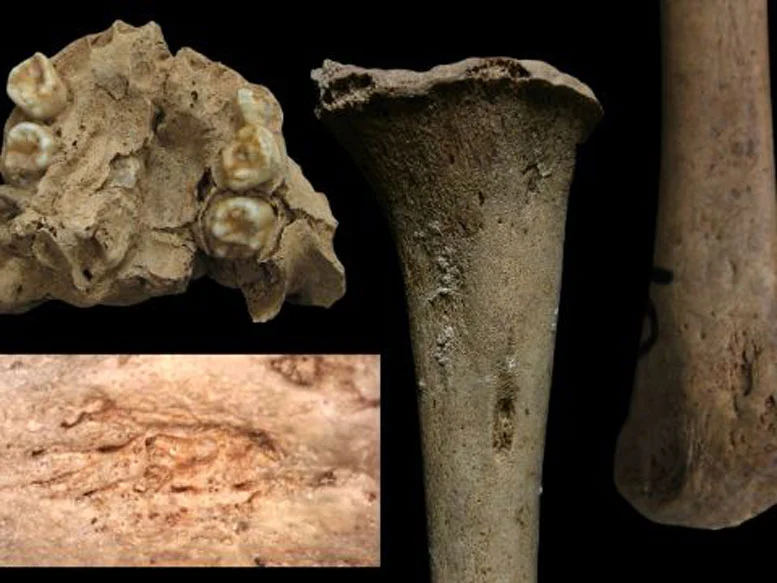
The research team analyzed the skeletal remains of children from prehistoric sites across northern and southern Vietnam, dating back approximately 4,000 to 3,200 years. A paper published in the *Journal of Archaeological Science* confirmed evidence of congenital spirochetal disease in the remains of three children, including syphilis, yaws, and endemic syphilis. Researchers noted that these lesions manifested as characteristic tooth defects and bone damage, indicating that the infections were likely transmitted from mother to infant in utero.
However, the researchers also emphasized that, considering the broader population distribution patterns, these cases are more likely to correspond to a non-sexually transmitted spirochetal disease, such as yaws, rather than the traditionally understood sexually transmitted disease, syphilis. Yaws is a tropical disease that currently affects over 150,000 people worldwide and can cause permanent disability.
Dr. Melandri Vlok, the first author of the paper and a lecturer in anatomy and physiology at Charles Sturt University, stated that for decades, evidence of congenital infection in archaeological remains has often been considered strong evidence of sexually transmitted syphilis. However, their research shows that this inference is not always valid, and other spirochetal diseases may also have been transmitted from mother to infant in the past.
The study analyzed 309 individuals from 16 archaeological sites in Vietnam, spanning a period of approximately 10,000 to 1,000 years ago. Among all samples, only three children showed clear signs of congenital infection, with at least some cases dating back 3,500 years.
Notably, two of these three cases came from the Man Bac site in northern Vietnam, which has previously been considered to have a high prevalence of spirochetal disease. Researchers noted that local infections primarily appeared in children and adolescents, an epidemiological characteristic more consistent with non-sexually transmitted diseases spread through skin contact than with sexually transmitted diseases.
Vlok stated that the epidemiological evidence from the Man Bac site strongly suggests a non-sexually transmitted form of spirochetal disease, but the researchers still found evidence of congenital transmission there, which is the most surprising aspect. This finding also directly impacts the long-standing debate about the origin of syphilis, as scholars have often used ancient skeletal congenital cases as a basis for determining whether syphilis existed outside the Americas before the arrival of Columbus.
The research team believes that the new evidence suggests that congenital infection alone is no longer sufficient to reliably distinguish between sexually transmitted syphilis and other related spirochetal diseases. This also means that some archaeological cases previously classified as “congenital syphilis” may actually belong to completely different disease types.
The article also points out that, to date, there is a lack of confirmed biological or genetic evidence of sexually transmitted syphilis in populations in the Americas or elsewhere before Columbus. Conversely, genetic studies of ancient remains suggest that multiple spirochetal diseases may have coexisted historically, reflecting the complex evolutionary history of this class of pathogens.
Researchers also mentioned that ancient pathogen research is facing increasing practical challenges, especially in tropical regions like Southeast Asia, where poor preservation conditions make it extremely difficult to extract ancient DNA. In addition, ethical issues related to destructive sampling of human remains are becoming increasingly important.
Minh Tran, co-first author of the paper and a doctoral student at the University of the Philippines Diliman, stated that obtaining ancient DNA in tropical environments is exceptionally difficult, and destructive sampling also raises important ethical concerns. Therefore, future research needs to proceed in new ways, establishing genuine partnerships with communities associated with these remains and prioritizing the preservation of remains before conducting any biomolecular research.
The research team concluded that this discovery once again demonstrates the strong adaptability of the bacterium that causes these diseases – *Treponema pallidum* – throughout history. Researchers believe that future scholarship should focus less on where syphilis originated and more on how different spirochetal diseases co-evolved with human populations and environmental changes. Only by clarifying this complex history can we more accurately reconstruct how infectious diseases have shaped human history.