Seawater Evaporation Can Also Generate Electricity: Swiss Team Develops Novel Nanodevice to Output Stable Continuous Current
A research team from the Nanoscale Science and Energy Technologies Laboratory (LNET) at the École Polytechnique Fédérale de Lausanne (EPFL) in Switzerland has recently developed an experimental nanogenerator that can continuously generate a stable current using the seawater evaporation process. The device is based on a silicon semiconductor core, regulates the movement of ions and electrons, and utilizes light and heat to drive seawater evaporation, thereby achieving self-powered electricity generation. Researchers say this mechanism could open up new avenues for eco-friendly energy harvesting technologies. The relevant results have been published in the journal *Nature Communications*.
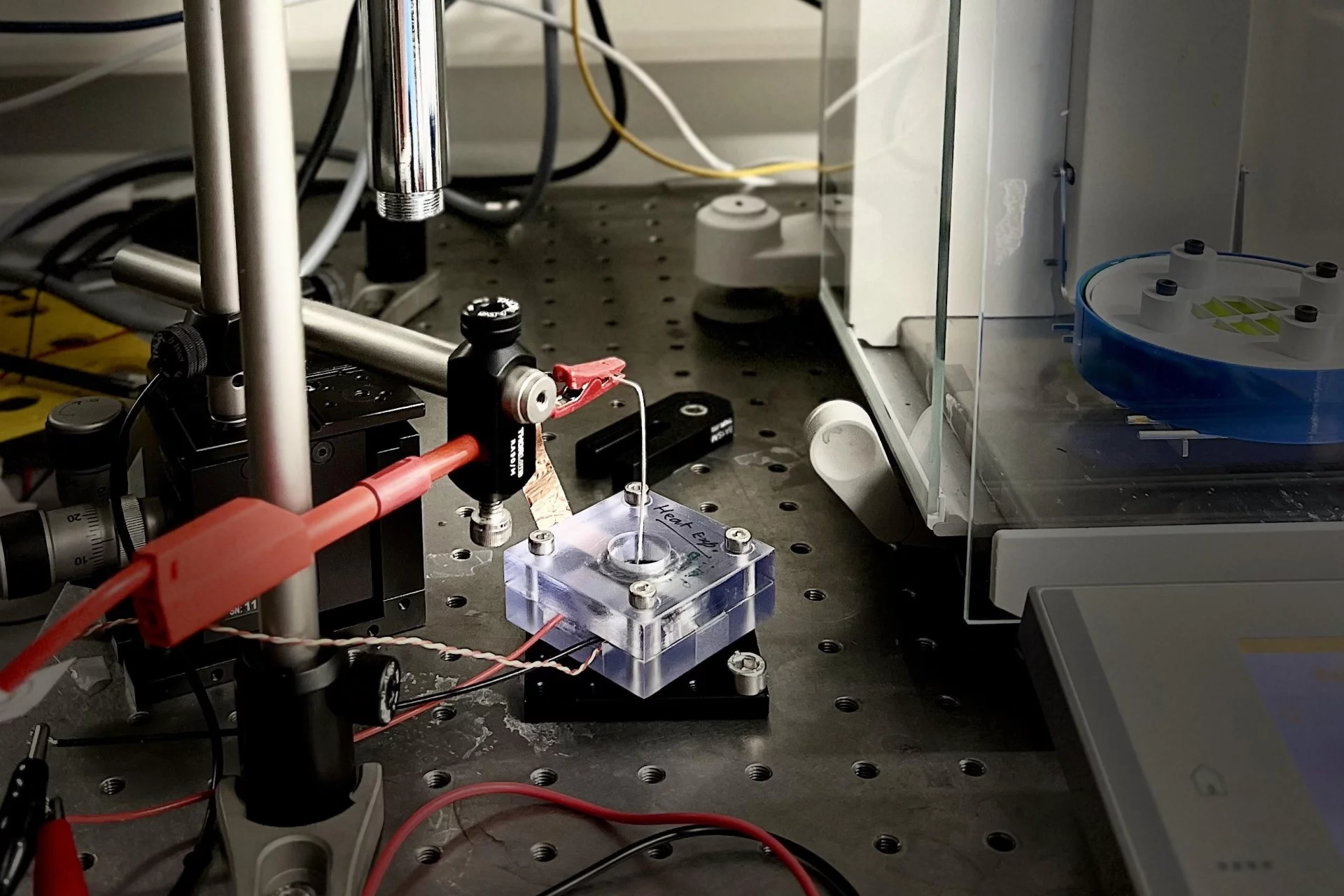
The research team, led by Giulia Tagliabue and researcher Tarique Anwar, proposed a “unified physical and experimental framework” for evaporation-driven hydrovoltaic systems in their paper, the key to which lies in separating and precisely controlling interfacial processes. These interfacial processes refer to interactions occurring between different phases, such as solid-liquid and liquid-gas. The research team hopes to use this framework to more efficiently convert the evaporation process into electrical energy output with the participation of sunlight and thermal energy.
This technology builds on LNET’s previous research on the “hydrovoltaic effect.” The hydrovoltaic effect refers to the ability to induce electricity generation when a liquid flows over the surface of a charged nanodevice. The new device further utilizes the tiny gaps between hexagonally arranged silicon nanopillars to promote liquid evaporation and guide the movement of ions in seawater during this process. Researchers point out that heat and light always affect the performance of hydrovoltaic devices, and their breakthrough this time is that they have, for the first time, transformed these previously unavoidable influences into performance advantages, using inexhaustible and relatively environmentally friendly seawater as an energy medium.
An important conceptual breakthrough in the research is that the team discovered that enhanced power generation is not simply a result of evaporation itself. Because the device uses silicon semiconductor material, heat increases the negative charge on the semiconductor surface, and sunlight activates the electrons within it. In other words, evaporation, thermal effects, and optical effects are not independent of each other, but form a synergistic effect within the device, jointly promoting the improvement of power generation efficiency.
According to the research team, the gain brought by this surface charge effect is quite significant. After introducing sunlight and heat, the device’s energy output can be increased by up to 5 times compared to the original. Tagliabue said that this natural effect has always existed, but they are the first researchers to truly utilize it.
In terms of structural design, this evaporation-based power generation device adopts a three-layer architecture, corresponding to three independent processes: evaporation, ion transport, and charge collection. The top layer is the evaporation layer, the middle layer is responsible for ion conduction, and the bottom layer is a dielectric silicon nanopillar array. This layered design not only helps researchers gradually analyze and calibrate the processes and results of each stage, but also further improves the overall power generation performance of the device and more clearly reveals how heat and light induce charge generation and promote ion migration.
In addition to its power generation capabilities, this technology also has obvious advantages in terms of durability. Researchers point out that heat and light can lead to degradation of the hydrovoltaic mechanism, and corrosion problems in high-salt environments can exacerbate this process. However, the surface of the silicon nanopillars in the device is covered with an oxide coating, which can remain stable under light and heat, thereby avoiding unnecessary chemical reactions and improving the reliability of the device in seawater environments.
The research team said that if subsequent iterations are successful, these hydrovoltaic devices are expected to provide continuous, autonomous power support for various small, battery-less sensor networks in the future, as long as sunlight, heat, and water are available. Potential application scenarios include environmental monitoring systems, Internet of Things devices, and current and future wearable technologies. Researchers believe that if mobile and nearly “free” power extraction methods can be put into practical application, the social value they bring will be immeasurable.