European Rivers Cause Salmon to Behave Radically Due to Cocaine Overload: Less Fear of Predators and Faster, Further Swimming
It is no secret that various drugs are present in European rivers at levels exceeding acceptable limits. Many might assume this is due to criminals disposing of drugs while fleeing, but the reality is that these drugs originate from the excretions of drug users.
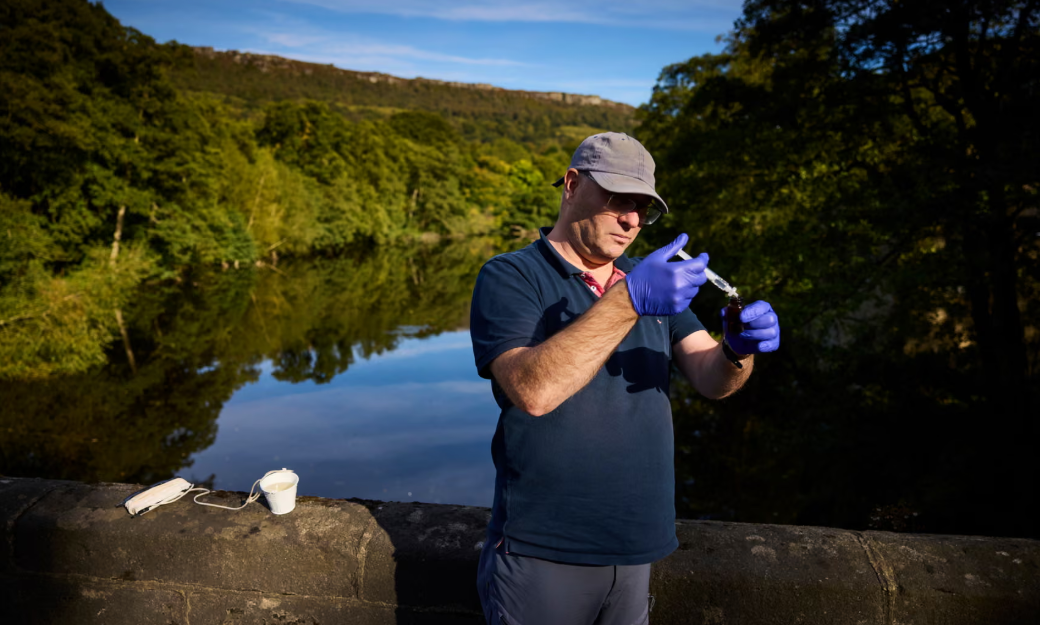
After drug users consume drugs, their bodies do not absorb and metabolize everything. A portion of the drug is excreted intact along with metabolic waste (in the form of feces or urine).
Urban wastewater is treated and then discharged directly into rivers. Drug compounds and their metabolic waste products are not “filtered” out by wastewater treatment systems, and therefore end up in rivers.
The drug residues found in these rivers reveal that different types of drugs are prevalent in different regions of Europe.
Rivers in Western and Southern Europe often show significant cocaine levels, while rivers in Central Europe typically have higher amphetamine levels. In the Czech Republic and Slovakia, methamphetamine contamination is more common.
Recently, a study from the Swedish University of Agricultural Sciences pointed out that even trace amounts of drug residues in rivers are impacting the entire ecosystem.
The study tracked the activity of Atlantic salmon fry in Lake Vättern that had been exposed to cocaine and its metabolites. The results showed that the behavior of these “cocaine salmon” differed significantly from normal salmon.
△ Lake Vättern
They became bolder and less fearful of predators;
They swam faster – 20% faster than normal salmon, traveling almost twice the distance per week as normal salmon, and spreading a total of 12.3 kilometers further;
Additionally, they did not have a passive period of complete rest, but continued to move.
Researchers set up three control groups: a normal group, a group injected with cocaine, and a group injected with benzoylecgonine.
△ From top to bottom: normal, injected with cocaine, injected with benzoylecgonine
They found that the chemical substance with the greatest impact on salmon was not cocaine, but benzoylecgonine.
Benzoylecgonine is a urinary metabolite when humans consume cocaine, so in reality, the amount of this substance discharged into rivers is greater than cocaine and its concentration is higher.
For humans, benzoylecgonine is an indicator used in urine tests to determine whether a person has consumed cocaine, but it is not considered a stimulant.
However, previous studies have found that benzoylecgonine can have a significant impact on the behavior of aquatic invertebrates, including increasing their swimming speed.
This study now shows that this drug’s degradation product also has a significant impact on the behavior of salmon fry.
Salmon fry need to migrate to the ocean. While benzoylecgonine and other substances make them swim faster and more actively, this is actually detrimental to salmon.
Being bolder aside, they are likely to be eaten by predators more easily. Increased activity and longer distances are also not good, as more activity and longer distances mean they are more likely to encounter predators and deplete their precious energy.
Atlantic salmon is an important economic fish in several Nordic countries (including Sweden), and since the beginning of the 21st century, wild Atlantic salmon populations have been declining.
Previously, experts generally believed that overfishing and environmental pollution were the main reasons for the decline in Atlantic salmon. Now, it appears that increased drug levels in rivers are also a potential cause.
It is hard to imagine that every human “indulgence” could ultimately turn into a nightmare for the fish world through the toilet.
Reference: