Australian Research Team Develops “Nano-Spike” Antiviral Coating Enabling “Contact-and-Kill” on High-Touch Surfaces
Researchers at the Royal Melbourne Institute of Technology (RMIT University) in Australia have developed a silicon-based surface material with a nano-textured structure. Its surface is covered with ultra-fine nano-pillar spikes invisible to the naked eye, which can physically puncture the viral envelope, significantly weakening the virus's ability to infect. Researchers say the material could be used in the future on surfaces of frequently touched objects such as mobile phone screens, keyboards, and hospital desktops to reduce the risk of disease transmission in shared spaces.
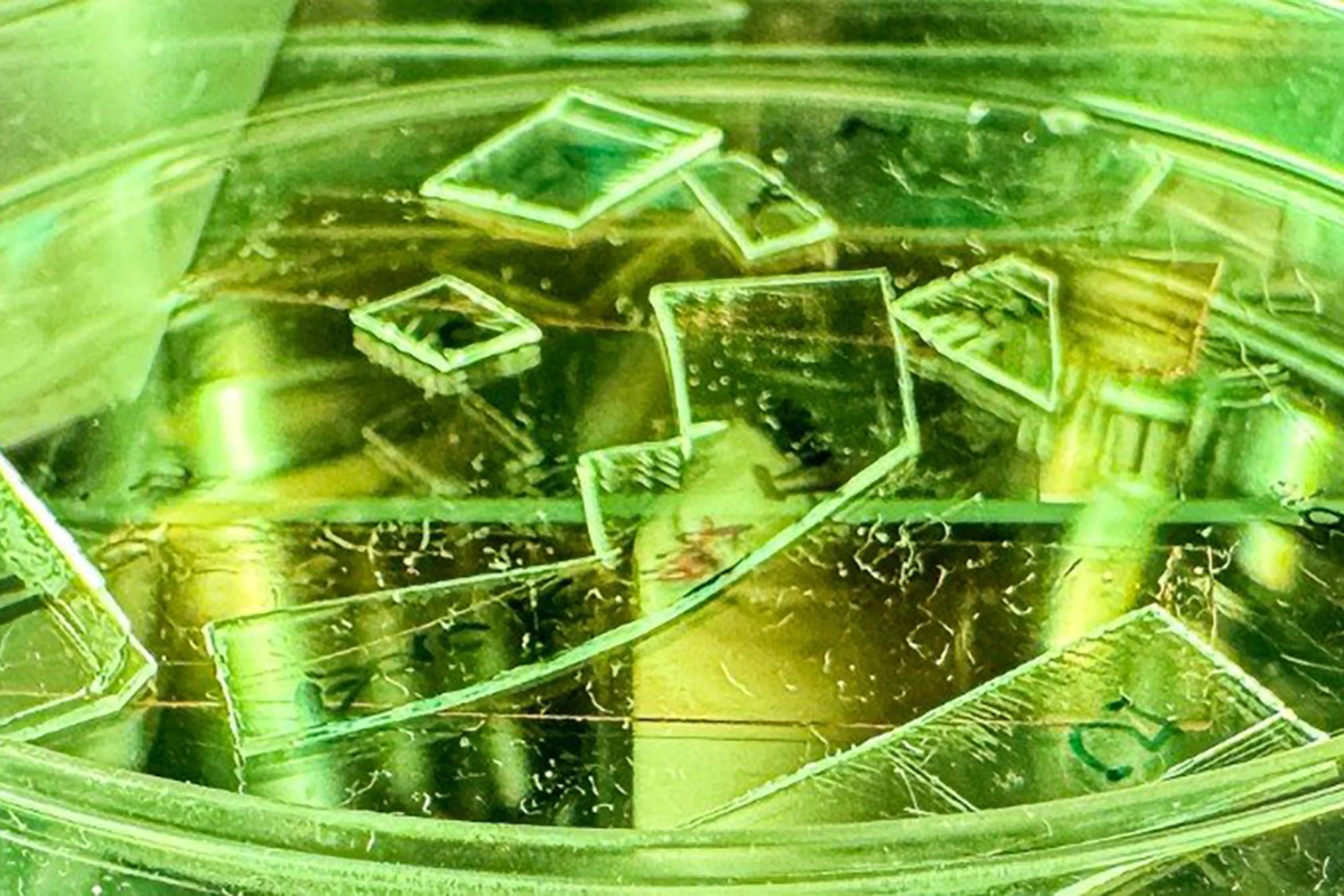
Reports indicate that in public environments such as offices and hospitals, people may become infected by inhaling small droplets containing virus particles, or by contacting contaminated surfaces such as door handles and countertops. This new advancement in materials science attempts to alleviate this problem by utilizing extremely small “spike structures.”
The new material is made of silicon and has anti-reflective properties, appearing black to the naked eye. The key lies in the surface being arranged with a large number of nano-pillars with extremely sharp tips. These structures can puncture the lipid envelope of virus particles, causing the virus to “deflate” and lose its original structural integrity. Research shows that once the virus is destroyed in this way, its infectivity is almost completely eliminated within 6 hours.
To verify the effect, the research team conducted a comparative experiment by placing droplets of a common respiratory virus – human parainfluenza virus type 3 (hPIV-3) – on two different silicon surfaces: one was a nano-textured surface covered with millions of tiny spikes, and the other was a smooth, flat silicon surface. Over a 6-hour observation period, researchers used high-magnification microscopy and laboratory infectivity tests to track the interaction between the virus and different surface textures.
The experimental results showed that these tiny spikes, like countless fine needles, can directly puncture the fatty membrane that protects the outside of the virus, causing the virus particles to collapse and lose structural stability. In contrast, most of the viruses remaining on the smooth surface remained intact and dangerous, while 96% of the infectious viruses were destroyed on the spiked surface within 6 hours. This indicates that this mechanical “nano-spike” design can efficiently inactivate pathogens without relying on toxic chemicals.
Combining existing research on nano-textured materials, the research team believes that this technology theoretically has the potential to exert a similar effect on a variety of viruses, including SARS-CoV-2, respiratory syncytial virus (RSV), rhinovirus (RV), and human coronavirus NL63, although specific tests have not yet been conducted for these viruses individually. In addition, the material also showed a certain effect in inhibiting some bacteria, indicating that its application potential may not be limited to antiviral scenarios.
Researchers believe that this achievement opens up space for the development of new safe materials and surface coatings, which could be widely used in the future to improve the hygiene safety of everyday items. Samson Mah, the first author of the paper, said that in the future, people may see surfaces such as mobile phone screens, keyboards, and hospital desktops covered with this film, achieving rapid inactivation of viruses upon contact without the use of irritating chemicals. He also pointed out that the mold developed by the team can be adapted to roll-to-roll manufacturing processes, which means that antiviral plastic films could potentially be mass-produced using existing factory equipment.
However, further optimization is still needed to move from laboratory results to commercial applications. Researchers say that the next step is to continue to improve the nano-texture design to improve the material’s efficiency in killing viruses. Mah explained that when the nano-pillars are arranged more closely, more spikes can act on the same virus particle simultaneously, stretching the viral envelope to its breaking point and further enhancing the destructive effect.
It is reported that the research results have been published in “Advanced Science.”