Microsoft Launches "Windows K2" Overhaul Plan to Restore Windows 11's Reputation
Microsoft is undertaking a long-term internal plan codenamed "Windows K2" to comprehensively address longstanding issues with Windows 11's performance, reliability, and user experience, aiming to regain trust from users and enthusiasts. The company, led by Pavan Davuluri, is committed to resolving significant pain points that arose from prioritizing AI development and introducing controversial changes while neglecting the core system experience.
According to reports, Microsoft is taking the overhaul of Windows 11 very seriously, with the goal of transforming it into a platform that "users will want to use and be proud of" by late 2026 to 2027. "Windows K2" is not a one-time fix but is defined as a continuous, systematic engineering effort, requiring a return to fundamentals at the product level and significant adjustments to the Windows team's internal development culture and collaboration methods.
The plan identifies "performance," "polish," and "reliability" as the three core pillars. Microsoft is reassessing Windows 11's most prominent shortcomings by directly collecting feedback from ordinary users and Windows Insider testers, analyzing telemetry data, and organizing customer focus groups, and will base subsequent improvements on these findings. Simultaneously, the K2 project is "operating" internally, aiming to improve code submission, feature launch, and cross-team collaboration mechanisms to avoid past development inertia that sacrificed product quality for rapid delivery.
Reports indicate that the Windows team had become overly enamored with "agile development" and frequent feature updates in recent years, hoping to quickly bring new features to market, but this pace ultimately came at the cost of system quality and stability. Users were faced with a system that changed too quickly and had constantly increasing problems, rather than a stable and trustworthy productivity platform. Microsoft's internal culture is now shifting from "pursuing speed" to "prioritizing quality," and new features will no longer easily enter public preview versions until they meet higher internal standards.
In addition to the three core pillars, reports mention a relatively less publicized "fourth pillar" – community. Microsoft hopes to use the K2 plan to rekindle Windows enthusiasts and core user groups, including resuming in-person Windows Insider gatherings and arranging for more Windows team members to directly respond to user feedback on social media and forums, to improve the long-standing perception that Microsoft "only collects feedback but doesn't truly listen."
Regarding specific improvement areas, performance is listed as one of the highest priorities in the K2 plan. Microsoft has recognized that the performance experience of Windows 11 has declined in elements such as File Explorer, gaming performance, and the right-click menu, and that in some benchmarks, Windows 10 actually performs better. Therefore, Microsoft is trying to reverse this situation through underlying adjustments.
In gaming, Microsoft has identified SteamOS as a key benchmark. The company is optimizing the Windows gaming platform, hoping that within one to two years, Windows gaming performance will genuinely compete with SteamOS under the same hardware conditions. This means Microsoft is not just making superficial optimizations but plans to improve Windows' competitiveness on handhelds and gaming devices through underlying platform transformations that will be rolled out gradually over the coming months.
File Explorer is also a key target for improvement. Microsoft plans to significantly improve file browsing, processing, and search speeds and is considering introducing new capabilities such as "instant filename search." Microsoft even considers a third-party application, File Pilot, as a reference benchmark, indicating that its goal is not just minor tweaks but a noticeable improvement in the user's tactile efficiency during daily, high-frequency operations.
Windows Update will also undergo adjustments. Microsoft hopes to optimize the Windows 11 update mechanism to a level where "rebooting is theoretically only required once a month" and to modify background mechanisms so that display driver, audio driver, and other updates are completed during the reboot phase, rather than interrupting users during normal device use. If this direction can be realized, it will help alleviate the disruption and uncertainty that Windows updates have long caused users.
In addition, Microsoft is also promoting a "lightweighting" effort for Windows 11. This effort will focus on compressing system memory usage in idle states, reducing the overall system size, so that Windows 11 can run more smoothly on entry-level hardware and also provide a more lightweight system experience for high-performance PCs and gaming handhelds.
In addition to performance and reliability, "polish" at the user interface and feature design level is also a focus of the K2 project. Microsoft has confirmed that it will bring back one of the most requested features since the release of Windows 11 – the ability to move and resize the taskbar. For many veteran Windows users, the return of this capability is not only a feature addition but also seen as a signal that Microsoft is re-emphasizing traditional desktop operating habits.
Reports also indicate that the K2 plan is driving more teams to use Microsoft's own Windows interface framework, WinUI 3, more deeply. Microsoft is enhancing the performance of this framework, hoping that more system interfaces will be built on a more modern, unified, and responsive native framework, and even gradually replacing interface parts such as the "Run" window and Control Panel that still carry traditional legacy traces.
To support this goal, Microsoft is reportedly introducing a new System Compositor to WinUI 3. The change aims to reduce the latency and memory overhead of the entire interface, ensuring that key elements such as the Start menu and taskbar remain responsive even under high system load.
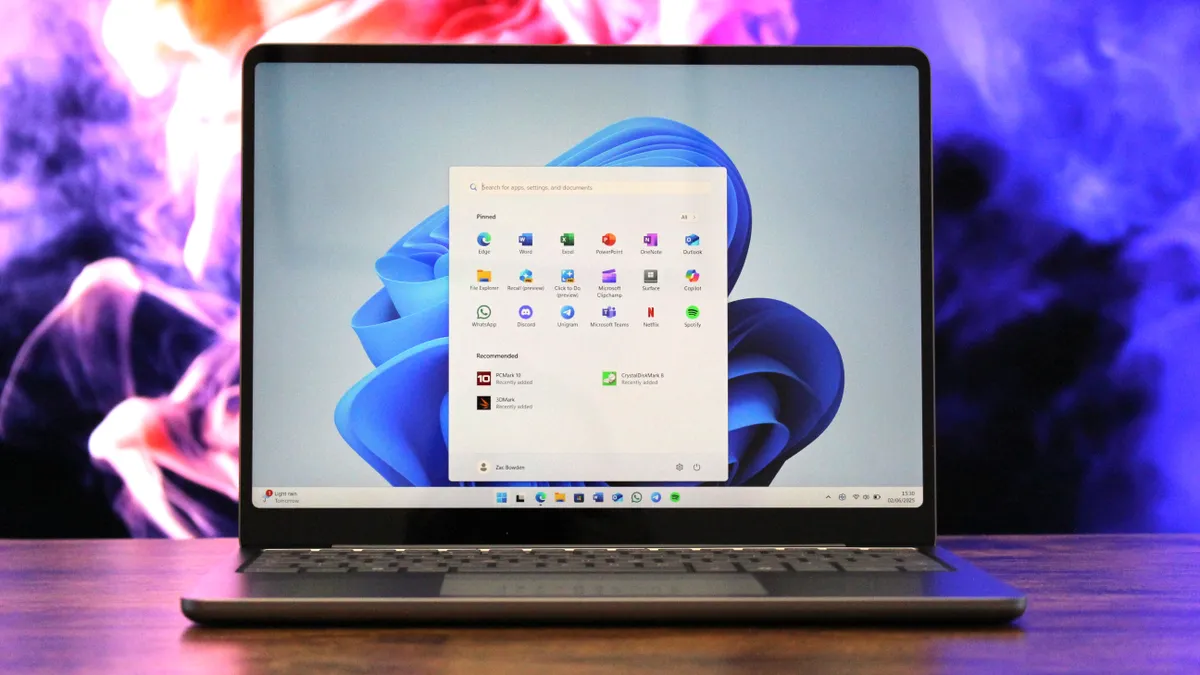
Based on this, Microsoft is also rebuilding the Start menu from scratch using WinUI 3 natively. Reports indicate that the new Start menu's responsiveness is expected to be up to 60% faster than the existing version, and will also add more customization options, such as allowing users to adjust the Start menu size and hide certain areas. This is seen as an important move by Microsoft to simultaneously address the two long-standing problems of "insufficient performance" and "insufficient customization."
More notably, the K2 project has also begun to address some "over-commercialization" designs that have long angered users. Reports indicate that Microsoft plans to remove advertising content from the Start menu and no longer allow MSN to occupy the core position of the widgets panel, but instead return "widgets" to the protagonist role, with MSN relegated to a secondary function. This means that Microsoft is re-examining its strategies regarding content distribution, recommended information, and system native interface commercialization in Windows 11 over the past few years.
According to reports, "Windows K2" does not have a clear end date; it is more like a methodology that will long shape the future direction of Windows development. Microsoft hopes to use this to fix Windows 11, reshape the platform's positioning, and maintain this pace of improvement in the future, rather than relying on a single version update to briefly boost its reputation. Currently, some of the changes that are part of the K2 plan have begun to roll out gradually, and more content is expected to be launched in preview form this summer.