Chinese Research Team Successfully Clones 10 Yaks in Bulk for the First Time
A press conference announcing the results of "Whole Genome Selection and Somatic Cell Cloning Compound Breeding Technology for Tibetan Yaks" was held in Dangxiong County, Lhasa City. The achievement was jointly released by Zhejiang University, the Plateau Biology Research Institute of the Tibet Autonomous Region, the Animal Epidemic Prevention and Control Center of the Tibet Autonomous Region (Regional Animal Husbandry Station), and the Dangxiong County People's Government.
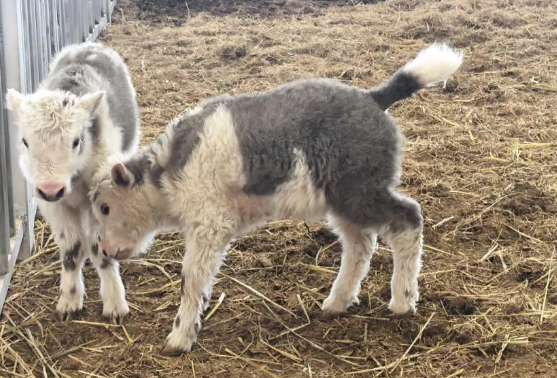
A "Whole Genome Selection + Somatic Cell Cloning Compound Technology" independently developed by a Chinese research team has achieved a major breakthrough in yak breeding, with the overall technology leading domestically and reaching an internationally advanced level.
On July 10, 2025, the team successfully bred the world's first somatic cell cloned yak – Namtso 1#, marking an original breakthrough from "0 to 1" in the traditional yak breeding bottleneck in Tibet. Namtso 1# weighed 33.5 jin at birth and had reached 366.5 jin after 286 days.
From March 25 to April 5, 2026, the second batch of cloned yaks achieved pregnancy in 10 individuals, and all were delivered naturally, successfully passing the small-scale application verification of "from 1 to 10," laying a solid foundation for subsequent mass production and industrialization promotion.
On the same day, the Lhasa Yak Germplasm Protection and Breeding Technology Innovation Center was unveiled at the Yangbajing Yak Superior Breed Expansion Base in Dangxiong County, at an altitude of 4300 meters. The base is also the Tibet (Dangxiong) Golden Silk Wild Yak Breeding Research Base. Journalists at the scene saw that the 11 calves born through whole-genome somatic cell cloning technology were strong, lively, and healthy.
The yak industry is one of the nine key industries prioritized for development in Tibet during the "Fifteenth Five-Year Plan" period. Traditional yak breeding relies on phenotypic selection, which takes as long as 20 years and is inefficient and prone to degradation. The application of the new technology will effectively solve key problems such as germplasm degradation, slow expansion of superior breeds, and low industrial benefits, with multiple values including technological breakthroughs, improvement of people's livelihoods, economic growth, and ecological protection.
Tibet possesses a variety of local germplasm resources, including Nanya yak, Pali yak, Subu yak, Lieqi yak, Chawula yak, and Tibetan alpine yak. Among them, the Golden Silk Wild Yak is a nationally first-level key protected rare and endangered species, with only over 300 remaining in the entire region.
Through somatic cell preservation and cloning technology, it is possible to achieve zero-loss replication of live germplasm, safeguard Tibet's unique and irreplaceable genetic resource sovereignty, and promote the population restoration and recovery of the Golden Silk Wild Yak and wild-blood yaks. Currently, the expert team has constructed more than 200 somatic cell cloned embryos of the Golden Silk Wild Yak and wild-blood yaks, laying a solid foundation for subsequent embryo transplantation and endangered species protection.
The implementation of the new technology will spawn jobs in the entire industrial chain, including superior breed breeding, embryo transplantation, technical services, breeding training, deep processing, and brand marketing, attracting herders to participate in technology promotion and standardized breeding. Herders will shift from the traditional "raising and selling cattle" model to a diversified income model of "breeding + processing + services," promoting the transformation from traditional producers to modern industrial operators.
At the same time, the technology will help build a modern yak industry system, construct national-level superior breed breeding bases, gene banks, and cloning expansion centers, create a new growth pole for the plateau's characteristic economy, and form a Tibetan-autonomous and controllable yak industry brand, enhancing industrial added value and core competitiveness.