ASML Accelerates EUV Equipment Production, Driven by AI Chip Boom
Dutch lithography giant ASML is rapidly expanding its production capacity to meet the growing demand for advanced lithography equipment fueled by increased investment in global artificial intelligence infrastructure. ASML now expects to produce at least 60 EUV (extreme ultraviolet) lithography systems this year, a 36% increase over 2025 sales levels, with plans to further increase annual capacity to at least 80 units in the next phase.
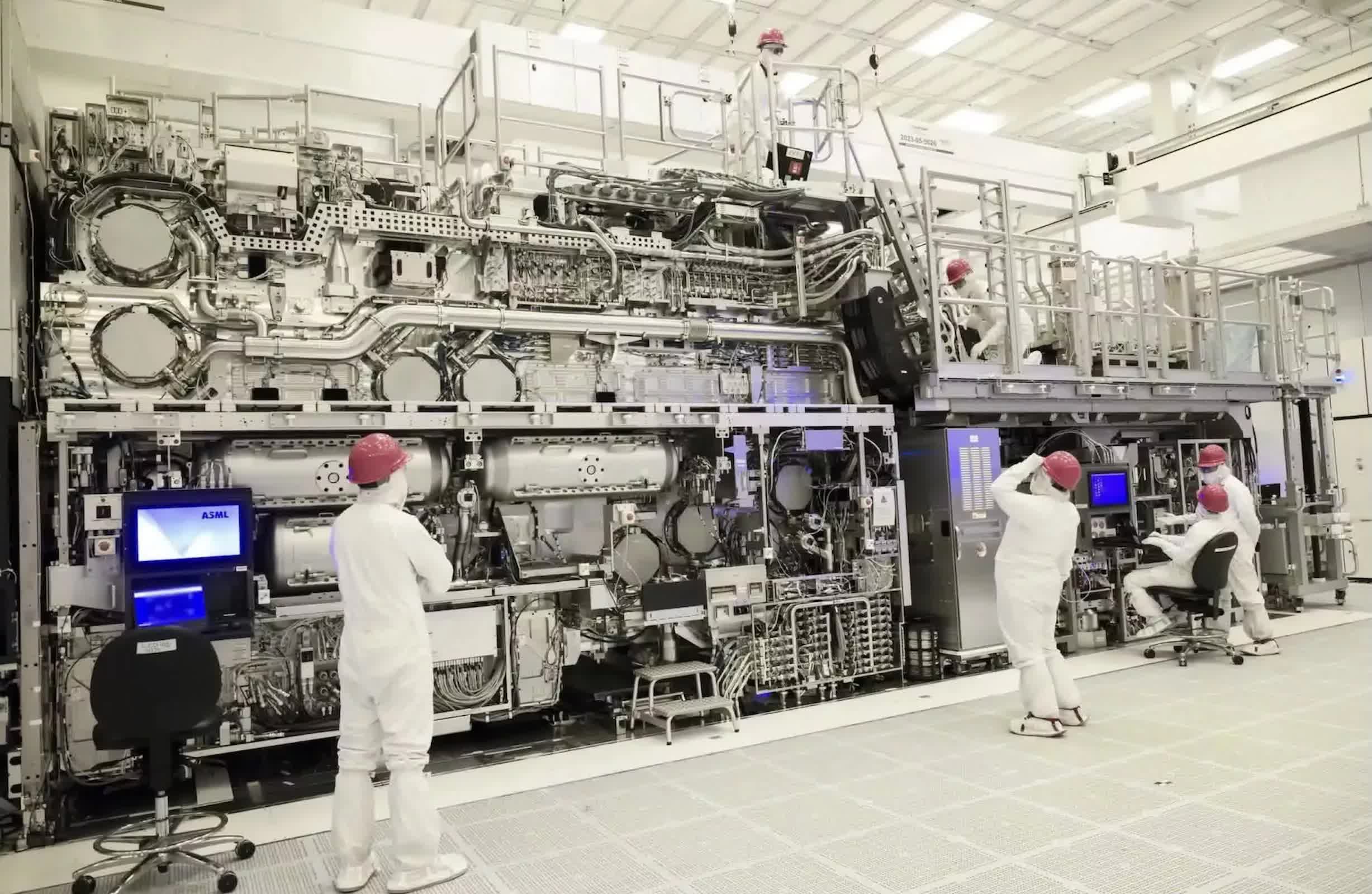
Reports indicate that ASML is simultaneously improving equipment processing efficiency while expanding overall production, including upgrading some models to process more wafers per hour, to further meet the urgent demand from chip manufacturers for advanced process equipment.
However, EUV systems are among the most complex pieces of equipment in today's manufacturing landscape, with each unit taking months to assemble and heavily relying on a vast supply chain network. The core process involves using lasers to convert molten tin into extreme ultraviolet light, which is then used to etch extremely fine circuit patterns onto silicon wafers. Even tiny dust particles can interfere with the entire manufacturing process, creating inherent limitations to capacity expansion.
To alleviate these bottlenecks, ASML has expanded cleanroom capacity in the United States, Germany, and South Korea, and plans to begin construction of a new campus near its headquarters in the Netherlands to support larger-scale production deployments.
In terms of capital expenditure, ASML expects to invest approximately $2.2 billion in real estate, equipment, and infrastructure this year, higher than last year's level. At the same time, the company is increasing investment in engineer recruitment and training, but a shortage of local labor in the Netherlands remains a realistic challenge during its expansion.
To avoid delays in equipment delivery due to shortages of critical components, ASML has also strengthened its supply chain management. Senior company executives are now directly involved in supplier coordination and are promoting expansion through regular communication, as the absence of any critical component could halt final assembly.
While demand for standard EUV equipment remains strong, the prospects for the next-generation High-NA EUV system are somewhat uncertain. These new devices offer higher resolution and higher production efficiency, but also come with a significant increase in cost, prompting some chip manufacturers to prioritize maximizing the performance of existing EUV platforms rather than immediately transitioning to the new generation of systems. In response, ASML is providing upgrade solutions for already installed equipment to extend their performance and output capabilities.
Looking further ahead, ASML is also developing more powerful light source technologies to further improve system throughput. Although these improvements will take years to fully deploy, they are seen as a key component in sustaining industry progress as chip designs continue to shrink.
In terms of performance expectations, ASML had previously warned the market that demand might slow down, but the company has now raised its full-year sales forecast to $42 billion to $47 billion. This growth expectation reflects continued increased spending by large technology companies on AI-related expenditures, as well as a simultaneous expansion of investment across the entire semiconductor industry.
Even so, ASML's growth is still constrained by some external factors. Customers not only need to build sufficient cleanroom space but also ensure the power supply required for equipment operation, both of which are time-consuming and require significant capital investment. Despite these limitations, the market generally expects EUV demand to remain strong in the coming years, and ASML is simultaneously accelerating in terms of capacity, supply chain, and technology research and development to catch up with rising market demand.