Data Center Boom Drives Up Costs, Natural Gas Power Plant Prices Soar 66% in Two Years
As generative artificial intelligence drives a surge in data center electricity demand, US tech giants are increasingly relying on natural gas power plants, but this embrace is coming at a high cost. A recent report from BloombergNEF shows that the cost of building a combined-cycle gas power plant has risen by about 66% in the past two years, and construction times have also lengthened significantly.
The report points out that despite relatively low spot prices for domestic natural gas in the US amid the ongoing Iran war, the unit installation cost of new combined-cycle gas turbine (CCGT) power plants has risen from less than $1,500 per kilowatt in 2023 to $2,157 last year. At the same time, the overall time from the start of construction to the completion of new power plants has increased by approximately 23%.
Behind this round of price increases, data centers are one of the key drivers of the increase in new electricity demand. Tech companies such as Microsoft and Meta have recently announced plans to build their own gas-fired power plants to directly power data centers, rather than relying solely on the public grid. The Trump administration also openly urged data center operators to “self-supply,” encouraging companies to turn more to self-built units. However, power companies are also increasing their investment in gas units and passing on the increased generation costs to all users through electricity pricing mechanisms, which has sparked growing backlash among the general public in the US against data center construction.
From an incremental perspective, data centers are not the only factor, but they are one of the fastest-growing large electricity consumers. According to previous forecasts, new and expanded data centers will push related electricity demand to approximately 2.7 times its current level by 2035, growing from about 40 gigawatts to 106 gigawatts. This is not only due to the increase in quantity, but also to the leap in individual scale: currently only about 10% of data centers have an installed capacity of 50 megawatts or more, while the average scale of new data centers will exceed 100 megawatts in the next ten years.
In recent years, large tech companies have largely operated data centers by connecting to the grid and hedging carbon emissions and price risks by signing long-term power purchase agreements (PPAs) with wind, solar, and battery storage projects. However, the sudden surge in electricity demand brought about by artificial intelligence, coupled with increased community resistance to data center facilities, is pushing more companies back to a route dominated by natural gas power plants.
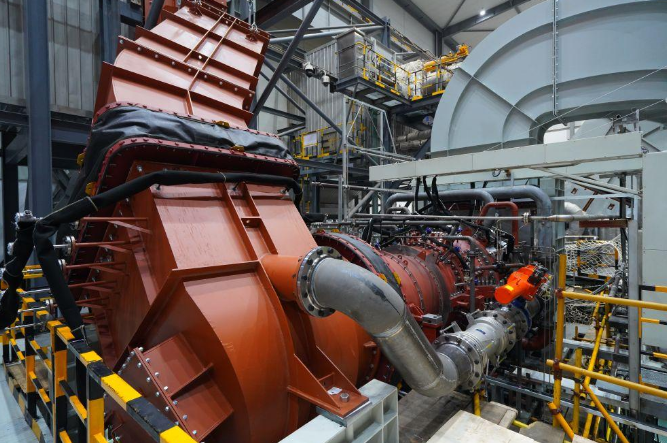
The direct consequence of the industry’s rush to install gas power plants is a severe shortage of core equipment for gas turbines. The report shows that by the end of this year, the price of gas turbines used in power plant hosts is expected to have risen cumulatively by 195% compared to 2019, and this part of the equipment cost can account for 30% of the total station cost. Due to the highly complex manufacturing process of gas turbines and the limited speed of industrial chain expansion, the order queue has extended to the early 2030s.
Amidst the clamor for natural gas, some tech companies are choosing a different path. Google has already begun to outline a new power plan for its data center expansion, with the core being the deep bundling of renewable energy with long-duration storage, including the adoption of Form Energy’s large-scale iron-air battery systems, which can continuously output power for up to 100 hours. In contrast to the continuously rising comprehensive cost of gas turbines, photovoltaic components and battery storage have continued to decline in price in recent years, making them an alternative path to hedge the soaring cost of gas power plants.