Most Earth-like Exoplanets Turn Out Unsuitable for Life, Earth Has Unique “Water Advantage”
A new study from the University of Washington suggests that many exoplanets previously considered “habitable candidates” are likely unsuitable for life if they are too dry, even if they are located within the habitable zone and have surface temperatures suitable for liquid water.
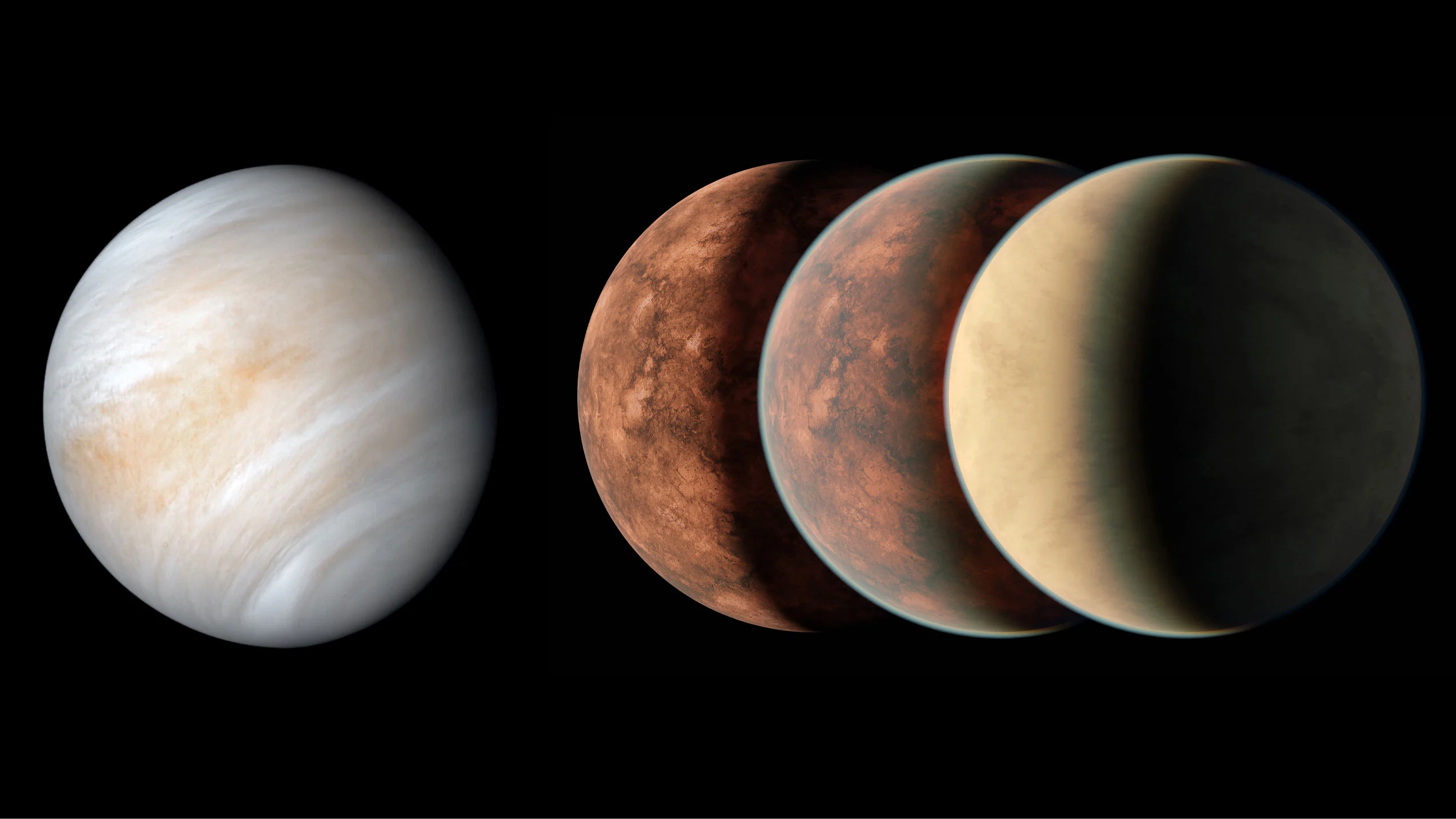
The research team found that for a rocky planet similar in size to Earth, maintaining a stable and habitable surface environment over long geological timescales requires a surface water content of at least about 20% to 50% of the total volume of Earth’s oceans. This means that many targets labeled as “desert planets” – even those with “just right” orbital positions – may fall far short of the conditions needed to support life in terms of water resources.
To date, astronomers have confirmed over 6,000 exoplanets and estimate that there are billions of similar bodies throughout the Milky Way. A significant portion of these fall within the habitable zone of their stars, where temperatures theoretically allow for liquid water to exist. However, the University of Washington team emphasizes that being “in the right place” is only one condition; planets still need to have long-term stable climate regulation mechanisms, which largely depend on how water interacts with the crust and atmosphere.
Haskell White-Jianner, the first author of the paper and a PhD student in Earth and Space Sciences, stated that when searching for life in the vast universe with limited observational resources, it is necessary to learn to selectively “screen out” some planetary targets. This research focuses on planets with very low surface water reserves, far less than an entire Earth ocean, to assess whether they are truly potentially habitable.
The research, published in the *Planetary Science Journal*, centers on the key process of planetary geological carbon cycling. On Earth, this water-driven cycle transports carbon elements between the atmosphere and the planet’s interior over millions of years, helping to regulate global surface temperature.
On Earth, volcanoes release carbon dioxide into the atmosphere, which then dissolves in rainwater. The rainwater reacts chemically with surface rocks, and rivers carry carbon-containing substances into the ocean, where they are deposited on the seafloor. With plate tectonic movement, carbon-rich oceanic crust is subducted beneath the continents and, through processes such as mountain building, returns carbon to the surface over long periods.
However, if a planet lacks enough water to maintain stable and widespread rainfall, this carbon cycle “thermostat” will break down. When precipitation and weathering weaken, the efficiency of removing carbon dioxide from the atmosphere significantly decreases, while volcanic emissions continue. As a result, carbon dioxide accumulates in the atmosphere, the greenhouse effect intensifies, temperatures rise further, and remaining water evaporates more rapidly, creating a vicious cycle that makes the planet’s surface too hot and uninhabitable.
White-Jianner points out that this means that even dry Earth-like planets within the habitable zone are unlikely to be ideal targets for searching for life. The study also reminds us that carbon cycling mechanisms on dry planets have received relatively little systematic investigation in previous theoretical work, which may have led to an overly optimistic assessment of the habitability potential of “desert exoplanets.”
Because direct observation of rocky exoplanets is still extremely difficult, scientists often use numerical simulations to explore their long-term climate evolution and water cycle characteristics. In this work, the research team improved existing carbon cycle models, specifically recalibrating key processes such as evaporation and precipitation for dry environments, and introduced factors that were previously often ignored, such as the impact of wind fields on water vapor distribution and evaporation efficiency.
Joshua Krissansen-Totton, co-author of the paper and assistant professor of Earth and Space Sciences at the University of Washington, said that these refined “mechanism-based” carbon cycle models, originally used to understand Earth’s climate evolution and temperature regulation over long geological histories, are now being extended to exoplanet research. New results show that even a dry planet with some surface water early on is likely to lose its water due to carbon cycle imbalances and become a hot, uninhabitable “imbalanced planet” later on.
The research also turned its attention to a “natural experiment” close at hand: Venus. Venus is similar in size to Earth and formed around the same time, and some models even suggest it may have had as much water as Earth in its early stages. However, the surface temperature of Venus today is comparable to that of a pizza oven, and the surface pressure is so high that it feels like being crushed by ten blue whales.
For a long time, the scientific community has been discussing why Earth and Venus have followed such different evolutionary paths. White-Jianner and Krissansen-Totton propose that Venus may have triggered a carbon cycle imbalance and runaway greenhouse effect early on due to its closer proximity to the sun and slightly lower initial water content. As carbon dioxide accumulated in the atmosphere and temperatures gradually rose, water was eventually lost in large quantities, and any life that may have existed lost its habitat.
In the coming years, several Venus exploration missions are expected to answer this “sister planet mystery” and test the key inferences of the carbon cycle models. White-Jianner believes that although humans are unlikely to land on the surface of any real exoplanet in the foreseeable future, Venus – this “nearby Earth-like exoplanet analog” – provides a unique window.
The research team hopes that data from these missions will help validate the theoretical framework of carbon cycle imbalances on dry planets and be used in reverse to interpret the atmospheric characteristics and evolutionary states of distant exoplanets. Krissansen-Totton pointed out that this research is important for how we assess the “true inventory” of potentially habitable planets in the universe, and many targets that were previously roughly classified as “habitable candidates” may be removed from the list under stricter water and carbon cycle standards.