Xerox Star Turns 45: The Cybernetic Ancestor of Modern Computers – Jobs and Gates Both Copied It
This year marks the 45th anniversary of the release of the Xerox Star 8010 computer. This device, born in 1981, was not only the world's first commercially available computer with a graphical user interface (GUI), but also established the desktop logic still used today, making it the cybernetic ancestor of modern computers. The Xerox Star, fully named the Xerox 8010 Information System, was born at Xerox's legendary Palo Alto Research Center (PARC).
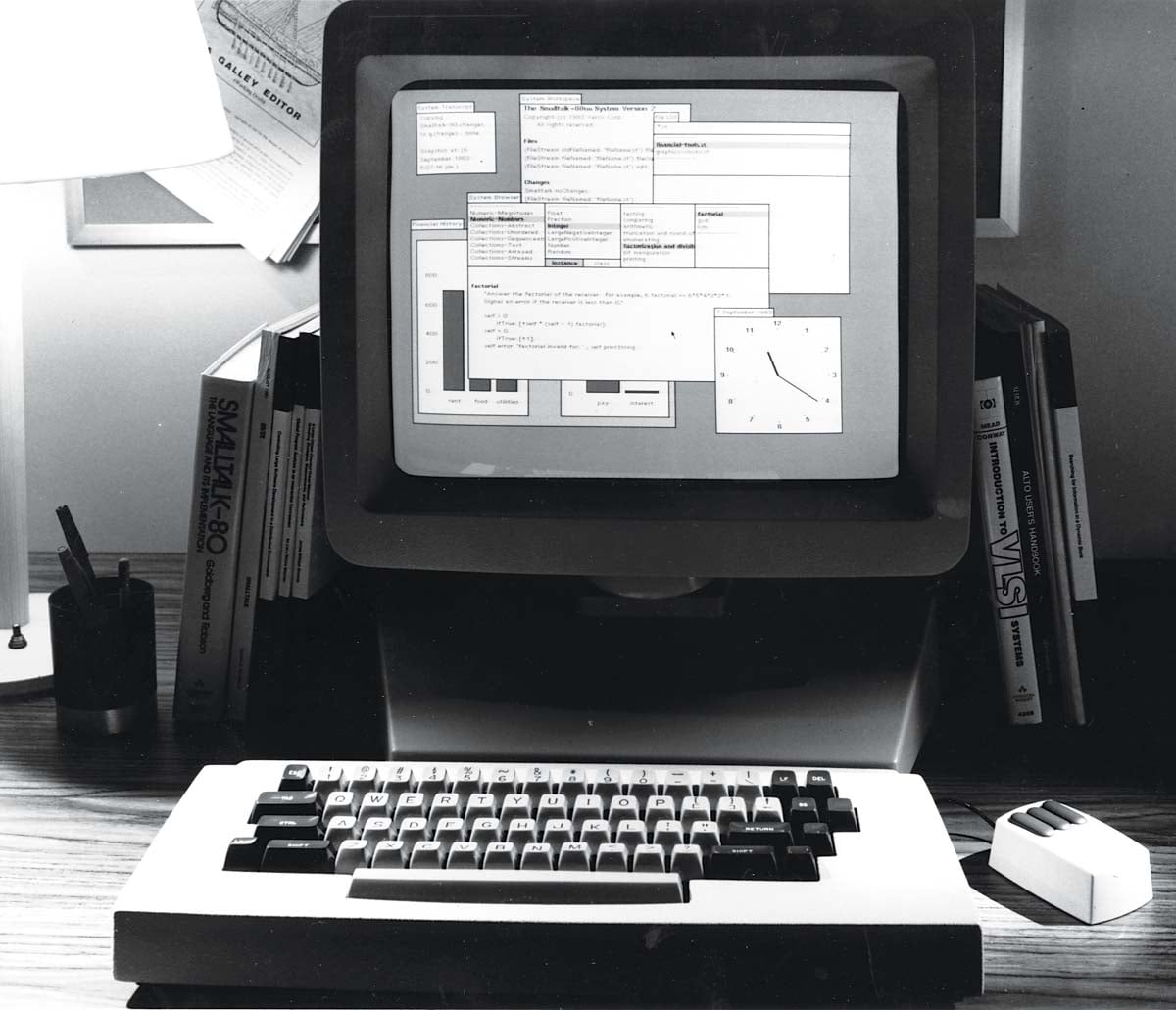
It achieved a leap from character interfaces to graphical interfaces, first introducing the WIMP (Windows, Icons, Menus, and Pointer) operating paradigm. Users didn't need to learn complex code, and could complete instructions with a mouse click, greatly lowering the barrier to computer use.
The Xerox Star featured a built-in Ethernet interface and could connect to a 12 pages/minute laser printer, which was very forward-looking at the time. The mouse and hand-controlled indicators it adopted became standard configurations for subsequent personal computers.
In terms of hardware configuration, it was equipped with an AMD AM2900 series processor, 384KB of memory (expandable to 1.5MB), a maximum of 40MB of hard disk space, and a 17-inch display with a resolution of 1024x808. These specifications far exceeded those of contemporary products like the IBM PC 5150.
The Xerox Star's graphical interface was not a direct copy of the research version from PARC, but was redesigned by the Xerox System Development Department under the leadership of David Canfield Smith. Smith created the concepts of desktop metaphors and icons. Inspired by Manila folders seen everywhere in the office, he designed the first folder icon in computer history, which is still used today.
Despite its leading technology, the Xerox Star cost $16,595 at the time, equivalent to approximately 120,000 RMB today, resulting in Xerox investing a huge amount in R&D costs but still failing to achieve ideal sales.
However, its technological value was discovered by Jobs and Gates. In 1979, Jobs had the opportunity to visit Xerox PARC and subsequently spurred the development of Apple Lisa and later Macintosh. Bill Gates was also inspired by these technologies and later developed the Windows operating system.
In a widely circulated anecdote, Bill Gates once told Steve Jobs that they were both eyeing Xerox as a "rich neighbor," saying he wanted to steal the TV, only to find that Jobs had already taken action.
In December 1989, Xerox sued Apple's Mac and Lisa systems for allegedly copying its GUI design, seeking damages of over $150 million, but the lawsuit was ultimately dismissed by the court. In 2010, Xerox again sued Apple, but the case was dismissed after a long delay.
Although Xerox held the original GUI achievements, it failed to receive any commercial returns from them, becoming a classic case of "getting up early but arriving late" in the history of technology.
As David Liddle, head of the Star design team, put it: "This machine was better than most of the products that came after it. The Mac took ten years to catch up, and Windows took almost fifteen."