NVIDIA's Market Cap Surpasses $5.26 Trillion, Wall Street Closely Watches Tech Giants' AI Spending
After months of sluggishness, NVIDIA, the leading AI chipmaker, has regained its upward momentum. On April 27th local time, NVIDIA (Nasdaq: NVDA) stock rose 4% in a single day, closing at $216.61 per share, a new historic high, with a total market capitalization of $5.26 trillion. Currently, NVIDIA ranks first on the U.S. stock market capitalization list, significantly ahead of Alphabet, Google's parent company, at $4.24 trillion, and Apple at $3.93 trillion.
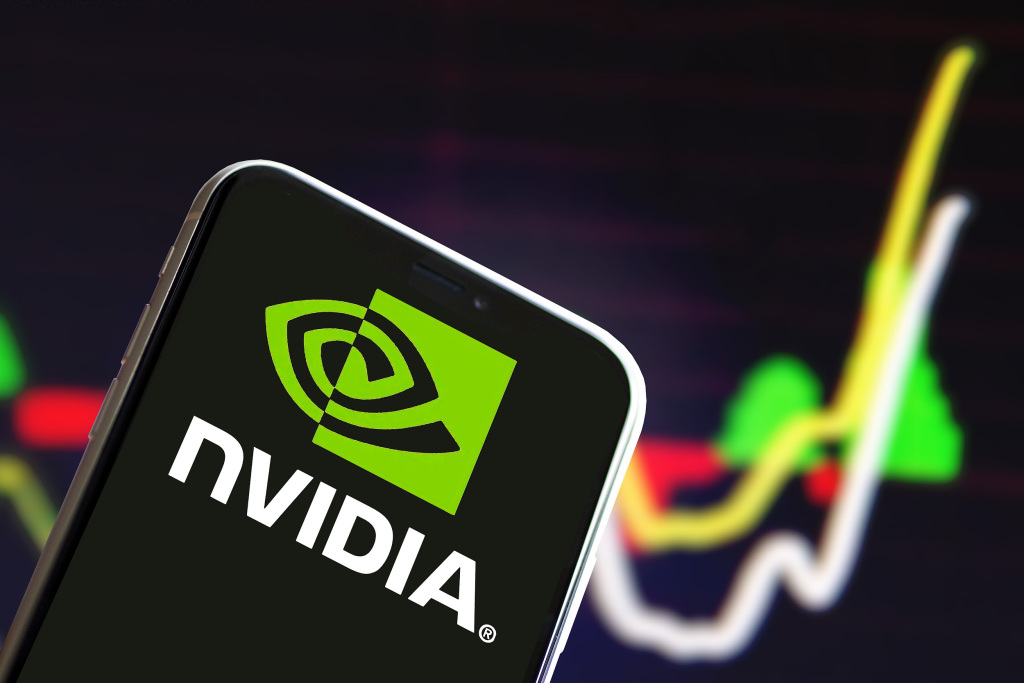
NVIDIA last refreshed its market cap record in October 2025, when its market value reached a high of $4.8 trillion. However, since the end of last year, due to a lack of new catalysts and market concerns about U.S. chip export control policies, NVIDIA's stock price once entered a consolidation period.
However, in April of this year, NVIDIA's stock price rose steadily driven by multiple positive factors. Over the past month, NVIDIA's stock has risen by more than 31%.
On the 27th, Tianfeng International Securities analyst Ming-Chi Kuo posted that OpenAI plans to develop its own mobile phone and is cooperating with MediaTek and Qualcomm to develop mobile phone processors, with Luxshare Precision as the exclusive system integration design and manufacturer, expected to be mass-produced in 2028. Qualcomm and OpenAI are both partners of NVIDIA, so the market believes that this news further confirms NVIDIA's core position in the entire AI industrial chain.
In addition, on April 24th, Intel announced optimistic first-quarter 2026 results, boosting the overall chip stock market. Intel's first-quarter revenue was $13.6 billion, a year-on-year increase of 7%; first-quarter earnings per share attributable to Intel were a loss of $0.73; non-GAAP earnings per share attributable to Intel were $0.29. Gross margin was 39.4%, an increase of 2.5 percentage points year-on-year.
At the same time, Intel forecasts second-quarter 2026 revenue of $13.8 billion to $14.8 billion; and expects second-quarter earnings per share attributable to Intel to be $0.08, and non-GAAP earnings per share attributable to Intel to be $0.20.
Besides Intel, tech giants will be releasing their earnings reports intensively this week. Microsoft, Meta, Google, and Amazon will announce their latest results after the U.S. stock market closes on April 29th local time. The AI spending and cloud demand of these tech giants are receiving close attention from the market, and their sales performance is also a key indicator of the demand for NVIDIA's products.
Regarding NVIDIA's subsequent stock performance, Wall Street has divergent opinions. However, analysts believe that the ongoing earnings season will profoundly affect NVIDIA's future prospects.
Matt Britzman, a senior equity analyst at investment service company Hargreaves Lansdown, said that NVIDIA's market capitalization exceeding $5 trillion is indeed a milestone worth noting by the market, but more importantly, what will happen next: "At times like these, investors often spend too much time looking back at the past rather than focusing on the direction of the company's profitability in the future."
Britzman pointed out: "If the market can remain confident in AI spending in 2027, it will reinforce our previous judgment that the market still underestimates the sustainability of NVIDIA's profitability. The investment plans of tech giants provide an important signal for the construction of AI infrastructure and ultimately determine the demand for NVIDIA's products."
Dan Ives, an analyst at investment bank Wedbush Securities, also said that the latest performance of tech giants will be a "test" of AI transactions: "Wall Street is highly focused on these companies' capital expenditure data, as well as any comments about the pace of AI deployment at the enterprise level."
Similarly, a team of analysts at Morgan Stanley wrote in a research report that the spending of hyperscale cloud vendors is a "key variable" in the tech sector: "Visibility into the multi-year AI investment cycle will be key to maintaining current market expectations."
However, Mislav Matejka, an analyst at JPMorgan Chase, said that although he remains optimistic about the semiconductor sector, the market's performance may not be as optimistic as last year: After a weak first quarter of 2025, NVIDIA's stock price soared by about 120% in the following six months, but there are no conditions for a similar rally this time.
Matejka believes that NVIDIA's stock price may face an upward bottleneck. However, in the short term, due to continued inflows of investors into semiconductor stocks, bullish sentiment may be difficult to reverse.