OpenAI Launches $8 Subscription for ChatGPT, Expects 122 Million Paying Consumers This Year
Over the past three years, OpenAI’s revenue has primarily come from ChatGPT Plus subscribers paying $20 per month. Internal forecasts reveal a significant shift this year: a lower-priced, ad-supported subscription tier will attract new users and cause tens of millions of existing premium subscribers to downgrade.
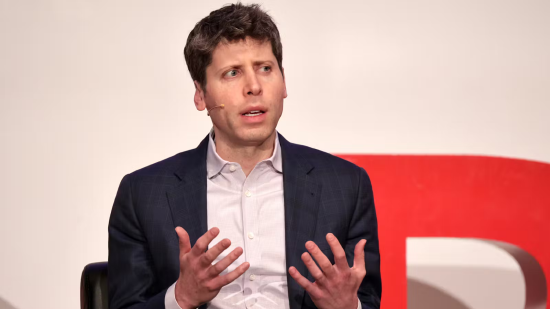
OpenAI CEO Sam Altman
The company’s strategy is to generate more revenue from advertising based on a large user base than currently generated by its flagship subscription service, ChatGPT Plus.
OpenAI predicted at the beginning of the year that ChatGPT Go, priced at $8 per month in the US and around $5 per month in other countries like India, will see subscriptions surge approximately 36-fold to 112 million this year.
As a result, flagship ChatGPT Plus subscriptions are expected to decline by 80% to around 9 million, while the most expensive Pro subscription is expected to double in number but still account for less than 1% of total users.
The company expects total revenue to more than double this year to $30 billion, and to reach $284 billion by 2030.
OpenAI forecasts that advertising will become its largest source of revenue by 2030, generating approximately $102 billion, accounting for about 36% of total revenue that year.
This forecast also highlights OpenAI’s high dependence on individual consumer business. Despite actively seeking large enterprise clients this year, many companies have turned to competitors like Anthropic.
Advertising revenue growth has become crucial for OpenAI after failing to meet its internal revenue targets in the first quarter.
Following news of lower-than-expected revenue, the stock prices of OpenAI’s cloud partners CoreWeave and Oracle fell by 6% and 4% respectively on Tuesday.
OpenAI stated on Tuesday that both its individual consumer and enterprise businesses are experiencing strong growth.
Faced with fierce competition in the consumer market from Google Gemini, OpenAI is hoping to boost revenue through advertising.
Michael Nathanson, an analyst at MoffettNathanson, said: “Google’s entry with Gemini, and the fact that most Gemini users are using it for free, will put significant competitive pressure on OpenAI, as Google has a large advertising business and is willing to offer Gemini for free.”
Currently, OpenAI has over 920 million weekly active users, but only about 5% are paying subscribers. The company now hopes more users will choose the lower-priced subscription tier.
ChatGPT Go launched in India in August last year and globally in January this year. Compared to the free version, this tier allows for more conversations, unlocks flagship models, and other features, while displaying ads on the page.
The company expects ChatGPT Go users to account for 92% of all paying users by the end of this year, compared to just 7% last year.
Much of the user growth comes from existing high-priced subscribers downgrading: the proportion of ChatGPT Plus users will drop sharply from 92% last year to 7% this year, indicating a large migration to lower-priced tiers. Overall, OpenAI’s total individual paid subscriptions are expected to more than double this year to 122 million, and further increase to 306 million by 2030.
As a large number of users switch to lower-priced subscriptions, OpenAI expects average revenue per user to fall from approximately $23 per month (annualized $271) last year to less than $12 per month (annualized $141) next year.
At the same time, advertising revenue per user is expected to increase from zero last year (as the advertising business had not yet launched) to over $3 per year next year, and to about $59 by 2030.
Meta generates the vast majority of its revenue from advertising, with an average annualized revenue per user of $57 across all its platforms last year, close to OpenAI’s 2030 forecast.
OpenAI is emulating the business model of streaming platforms like Netflix: Netflix launched a lower-priced, ad-supported subscription tier in 2022 and cracked down on account sharing, boosting both subscription numbers and overall revenue.
These forecasts are based on OpenAI’s ability to quickly attract advertisers.
The company only launched an advertising pilot in February this year, and its annualized advertising revenue reached $100 million by the end of March. According to media outlet The Information, advertising revenue is expected to be around $2.4 billion this year and double to nearly $11 billion next year.
At the end of last year, OpenAI issued a “highest priority alert” and concentrated resources on optimizing its flagship ChatGPT.
The company subsequently cut some business lines, such as the independent video app Sora, and reduced its e-commerce shopping business layout, turning ChatGPT into a super app incorporating features like code development and the Atlas browser.
The high growth potential of the lower-priced subscription tier is largely due to the company’s user growth coming primarily from overseas.
Approximately 90% of OpenAI’s weekly active users come from outside the US, with India, Brazil, Germany, Indonesia, and France being its top five overseas markets.
Data shows that 70% of ChatGPT Plus subscribers are also located outside the US, with Brazil, Germany, France, Japan, and the UK being the top five countries for overseas subscribers. The main users of the lower-priced subscription are also likely to come from these regions.
The company is also increasing its marketing investment in the US. Industry media Adweek reported that OpenAI spent millions of dollars on a Super Bowl ad this year, with the slogan “You can just build things,” highlighting its code intelligence agent Codex.
Outdoor billboards have also been placed in major cities, but the promotion has not yet focused on the $8 low-price package.
Aggressively promoting the $8 subscription tier could force competitors to adjust their pricing strategies.
Since ChatGPT launched paid subscriptions in February 2023, OpenAI’s $20 pricing has become an industry benchmark. Professional versions of competitors such as Perplexity and Anthropic are also priced at $17 per month.